Ingredient Science
Tea Tree Oil for Scalp Health: Antifungal and Antimicrobial Science
Tea tree oil won't regrow hair on its own, but its antifungal punch against dandruff-causing yeast makes it one of the more evidence-backed scalp care ingredients out there. Here's what the science actually shows.
Updated July 1, 2026
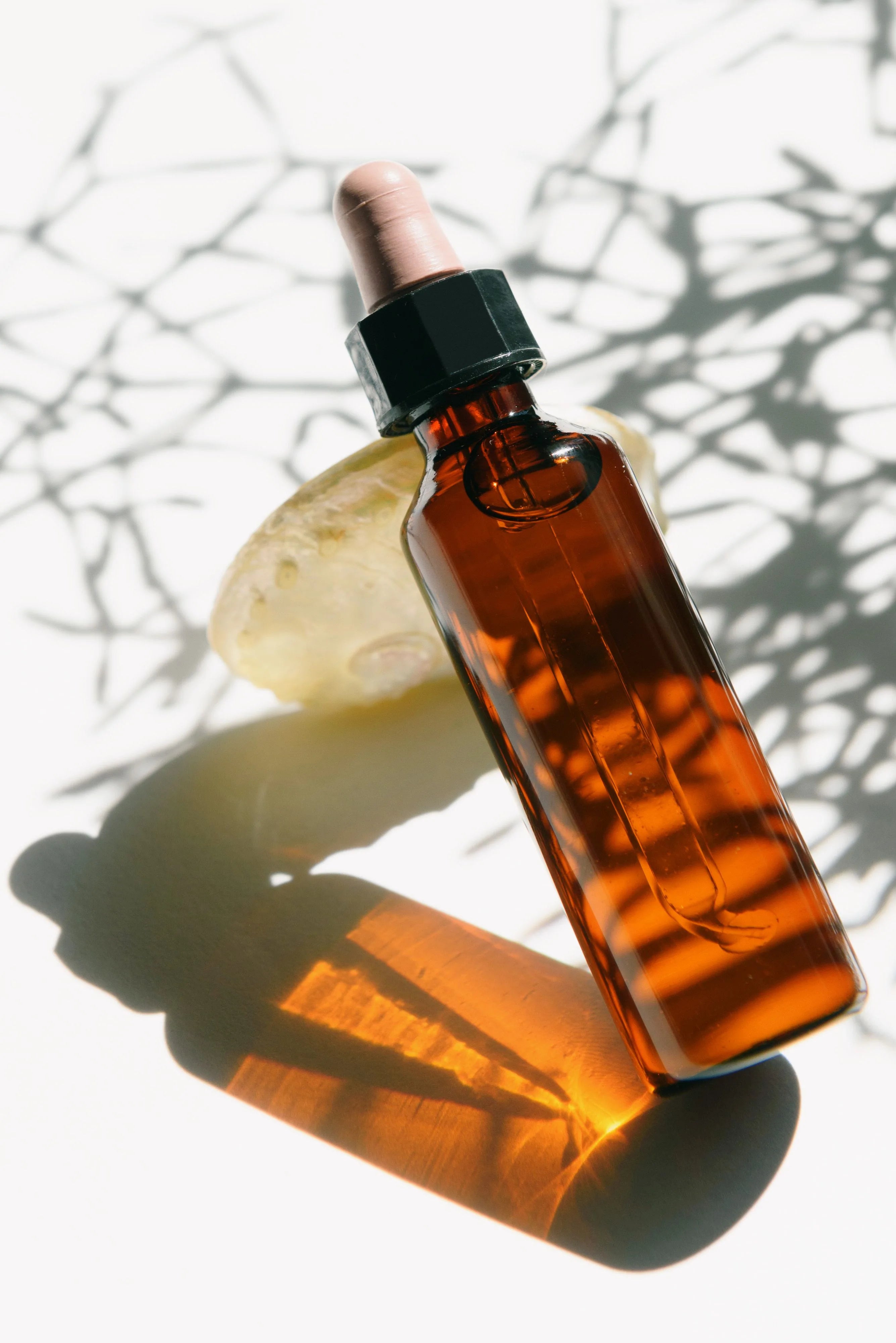
If you've spent any time researching natural scalp remedies, you've run into tea tree oil. It shows up in dandruff shampoos, scalp serums, and DIY hair masks, usually with a promise that it will calm an itchy scalp and maybe even help hair grow back thicker. Some of that is marketing. But underneath the hype sits a genuinely interesting piece of botanical chemistry: tea tree oil is one of the few plant extracts with real, lab-confirmed antifungal and antimicrobial activity. Understanding what it actually does, and what it doesn't, is the difference between using it well and just hoping it works.
Tea tree oil comes from the leaves of Melaleuca alternifolia, a shrub native to Australia. Indigenous communities used crushed tea tree leaves for skin complaints long before it became a bottled essential oil, and modern chemistry has since isolated the compounds responsible for its effects. This article walks through the actual science: how tea tree oil interacts with the organisms that live on your scalp, why that matters for dandruff and flaking, what it can and cannot do for hair growth, and how to use it safely as part of a broader scalp care routine.
What Makes Tea Tree Oil Antimicrobial
Tea tree oil is a complex mixture of more than 100 compounds, but the one that gets the most attention from researchers is terpinen-4-ol. It typically makes up the largest share of the oil and is considered the primary driver of its antimicrobial activity. Terpinen-4-ol and related terpenes are lipophilic, meaning they dissolve easily in fats and oils, which allows them to penetrate the cell membranes of bacteria and fungi.
Once inside, these compounds disrupt the microbial cell membrane, interfering with its structure and function. For many bacteria and fungi, this leads to leakage of essential cellular contents and, at sufficient concentrations, cell death. Laboratory studies have repeatedly demonstrated that tea tree oil has activity against a range of organisms, including Staphylococcus aureus, Propionibacterium species, and several types of fungi. This is why tea tree oil shows up not just in scalp products but in acne treatments, nail fungus remedies, and general antiseptic formulations.
It's worth being precise about what "antimicrobial" means here. Tea tree oil is not a prescription antifungal medication, and it does not work through the same targeted mechanism as something like ketoconazole. Instead, it has broad, somewhat nonspecific activity against microbial cell membranes. That broad action is part of what makes it useful as a supporting ingredient, but it also means it is generally gentler and slower than a dedicated pharmaceutical antifungal.
Tea Tree Oil and Malassezia, the Dandruff Yeast
Most everyday dandruff is not simply "dry scalp." It is driven by a yeast called Malassezia that lives naturally on almost everyone's scalp. In some people, Malassezia overgrows or triggers an inflammatory response, and the scalp reacts by shedding skin cells faster than normal, producing flakes, itching, and sometimes a mild form of seborrheic dermatitis. This is the biological reason dandruff shampoos are built around antifungal ingredients rather than simple moisturizers.
This is exactly the terrain where tea tree oil has the most legitimate evidence behind it. Dermatology research has found that tea tree oil has direct activity against Malassezia species in laboratory settings, and clinical trials on tea tree oil shampoo formulations have reported measurable improvements in dandruff severity, including reduced flaking and less scalp itch, compared with placebo. This is the strongest, most consistent evidence base behind tea tree oil for scalp health, which is exactly why "tea tree oil dandruff" is such a common search: the yeast connection is real, and the oil's antifungal action addresses it directly rather than just masking symptoms.
That said, tea tree oil is generally considered a milder antifungal than prescription options. For persistent or severe dandruff, especially when it crosses into seborrheic dermatitis with redness and greasy scaling, a stronger, medically established ingredient is usually more effective. Tea tree oil works well as a maintenance ingredient or a first step for mild cases, not necessarily as a replacement for treatment when the problem is more advanced.
Key Point
Tea tree oil's best-supported use for the scalp is calming Malassezia-driven flaking and itch, not stimulating new hair growth directly. Think of it as scalp hygiene support that creates a better environment for growth, rather than a growth agent on its own.
Can Tea Tree Oil Actually Grow Hair
This is where it's important to be honest about the limits of the science. Tea tree oil does not block DHT, the hormone byproduct most responsible for pattern hair thinning, and it has no established mechanism for stimulating dermal papilla cells the way ingredients studied for hair regrowth do. If someone is searching "tea tree oil hair growth" hoping it works like a topical treatment for androgenetic hair loss, the honest answer is that it isn't designed for that job, and framing it that way would be overselling a scalp-care ingredient.
Where tea tree oil earns a legitimate, indirect role is in scalp condition. A scalp dealing with excess buildup, clogged follicles, chronic flaking, or low-grade inflammation is not an ideal environment for hair to grow well. Follicles that are inflamed or obstructed by product buildup and sebum can miniaturize faster and cycle less efficiently. By helping keep the scalp clear of buildup and calming surface-level irritation, tea tree oil supports the conditions hair needs to grow, even though it isn't a growth stimulant in the way that, for example, minoxidil or red light therapy are.
This distinction matters for anyone building a real routine. If pattern thinning driven by DHT is the primary issue, tea tree oil should be viewed as a complementary scalp-care step, not the centerpiece. A device like a rosemary oil routine or a low-level laser therapy device targets the follicle and growth cycle more directly. Tea tree oil's job is keeping the surface environment clean and calm so those other efforts aren't fighting against an irritated, congested scalp.
How Tea Tree Oil Fits Into a Scalp Care Routine
In practice, tea tree oil works best as one ingredient inside a formulated product rather than as a standalone treatment applied at full strength. Shampoo and scalp serum formulations typically use tea tree oil alongside other cleansing and clarifying ingredients so the concentration is controlled and the rest of the formula supports absorption and rinse-off. This is part of why our Dense Cleanse scalp shampoo includes tea tree oil in its formulation: it's paired with clarifying agents that lift buildup while the tea tree oil works on the microbial side of scalp health, rather than leaving flaking and excess oil to accumulate around the follicle.
A reasonable weekly routine looks less like a single miracle step and more like layered maintenance. Clarify and calm the scalp with an antifungal-supportive wash a few times a week, keep an eye on product buildup from styling and other treatments, and address the growth cycle itself through consistent, evidence-backed methods. Tea tree oil covers the "keep the scalp environment healthy" piece of that equation well. It is not designed to cover the "stimulate follicles that have stopped producing terminal hair" piece, and being clear about that distinction will save you from disappointment.
For people specifically dealing with itch, flaking, or a scalp that feels congested and oily, adding a tea tree oil scalp health step is one of the lower-risk changes you can make. For people whose main concern is diffuse thinning or a receding hairline with a normal, non-flaky scalp, tea tree oil is unlikely to move the needle much on its own, and effort is better spent on approaches with a direct mechanism for the hair cycle.
Safety, Dilution, and How to Use It Correctly
Tea tree oil is potent, and undiluted essential oil applied directly to the scalp is a common cause of contact irritation, redness, and in some people, allergic reactions. Because the same lipophilic property that lets it penetrate microbial membranes also lets it penetrate skin, concentration matters far more with tea tree oil than with a heavier carrier oil.
- Never apply pure, undiluted tea tree oil directly to the scalp. It should be diluted in a carrier oil or, more practically, used through a formulated shampoo or serum built with an appropriate concentration.
- Patch test any new tea tree oil product on a small area of skin, such as behind the ear, and wait 24 to 48 hours before applying it more broadly.
- Discontinue use if you notice burning, persistent redness, or increased itching. That is a sign of irritation, not the product "working."
- Store tea tree oil away from light and heat. Oxidized tea tree oil is more likely to cause skin sensitization than fresh oil.
- If you have broken skin, active sores, or a diagnosed skin condition, check with a dermatologist before adding tea tree oil products to your routine.
Sensitization to tea tree oil, where the skin becomes reactive to it over repeated exposure, is a documented phenomenon, particularly with oxidized or old oil. This isn't a reason to avoid it, but it is a reason to buy from reputable sources, use properly diluted formulations, and pay attention to how your scalp responds rather than assuming more is better.
Pairing Tea Tree Oil With Other Scalp Treatments
Because tea tree oil works on the microbial and surface layer of scalp health rather than the hair cycle itself, it pairs naturally with treatments that target follicles more directly instead of competing with them. A clean, non-inflamed scalp is a better surface for topical actives to absorb into and for red and near-infrared light to reach the follicle without being blocked by buildup. This is one reason people using a Laser Therapy Cap pay attention to scalp hygiene between sessions: a scalp free of excess oil and flaking lets the 660nm light reach the follicles more consistently.
The same logic applies to internal approaches. Ingredients like saw palmetip, biotin, and collagen peptides work through nutritional and hormonal pathways that have nothing to do with surface microbes, so there's no conflict in running a tea tree oil scalp routine alongside a supplement approach such as Daily Density Pro or Density Collagen. Each is addressing a different layer of the problem: what's happening on the scalp surface, what's happening at the hormonal level, and what's happening nutritionally. None of them substitute for the others, and using tea tree oil doesn't mean you can skip the parts of a routine that actually target the follicle's growth cycle.
If you're building a full routine from scratch, a reasonable sequence is to start by getting scalp irritation and buildup under control, since an inflamed, congested scalp makes it harder to judge whether anything else is working. From there, layer in whichever growth-focused approach makes sense for your situation, whether that's a topical, a device, or a supplement, and give it the months of consistent use that hair biology actually requires rather than expecting results in days or weeks.
What Tea Tree Oil Won't Fix
It's worth closing on limitations, because the honest picture is more useful than an inflated one. Tea tree oil will not reverse androgenetic alopecia, will not regrow hair in areas where follicles have fully miniaturized, and will not substitute for a dermatologist's evaluation if you have a diagnosed scalp condition beyond ordinary dandruff. If you're experiencing sudden, patchy hair loss, scalp pain, significant redness, or scarring, that's a signal to see a professional rather than treat it with an essential oil.
Used for what it's actually good at, tea tree oil is a well-supported, low-risk addition to scalp care. It has a real, demonstrated mechanism against the yeast most responsible for everyday dandruff, it's been tested in actual shampoo formulations with measurable results, and it fits naturally alongside other scalp and hair care approaches without interfering with them. That's a solid, honest role for a plant extract to play, even if it isn't the miracle growth serum that some marketing implies.
The most useful way to think about tea tree oil is as scalp hygiene support, not a hair growth treatment. If dandruff, flaking, or an itchy, congested scalp is part of your picture, it earns a place in your routine. If your main concern is thinning driven by genetics and hormones, treat tea tree oil as the supporting act, and put your primary effort into approaches with a direct mechanism on the follicle and growth cycle.
From the routine
Mentioned in this article
Common questions
Frequently asked questions
Does tea tree oil help with hair growth or just dandruff?+
Can I apply tea tree oil directly to my scalp?+
How is tea tree oil different from ketoconazole for dandruff?+
How long does it take to see results from tea tree oil for scalp issues?+
Is tea tree oil safe to use with other hair loss treatments?+
Can tea tree oil cause more hair shedding or irritation?+
The Regrowthy System
Ready to start regrowing at home?
Hands-free. Non-prescription. 660nm clinical wavelength, backed by a 30-day guarantee.
Continue Reading
Ingredient Science
Argan Oil for Hair: What It Can and Cannot Do
9 min read
Ingredient Science
Onion Juice for Hair Growth: Separating the Study from the Trend
8 min read
Ingredient Science
Rosemary Oil for Hair Growth: What the Research Actually Shows
9 min read
Ingredient Science