Ingredient Science
Onion Juice for Hair Growth: Separating the Study from the Trend
Onion juice for hair loss has one real study behind it, but it was tested on alopecia areata, not the pattern thinning most people are hoping to fix. Here is what the sulfur science actually supports, and where the trend overreaches.
Updated July 1, 2026
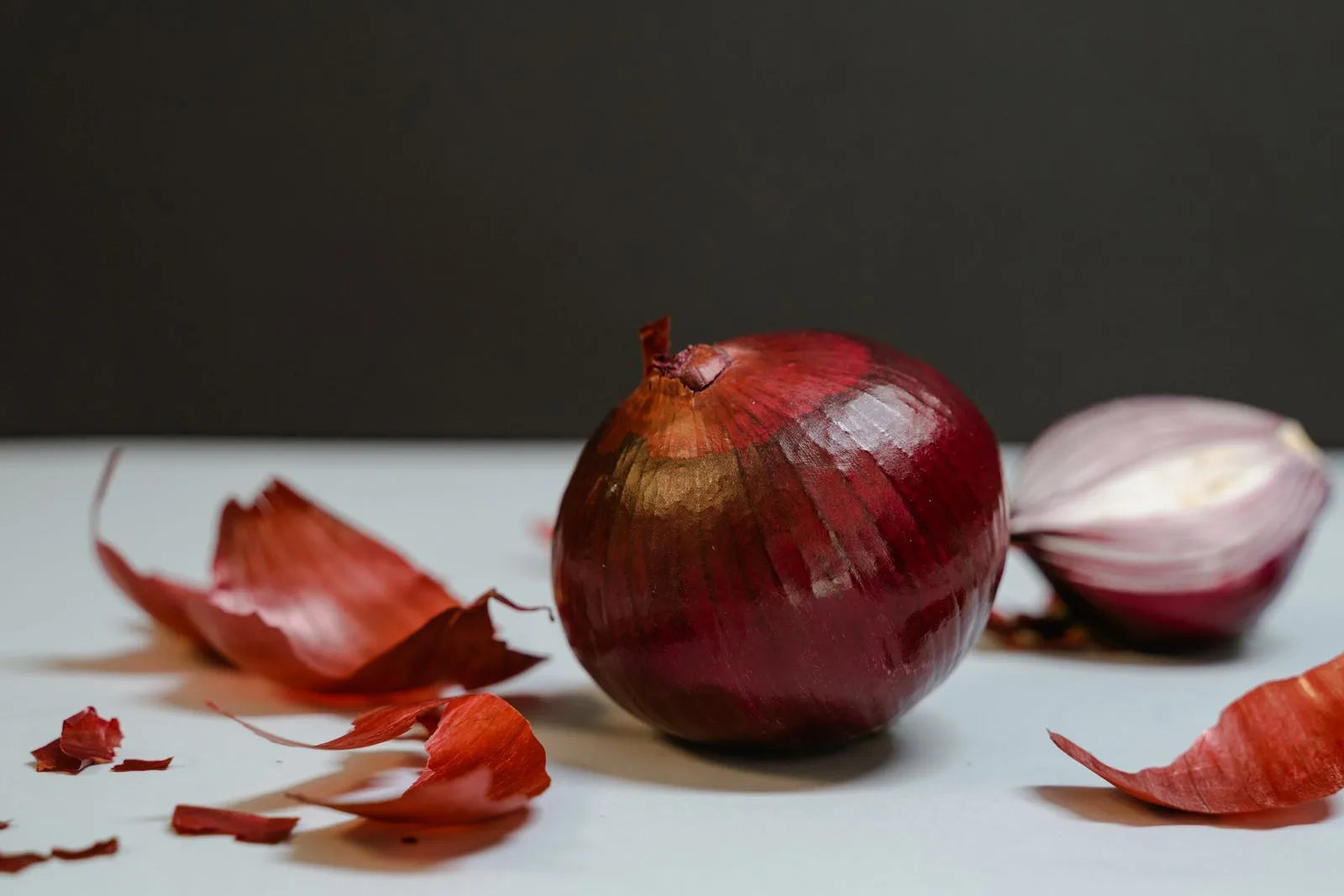
Search "onion juice hair growth" and you will find millions of posts, a bottle of blended onion sitting in someone's kitchen, and confident claims that a vegetable from your pantry can outperform treatments that cost real money. Underneath the trend is one small, genuinely real study that gets cited constantly and understood rarely. Here is what onion juice for hair loss can honestly claim based on the evidence, and where the internet has run well past what that evidence actually says.
Where the Onion Juice Trend Actually Began
Onion juice for hair loss is not a new discovery from a wellness influencer. It has circulated in folk medicine for generations, largely because onions (Allium cepa) are dense in sulfur compounds and have a long history of use in topical remedies for everything from skin infections to scalp irritation. The modern wave of interest, though, traces almost entirely back to a single piece of published research from the early 2000s that keeps getting reposted, reinterpreted, and stripped of its context.
That is the pattern with most kitchen-cabinet hair remedies. A real, peer-reviewed study gets published, it gets picked up by a handful of health blogs, and by the time it reaches a fifteen-second video it has been flattened into "this regrows hair" with none of the details that actually matter. Onion juice happens to be one of the few home remedies where a real clinical study exists at all, which is exactly why it deserves a closer, more honest look rather than a dismissal or a blanket endorsement.
The Study Behind the Headlines
The onion juice study on alopecia patients that everyone references was a small clinical trial testing topical onion juice against a control liquid, applied directly to the scalp twice a day for a period of weeks. Participants who used the onion juice saw new hair growth in patches at a noticeably higher rate than the control group, and the results were striking enough that the paper has been cited in dermatology literature ever since.
That part is real. What gets lost in translation is who those participants actually were. This was not a study of ordinary thinning hair, receding hairlines, or a widening part. It was a study of people with alopecia areata, a specific autoimmune condition that causes sudden, often patchy hair loss and behaves nothing like the gradual, hormone-driven thinning most people are searching for a solution to when they type "onion juice hair growth" into a search bar.
Why the Type of Hair Loss Matters
This distinction is the single most important thing to understand before trying onion juice as a fix for thinning hair, and it is the part almost every viral post skips entirely.
Alopecia areata happens when the immune system mistakenly attacks hair follicles, causing round, well-defined bald patches that can appear and disappear unpredictably. The hair follicles themselves are typically still alive and capable of producing hair once the immune attack subsides, which is part of why a topical irritant like onion juice, thought to stimulate local blood flow and immune activity in the skin, showed a real effect in that population.
Androgenetic alopecia, the pattern hair loss that affects most adults dealing with a receding hairline, thinning crown, or widening part, works through a completely different mechanism. It is driven primarily by DHT (dihydrotestosterone), a byproduct of testosterone that gradually shrinks, or "miniaturizes," genetically sensitive follicles over years. This is the same process behind the Norwood and Ludwig scales used to classify pattern hair loss. There is no clinical evidence that onion juice interrupts DHT's effect on follicles, because the original research was never designed to test that question in the first place.
Key Point
The most-cited onion juice study was conducted on alopecia areata, an autoimmune condition, not on androgenetic (pattern) hair loss. A real result in one condition does not automatically transfer to a completely different cause of hair loss, no matter how often the study gets shared as if it does.
The Sulfur Connection: Why Onions Keep Coming Up
Even with that caveat, there is a legitimate reason onions keep surfacing in hair conversations, and it has less to do with the vegetable itself and more to do with what it contains. Onions are naturally rich in organosulfur compounds, and sulfur is not a minor player in hair biology. Hair is one of the most sulfur-dense tissues in the human body, built largely from keratin proteins that depend on sulfur-containing amino acids like cysteine to form the disulfide bonds that give each strand its structure and strength.
This is where the sulfur hair growth connection actually holds up under scrutiny, even if onion juice itself is a clumsy way to access it. Sulfur amino acid availability matters for keratin production, and a body that is short on the raw materials for keratin will generally produce weaker, more fragile hair. That is a real, well-established piece of biology. It just does not mean that rubbing crushed onion on your scalp is an efficient or pleasant way to deliver it.
It is also worth being honest about the leap here. "Sulfur is important for keratin" and "onion juice regrows pattern hair loss" are two very different claims, and the trend tends to blur them together. The first is supported by basic biology. The second has never actually been tested in the population most readers are trying to help.
What the Research Doesn't Show
Beyond the alopecia areata versus pattern hair loss issue, the underlying research has other limitations worth knowing before you commit to a kitchen regimen.
- The trial was small, involving a few dozen participants rather than the hundreds typically used to establish a treatment's effectiveness with confidence.
- It ran for a matter of weeks, so there is no data on what happens with long-term use, or whether any regrowth held up over months and years.
- Because onion juice has a strong, distinctive smell, participants could likely tell which group they were in, which weakens the blinding that placebo-controlled studies rely on.
- The comparison group used a bland liquid rather than a validated topical treatment, so the study shows onion juice beat "nothing," not that it beat an established option.
- There has been little rigorous follow-up research since, which is unusual for a remedy that gets referenced this frequently.
None of this means the original researchers did bad work, or that the result was fake. It means the result is narrower and more fragile than the version of it that circulates online, and it was never designed to answer the question most people are actually asking.
The Practical Problems With Onion Juice
Setting the science aside for a moment, there are also everyday reasons onion juice is a hard habit to sustain. The smell is strong, lingers on the scalp and pillow, and does not wash out easily with a single shampoo. Blending your own onion at home means there is no consistent concentration from batch to batch, so you have no real way to know how much of the active compounds you are applying, or whether today's batch matches last week's.
Scalp irritation is another common complaint. Raw onion juice is acidic and can cause stinging, redness, or a genuine allergic contact reaction in some people, particularly on skin that is already sensitive or has small breaks from scratching. There is also the simple matter of adherence. A remedy that requires blending a fresh onion, straining the juice, and applying it twice a day for weeks is far less likely to actually get used consistently than something built into an existing routine, and consistency is the one variable that matters more than almost anything else in hair care.
A More Complete Approach to Thinning Hair
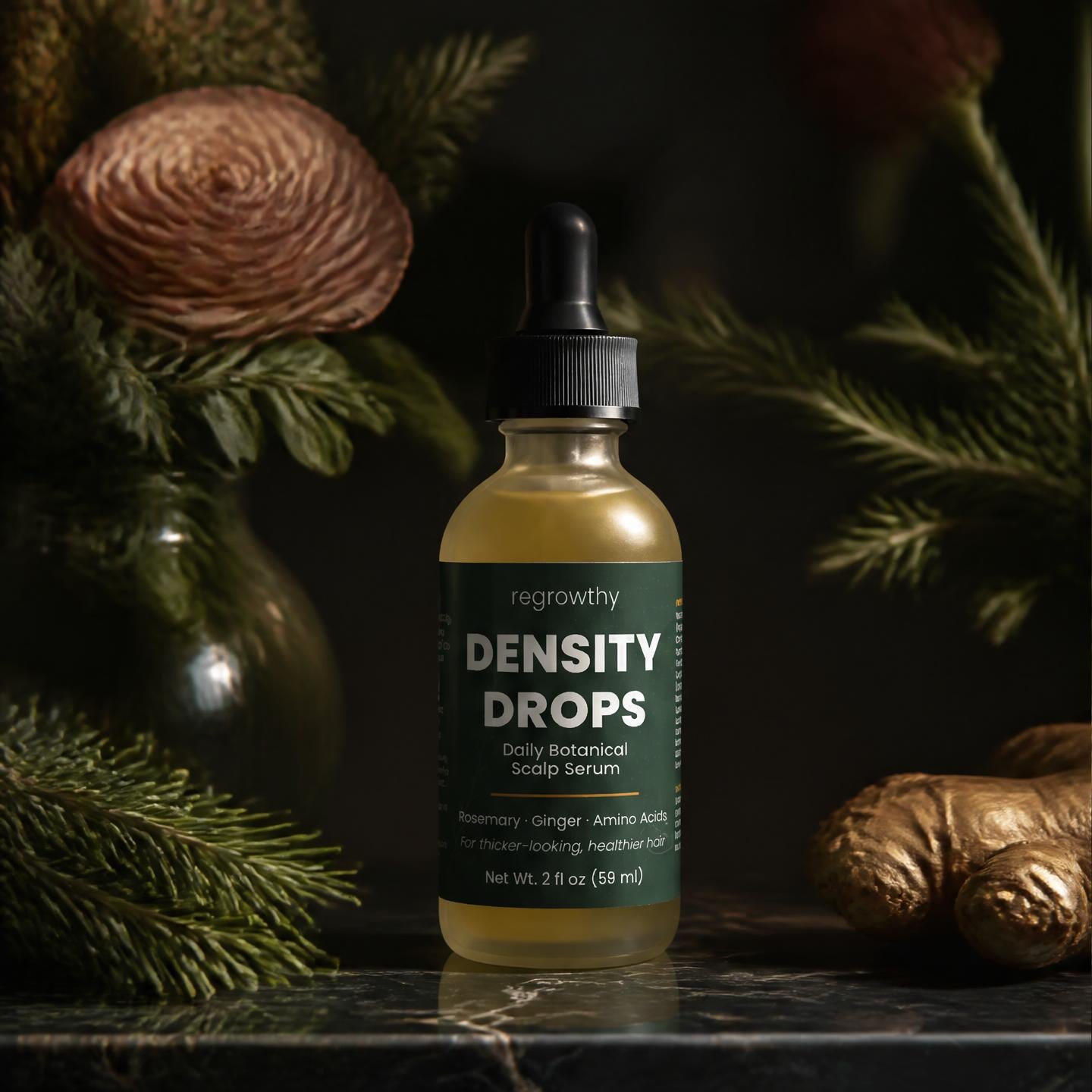
If the honest takeaway from the sulfur hair growth research is that sulfur amino acids support keratin production, the more useful question is how to get that support without the mess, the smell, or the guesswork of a kitchen preparation. This is where formulated options tend to make more sense than raw produce. MSM, a stable sulfur-donor compound, delivers a consistent, measured dose of the same nutrient category onions are prized for, without the odor or the irritation risk. Regrowthy's Density Drops were formulated with this kind of targeted, absorbable nutrient support in mind, aimed at people managing ordinary pattern thinning rather than an autoimmune condition.
It is also worth remembering that nutrient support, whether from sulfur compounds, biotin, or other cofactors, addresses one piece of a much larger picture. Since androgenetic hair loss is driven largely by DHT's effect on follicles over time, a more complete routine usually pairs nutritional support with something that addresses the follicle itself. A Laser Therapy Cap, for instance, uses low-level red light to stimulate cellular activity in the scalp and support existing follicles, working through an entirely different mechanism than any topical juice or supplement. Comparing single, unproven remedies against layered, purpose-built approaches is often the clearest way to see why trends like isolated nutrient fixes tend to disappoint on their own.
None of this is about dismissing home remedies out of hand. Onion juice earned its reputation because a real study produced a real result, and that is more than most viral hair hacks can say. But that result belongs to a specific autoimmune condition, tested under specific conditions, over a specific and fairly short window of time. If your hair loss looks like a receding hairline, a thinning crown, or an overall reduction in density rather than sudden round patches, the science simply was not built to speak to your situation. Understanding that difference is what separates a remedy worth trying from a headline worth sharing, and it is the difference between chasing a trend and actually addressing the reason your hair is thinning in the first place.
From the routine
Mentioned in this article

Common questions
Frequently asked questions
Does onion juice actually help hair growth?+
What is the sulfur hair growth connection everyone talks about?+
How do people typically apply onion juice for hair loss?+
Is onion juice safe to use on the scalp?+
What's a better option if I want the sulfur benefit without the mess?+
Should I stop other hair loss treatments if I try onion juice?+
The Regrowthy System
Ready to start regrowing at home?
Hands-free. Non-prescription. 660nm clinical wavelength, backed by a 30-day guarantee.
Continue Reading
Ingredient Science
MSM for Hair Growth: What the Sulfur Compound Actually Does
9 min read
Ingredient Science
Copper Peptides for Hair Growth: The Follicle Signaling Science
9 min read
Ingredient Science
Rosemary Oil for Hair Growth: What the Research Actually Shows
9 min read
Ingredient Science