Ingredient Science
Argan Oil for Hair: What It Can and Cannot Do
Argan oil is one of the most talked about hair ingredients on the internet, but does it actually grow hair or just make it look better? Here is what the evidence really shows.
Updated July 1, 2026
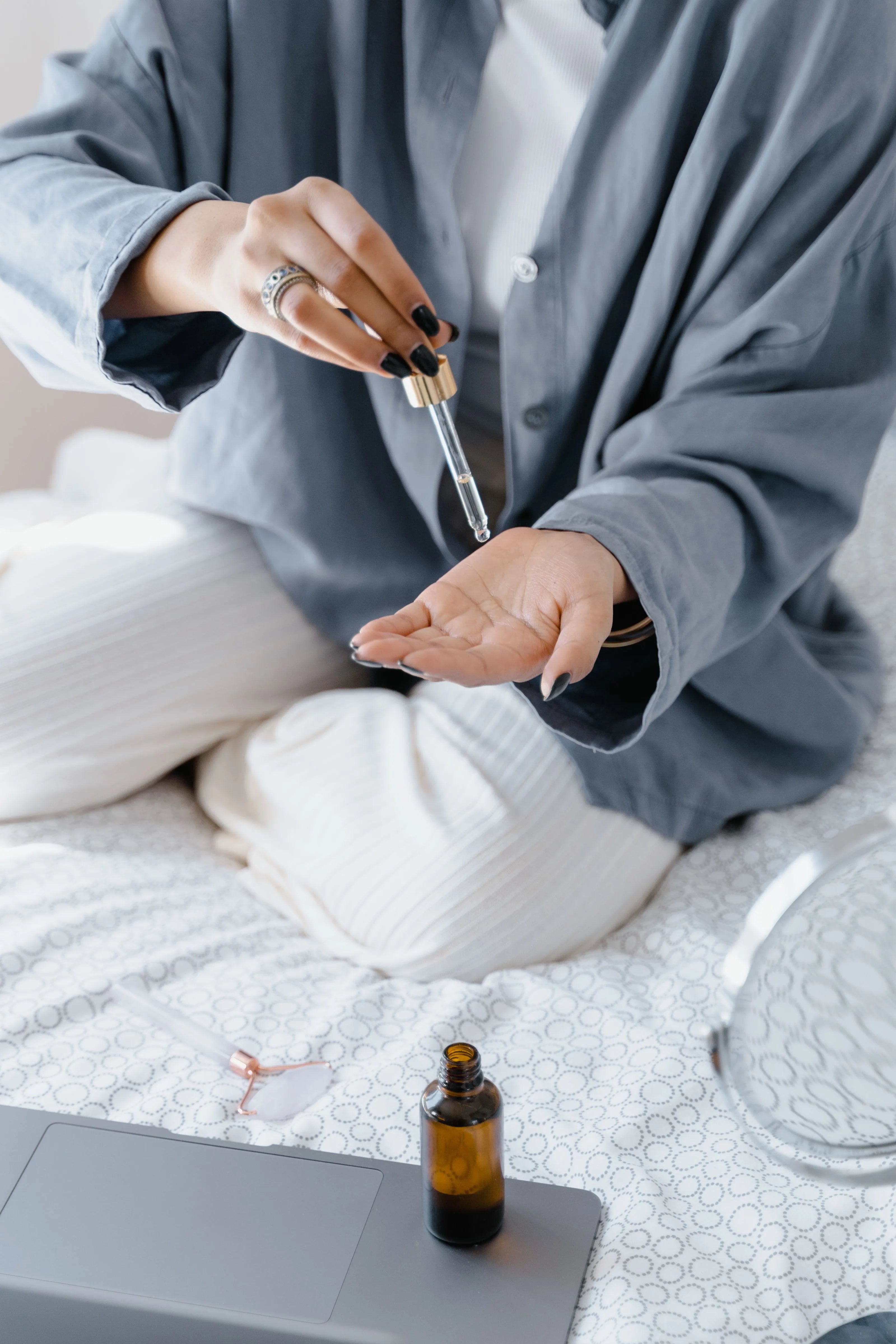
Walk down any hair care aisle and you'll see it on half the bottles: argan oil. It's marketed as a fix for frizz, dullness, breakage, and, increasingly, hair loss itself. If you've been dealing with thinning hair and you're wondering whether that little bottle of golden oil is worth adding to your routine, or whether it's being oversold, you're asking the right question. The honest answer is that argan oil is genuinely useful for certain things and completely irrelevant to others. This article separates the two.
Argan oil for hair has become one of the most searched cosmetic ingredients of the past decade, largely thanks to smart marketing out of Morocco and a genuine cosmetic benefit that people can feel the first time they use it. But there's a difference between a product that makes your hair look and feel healthier and a product that regrows hair you've lost to a hormonal or follicular process. Understanding that difference will save you money, time, and false hope.
We'll walk through what argan oil actually is, what it can realistically do for your hair and scalp, why the argan oil hair growth myth persists despite a lack of supporting evidence, and what a more complete, evidence-minded approach to thinning hair actually looks like.
What Is Argan Oil, Exactly?
Argan oil is pressed from the kernels of the argan tree (Argania spinosa), a species native almost exclusively to southwestern Morocco. For generations, Berber communities in the region have extracted the oil by hand for cooking and skin care, and it has since become a global cosmetic export, often labeled as moroccan oil hair treatment in Western markets.
Chemically, argan oil is rich in oleic and linoleic fatty acids, along with vitamin E (tocopherols) and a range of plant sterols and polyphenols. This composition is what gives it emollient, antioxidant, and mild anti-inflammatory properties on skin and hair shafts. It's a genuinely well-studied oil in the context of skin barrier function and cosmetic hair conditioning, which is part of why it earned its popularity in the first place.
What it is not is a hormonal, follicular, or cellular intervention. Argan oil doesn't reach the dermal papilla, doesn't interact with androgen receptors, and has no established mechanism for influencing the hair growth cycle at the follicle level. That distinction matters enormously once you start comparing marketing claims to what the oil is actually capable of doing.
What Argan Oil Can Actually Do for Hair
To be fair to the ingredient, argan oil earns its reputation for a reason. Its benefits are real, just cosmetic and structural rather than biological. Here's what it's genuinely good for:
- Reducing frizz and adding shine: The fatty acid profile coats the hair cuticle, smoothing the outer layer so light reflects more evenly. This is the most immediate and noticeable effect people report.
- Improving manageability: A light coating of oil reduces friction between strands, which can make hair easier to detangle and style.
- Reducing split ends and breakage: By conditioning the hair shaft and reducing moisture loss, argan oil can help protect existing hair from mechanical damage, which matters more than people realize when hair is already thinning and fragile.
- Calming a dry, flaky scalp: The fatty acids and mild anti-inflammatory compounds can soothe surface-level scalp dryness, which may reduce the itch-scratch cycle that contributes to unnecessary hair shedding.
- Protecting against heat and environmental damage: A thin layer of oil can act as a partial barrier against heat styling and UV exposure, both of which weaken the hair shaft over time.
All of these benefits share a common thread: they act on the hair shaft, the part of the hair that is already dead keratin protein sitting above the scalp. That's an important detail, because it explains exactly where argan oil's benefits stop.
Key Point
Argan oil conditions and protects the hair shaft you already have. It has no established mechanism for stimulating new growth at the follicle, because the follicle lives beneath the scalp where a topical oil applied to strands never really reaches in a biologically meaningful way.
The Argan Oil Hair Growth Myth
If you've searched for argan oil hair growth myth content online, you've probably noticed a strange pattern: a lot of blogs claim argan oil "stimulates follicles" or "increases blood flow to the scalp," but almost none of them cite anything beyond anecdote or each other. That's usually a sign you're looking at a marketing claim that got repeated so many times it started to sound like established fact.
Hair loss from conditions like androgenic alopecia is driven by a very specific mechanism: the hormone DHT binds to androgen receptors in genetically susceptible follicles and gradually shrinks them over successive growth cycles, a process called miniaturization. Reversing or slowing that process requires an intervention that either blocks DHT's effect at the follicle, stimulates cellular energy production in the follicle itself, or otherwise interrupts that specific biological pathway.
Argan oil does none of these things. It has no documented effect on DHT, no established interaction with androgen receptors, and no clinical research showing it increases hair density, hair count, or follicle activity in people with pattern hair loss. The confusion largely stems from three overlapping but different ideas getting merged into one: hair looking thicker (a coating effect), hair breaking less (a shaft-protection effect), and hair actually growing more (a follicular effect). Argan oil can plausibly deliver the first two. It has no credible basis for the third.
This is worth being blunt about, because if you're dealing with genuine thinning, believing a cosmetic oil is "handling it" can cost you months or years of delay before you try something that actually addresses the underlying cause.
What the Research Actually Shows
Cosmetic science research on argan oil focuses almost entirely on skin barrier function, moisture retention, and hair fiber protection, not follicular stimulation. Studies looking at argan oil's fatty acid and antioxidant content generally support its use as an emollient and conditioning agent, consistent with what generations of traditional use already suggested.
What you won't find is a body of dermatology research demonstrating that argan oil increases hair count, reduces shedding from androgenic alopecia, or outperforms established treatments in a clinical trial setting. That's very different from ingredients that do have this kind of research behind them. Red light therapy at the 660 nanometer wavelength, for instance, has clinical research supporting increased cellular energy production in the follicle. Certain topical botanicals, like rosemary oil, have been studied specifically in the context of hair density and compared against pharmaceutical treatments in small trials. Argan oil simply hasn't been studied in that way, because its chemistry doesn't suggest it would behave that way in the first place.
None of this makes argan oil a bad product. It makes it a cosmetic conditioning oil being marketed, in some corners of the internet, as something it was never designed or shown to be. A review of the science on hair growth interventions consistently separates ingredients into two buckets: those that act on the visible hair shaft, and those with a plausible or proven mechanism at the follicle. Argan oil sits firmly in the first bucket.
Moroccan Oil Hair Products: Marketing vs. Reality
The commercial success of moroccan oil hair products deserves a mention here, because it shapes how people think about the ingredient. Many of these product lines built their reputation on genuinely good formulation for shine, softness, and frizz control, and then, as the brand grew, marketing copy started drifting toward vaguer wellness and "healthy hair growth" language that implies more than the formula delivers.
This is a common pattern in the hair care industry generally: a real, modest benefit gets stretched with language until it sounds like it addresses a problem it was never formulated for. It's worth reading ingredient lists and marketing claims with a slightly skeptical eye. If a product's main active ingredient is an oil with no follicular mechanism, claims about regrowth or density should be treated as aspirational marketing language rather than a documented result.
That skepticism isn't meant to talk you out of using argan oil products. If you like how they make your hair look and feel, that's a perfectly valid reason to keep using them. Just hold two separate budgets in your head: one for cosmetic hair care that makes existing hair look its best, and a separate one for anything you're using specifically to address thinning or loss at the root.
How to Actually Use Argan Oil on Thinning Hair
If you want to keep argan oil in your routine for its legitimate benefits while you address thinning through other means, a few practical guidelines help:
- Apply it to the lengths and ends, not the scalp. Thinning hair is often more fragile along the shaft. Focus the oil where breakage protection actually matters, and avoid saturating the scalp, where excess oil can clog follicle openings and attract more product buildup than a thinning scalp needs.
- Use a small amount. A few drops warmed between the palms is enough for most hair lengths. More oil doesn't mean more benefit, it usually just means limper, greasier-looking hair.
- Don't skip washing your scalp. A clean scalp environment matters more for thinning hair than most people assume, since buildup and inflammation can aggravate shedding. A gentle, purpose-built scalp wash like Dense Cleanse keeps the scalp clear without stripping it, which pairs well with an occasional argan oil treatment on the lengths.
- Treat it as maintenance, not a treatment plan. Think of argan oil the way you'd think of a good moisturizer: it keeps what you have looking its best. It isn't a substitute for anything that addresses the biological cause of thinning.
Used this way, argan oil is a sensible, low-risk addition to a hair care routine. The problem only arises when it's asked to do a job it was never built for.
What Actually Targets the Cause of Thinning
If your goal is genuinely to slow, stop, or reverse thinning rather than just make your existing hair look better, it helps to understand the mechanisms that are actually implicated in hair loss and to look for interventions built around them. Two things happen simultaneously in most cases of pattern thinning: DHT gradually miniaturizes follicles, and the follicles themselves lose some of the cellular energy and nutrient supply they need to produce strong, thick hairs.
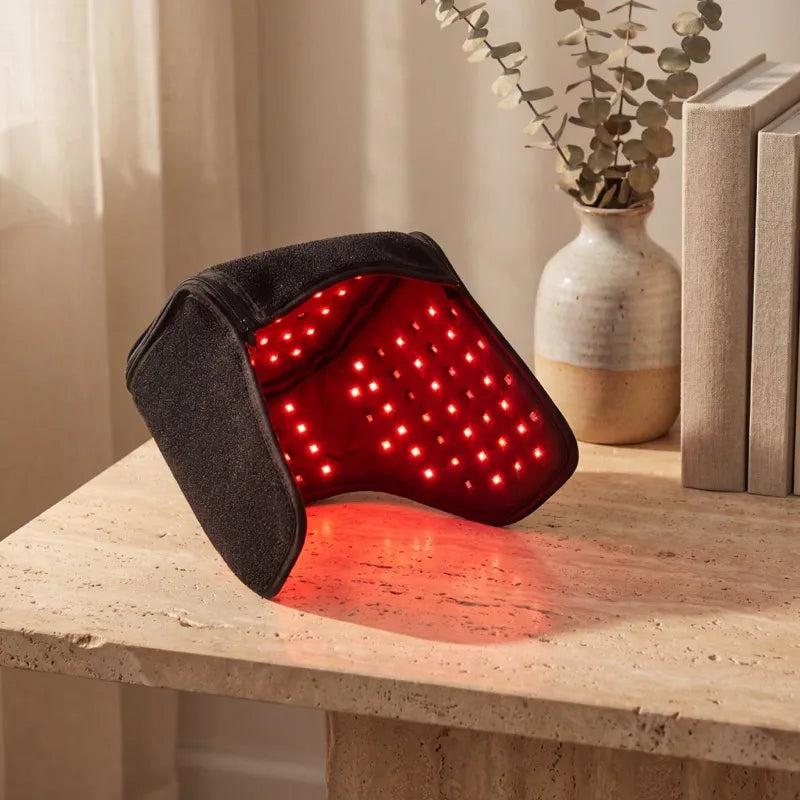
Photobiomodulation, delivered through devices like the Laser Therapy Cap, works at the 660nm wavelength to stimulate mitochondrial activity within follicle cells, which is a mechanism with a real, if still developing, evidence base behind it. That's a fundamentally different category of intervention than a conditioning oil, because it's aimed at the follicle rather than the visible strand.
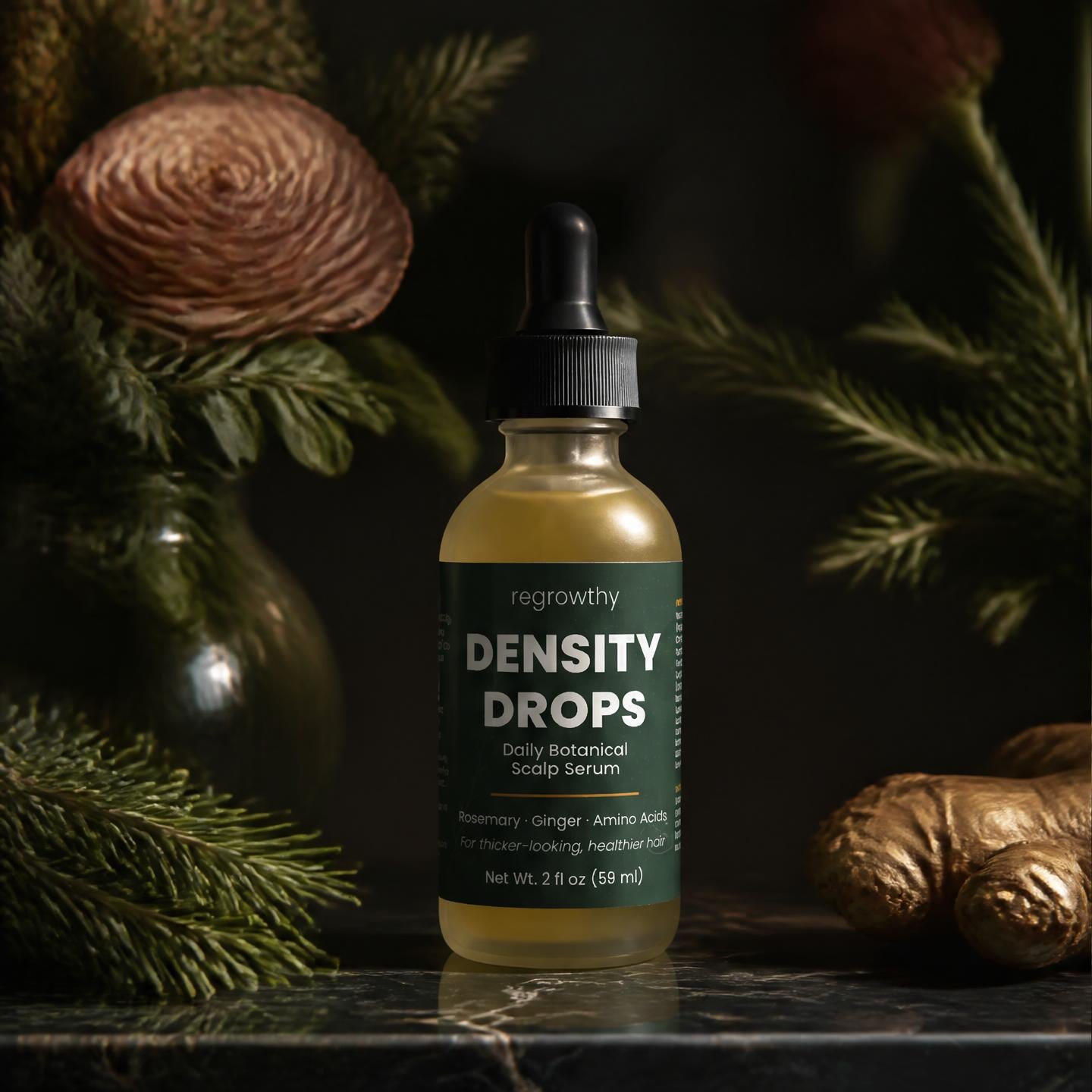
On the nutritional and topical side, formulations that combine multiple actives with more direct relevance to the scalp and follicle environment, such as Density Elixir, are built around ingredients chosen for a plausible connection to scalp health and follicle support rather than shaft conditioning alone. This is also where ingredients like saw palmetto tend to come up, since it has a proposed (though still modest) mechanism related to DHT activity, unlike argan oil, which has none.
The honest takeaway is that a comprehensive approach to thinning hair usually needs to address the follicle and the hormonal environment directly, not just the appearance of the hair you already have. Argan oil can be part of a routine. It shouldn't be mistaken for the whole plan. If you're trying to figure out where various natural ingredients fit into that bigger picture, our breakdown of the evidence behind onion juice for hair growth covers a similar case: a home remedy with a plausible mechanism that gets oversold well beyond what the research supports.
None of this is meant to dismiss argan oil outright, and it's certainly not meant to shame anyone who enjoys it as part of their hair care routine. It's a genuinely pleasant, well-tolerated oil with real cosmetic benefits, and there's nothing wrong with using it for exactly that. The goal here is simply to make sure you're not relying on it to do a job it was never designed to do. If you're noticing real thinning, not just dry ends or frizz, that distinction is the difference between a routine that maintains your hair and one that actually gives your follicles a fighting chance.
From the routine
Mentioned in this article
Common questions
Frequently asked questions
Does argan oil help with hair growth or hair loss?+
Is the argan oil hair growth myth completely false, or is there some truth to it?+
Can I use argan oil on my scalp if I have thinning hair?+
What's the difference between argan oil and moroccan oil products for hair?+
Should I stop using argan oil if I'm trying to regrow hair?+
Why do so many hair care brands market argan oil as a growth solution?+
The Regrowthy System
Ready to start regrowing at home?
Hands-free. Non-prescription. 660nm clinical wavelength, backed by a 30-day guarantee.
Continue Reading
Ingredient Science
Onion Juice for Hair Growth: Separating the Study from the Trend
8 min read
Ingredient Science
MSM for Hair Growth: What the Sulfur Compound Actually Does
9 min read
Ingredient Science
Rosemary Oil for Hair Growth: What the Research Actually Shows
9 min read
Ingredient Science