Ingredient Science
Silica and Horsetail Extract for Hair: What the Research Shows
Silica and horsetail extract show up in nearly every hair supplement on the shelf, but does the science actually back it up? Here is an honest look at what these ingredients can, and cannot, do for thinning hair.
Updated July 1, 2026
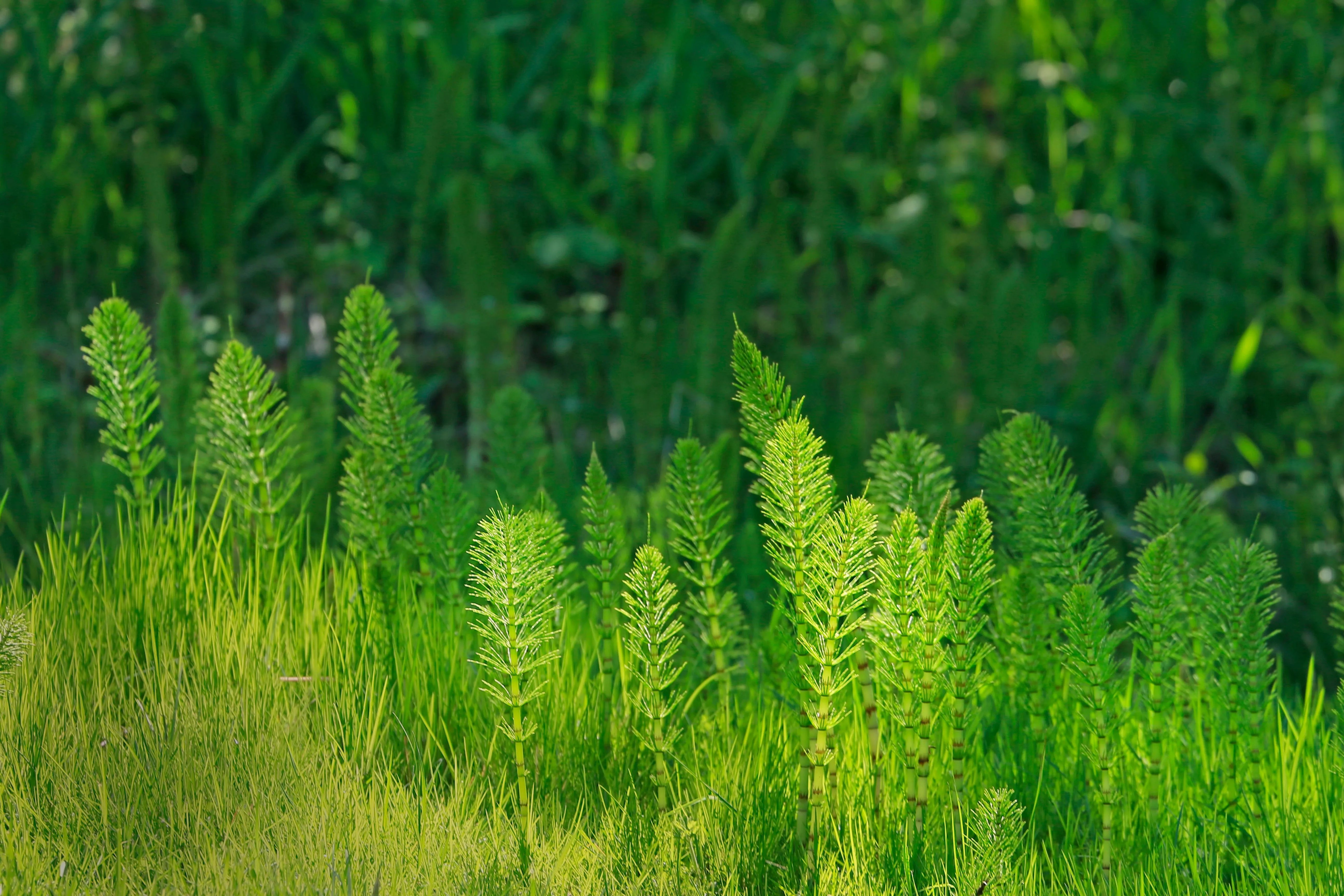
Walk down the hair supplement aisle and you will see silica and horsetail extract listed on nearly every label, often right next to biotin. The pitch is always some version of "stronger, thicker hair from the inside out." But silica for hair growth is one of those claims that gets repeated so often it starts to sound like settled science, when the real picture is more nuanced. Here is what silica and horsetail extract actually do, what the research supports, and where they realistically fit into a hair care routine.
What Is Silica, and Why Does It Matter for Hair?
Silica, or silicon dioxide, is a trace mineral found throughout the body, concentrated in connective tissue, bone, skin, nails, and hair. It is not considered an essential nutrient in the same way iron or vitamin D are, but researchers have long noted that tissues undergoing active growth and repair, like the dermis and the hair follicle, tend to contain higher concentrations of silicon than tissues that are not.
The theory behind silica for hair growth is straightforward: silicon appears to play a supporting role in the enzymatic processes that build collagen and keratin, the two structural proteins that make up most of a hair strand and the follicle that produces it. Less clear is whether taking silica as a supplement meaningfully changes how much silicon reaches the scalp, or whether most people already get enough through food. That distinction matters, and it is the thread running through most of the research on this ingredient.
Horsetail Extract: Nature's Concentrated Silica Source
Horsetail (Equisetum arvense) is a primitive, non-flowering plant that has been used in traditional herbal medicine for centuries, mostly for wound care, urinary tract support, and connective tissue complaints. What sets it apart from other botanicals is its unusually high mineral content. Horsetail extract for hair supplements is popular specifically because the plant absorbs and stores silica at levels far above most other plants, making it one of the more concentrated natural sources available.
This is why horsetail shows up so consistently in "hair, skin, and nails" formulas rather than being sold as a silica supplement on its own. It delivers silicon in a plant-based, historically used form, which appeals to people who prefer botanical ingredients over synthetic mineral compounds. That said, historical use is not the same as clinical proof, and any horsetail supplement for hair should be evaluated on its own evidence, not just its reputation.
The Science Connecting Silica to Hair Strength
Most of the research on silica and hair does not measure hair growth directly. Instead, it looks at silica hair strength markers such as tensile strength, elasticity, and resistance to breakage. Some small clinical studies on oral silicon supplementation have reported improvements in hair thickness and reduced brittleness over several months of use, alongside parallel improvements in skin and nail quality. Dermatology researchers have proposed that this happens because silicon supports the crosslinking of collagen fibers, which indirectly stabilizes the connective tissue sheath surrounding each hair follicle.
It is worth being honest about the limits here. The available studies tend to be small, sometimes industry funded, and focused on general hair and nail quality in people without a diagnosed hair loss condition, rather than on people experiencing androgenetic alopecia specifically. That does not mean the ingredient is useless, but it does mean the evidence supports "may help hair resist breakage and appear fuller" far more strongly than it supports "regrows lost hair."
Key Point
Silica and horsetail extract are best understood as structural support for the hair you already have, helping strands resist breakage and appear thicker, rather than as a treatment that reverses follicle miniaturization or blocks hormonal hair loss.
Silica, Collagen, and the Hair Shaft Connection
To understand why silica keeps coming up alongside collagen, it helps to look at how collagen is actually built. Collagen synthesis depends on enzymes that hydroxylate the amino acids proline and lysine, a step that gives collagen its strength and structure. Some research suggests silicon acts as a supporting cofactor in this process, which is one reason silica and collagen ingredients are so often formulated together rather than sold separately.
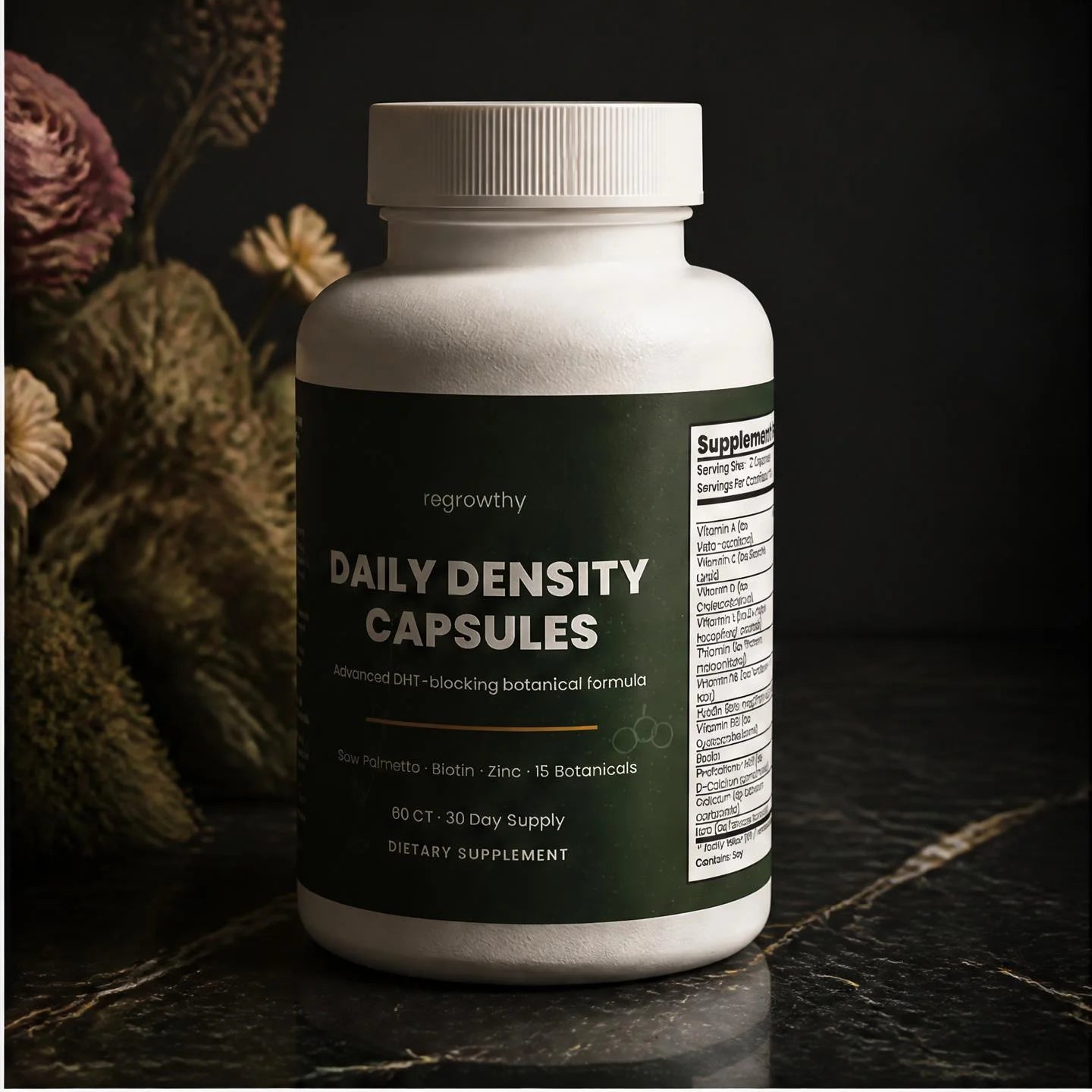
This is also why biotin is frequently paired with both silica and collagen peptides in hair supplement stacks: each nutrient supports a different part of the same structural pathway rather than duplicating the others. Density Collagen Peptides is built around this same logic, supplying the amino acid building blocks (glycine, proline, hydroxyproline) that collagen synthesis requires, while silica-rich ingredients like horsetail support the enzymatic side of that process. Neither one works in isolation, and neither replaces the other.
What Silica Can't Do for Pattern Hair Loss
This is the section that matters most if thinning, not just brittleness, is your actual concern. The most common cause of progressive hair loss in both men and women is androgenetic alopecia, driven by the hormone DHT binding to receptors in genetically sensitive follicles and gradually shrinking them, a process known as miniaturization. Silica and horsetail extract do not interrupt that hormonal pathway. They do not lower it, they do not block its receptor, and they do not reverse a follicle that has already started to shrink.
This is not a knock against the ingredients, it is just an honest description of what they are for. A mineral that supports collagen crosslinking is a structural nutrient, not a hormonal one. If miniaturization and shedding are the main issue, the more relevant tools are ones that address blood flow and follicle stimulation directly, which is the entire premise behind a device like the Laser Therapy Cap: low level red light delivered to the scalp to support cellular energy production in the follicle itself, rather than in the surrounding connective tissue. Silica and a light-based device are solving different problems, and for someone dealing with real thinning, relying on silica alone is unlikely to be enough on its own.
How to Add Silica and Horsetail to Your Routine
If you want more silica in your diet before reaching for a supplement, it shows up naturally in oats, whole grains, leafy greens, bananas, green beans, cucumbers, and bell peppers. Interestingly, beer is also one of the more concentrated dietary sources of soluble silica, thanks to the barley and hops used to brew it, though obviously not a source anyone should lean on for hair health.
For a horsetail supplement for hair, look for extracts standardized to a specific silica percentage rather than plain dried herb, since standardization is the only real way to know roughly how much active mineral you are getting per dose. These typically come as capsules or liquid tinctures and are commonly combined with biotin, zinc, and collagen peptides in "hair, skin, and nails" formulas. Keeping the scalp itself clean and free of product buildup also matters for the environment those strands are growing out of, which is part of why a purpose-built scalp wash is worth pairing with an internal supplement routine rather than treating supplementation as the whole strategy.
Consistency matters more than dose size with an ingredient like this. Collagen and keratin turnover happen on a timescale of months, not days, so most people evaluating whether horsetail extract for hair is doing anything should expect to wait at least three to four months before drawing conclusions, the same patience required with other slow-acting botanicals like pumpkin seed oil.
Safety, Dosage, and Precautions
Silica and standardized horsetail extract are generally well tolerated at typical supplement doses, but there are a few things worth knowing before you start. Raw horsetail contains an enzyme called thiaminase, which can break down vitamin B1 (thiamine) in the body. Reputable manufacturers process horsetail extract specifically to reduce this enzyme's activity, which is one more reason to buy a standardized extract from a transparent brand rather than loose dried herb of unknown origin.
Horsetail also has a mild traditional diuretic effect, so it is worth talking to a doctor before combining it with prescription diuretics, lithium, or other medications where fluid and electrolyte balance is a concern. It is generally not recommended during pregnancy or breastfeeding due to limited safety data, and anyone with kidney issues should check with a physician first. As with any supplement, more is not better, so stick to the labeled dose rather than assuming a higher amount will speed up results.
- Choose a horsetail extract standardized to a specific silica content, not raw dried herb
- Give it three to four months before judging whether it is making a difference
- Check with a doctor first if you take diuretics, take lithium, or are pregnant or breastfeeding
- Pair it with collagen support and scalp care rather than expecting it to work alone
Silica and horsetail extract have earned their place in hair supplement formulas, but earned is the operative word, not proven beyond question. The honest summary is that they offer modest, plausible support for hair strength and the collagen infrastructure surrounding each follicle, especially when paired with the right amino acids and a clean scalp environment. What they are not is a substitute for addressing the hormonal or circulatory drivers of pattern thinning. Used with realistic expectations, as one part of a broader routine rather than the whole plan, they are a reasonable, low-risk addition for anyone focused on hair that feels stronger and looks fuller over time.
From the routine
Mentioned in this article
Common questions
Frequently asked questions
Does silica actually regrow hair, or just make it stronger?+
How long does it take to see results from horsetail extract for hair?+
Is horsetail extract safe to take every day?+
Can I get enough silica from food instead of a supplement?+
Should I pair silica and horsetail with other hair supplements?+
Will silica help with hormonal hair loss like androgenetic alopecia?+
The Regrowthy System
Ready to start regrowing at home?
Hands-free. Non-prescription. 660nm clinical wavelength, backed by a 30-day guarantee.
Continue Reading
Ingredient Science
Green Tea EGCG for Hair Growth: The Antioxidant Science
9 min read
Ingredient Science
Pumpkin Seed Oil for Hair Loss: What the Studies Actually Found
9 min read
Ingredient Science
Rosemary Oil for Hair Growth: What the Research Actually Shows
9 min read
Ingredient Science