Ingredient Science
Pumpkin Seed Oil for Hair Loss: What the Studies Actually Found
A single clinical trial is doing a lot of heavy lifting in pumpkin seed oil's hair loss reputation. Here is what that study actually measured, what it didn't, and what a realistic dose looks like.
Updated July 1, 2026
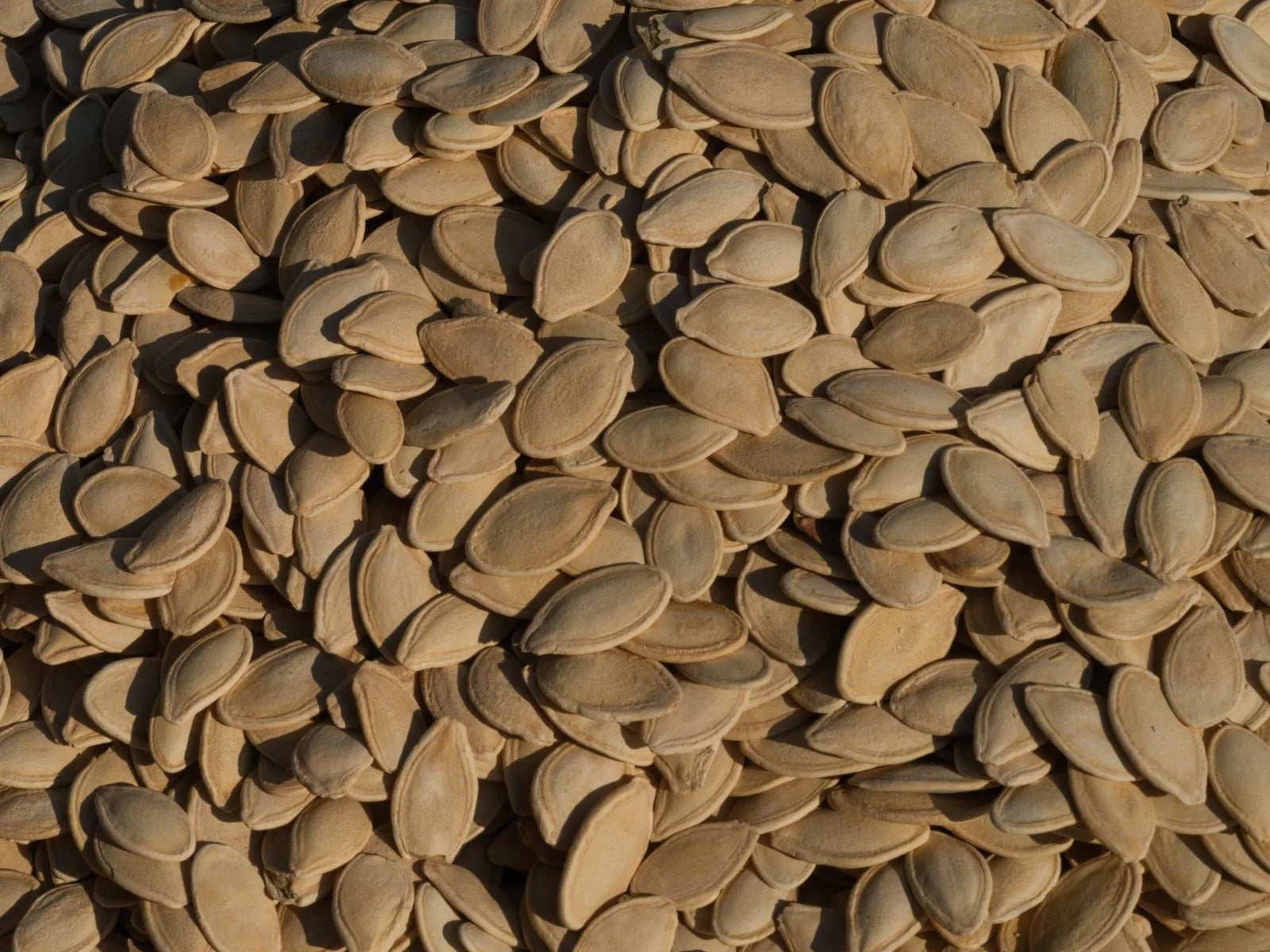
If you've spent any time researching natural options for thinning hair, you've probably run into a claim that sounds almost too clean: pumpkin seed oil grew back 40% more hair in a clinical trial. It gets repeated on supplement labels, in forum threads, and across dozens of blog posts, usually without much context about where that number actually came from. So let's look at the real study behind pumpkin seed oil hair loss claims, what it measured, what it left unanswered, and what a sensible dose actually looks like if you're considering it.
Pumpkin seed oil isn't a new discovery. It's been used in traditional medicine for urinary and prostate health for generations, largely because of its concentration of plant sterols, most notably beta-sitosterol. The jump from "prostate health" to "hair health" isn't as random as it sounds, because both conditions are tied to the same hormone pathway: the conversion of testosterone into dihydrotestosterone, or DHT. That shared mechanism is exactly why researchers eventually decided to test pumpkin seed oil directly against androgenetic alopecia, the medical term for typical pattern hair thinning.
Where the Claim Comes From
Almost every article, product page, and forum post citing a "40% increase" for pumpkin seed oil hair loss is referencing one specific pumpkin seed oil study: a randomized, double-blind, placebo-controlled trial published in a peer-reviewed complementary medicine journal, conducted on men with mild to moderate androgenetic alopecia. This is a genuinely well-designed study format, the kind of trial structure used to evaluate real pharmaceuticals, which is part of why the results got so much attention in the hair loss community.
That said, it's worth being upfront about something the internet tends to gloss over: this is essentially the only clinical trial of its kind on pumpkin seed oil and hair growth. There isn't a large body of follow-up research confirming or expanding on it. One well-conducted study is meaningfully better than zero studies, but it's still a single data point, not a settled scientific consensus. Treat it as promising early evidence rather than proof.
The 2014 Study in Detail
The trial enrolled 76 men with mild to moderate pattern hair loss and split them into two groups. One group took 400 mg of pumpkin seed oil daily, and the other took a placebo. Neither the participants nor the researchers scoring the results knew who was in which group, which is the standard for eliminating bias. The trial ran for 24 weeks, about six months, which is a reasonable window for evaluating hair growth changes since hair cycles are slow to begin with.
At the end of the study period, researchers measured hair counts using standardized photography of a marked scalp area, along with self-rated satisfaction and improvement scores from the participants themselves. The pumpkin seed oil group showed meaningfully more hair at 24 weeks compared to baseline, and the difference between the treatment group and the placebo group was statistically significant. Reported figures put the pumpkin seed oil group's hair count increase at roughly 40%, versus roughly 10% in the placebo group. Side effects were minimal, and the oil was generally well tolerated across the study period.
Key Point
The one existing pumpkin seed oil study used 400 mg per day for 24 weeks, in oral capsule form, on men with mild to moderate hair thinning. Results outside that specific dose, duration, and population haven't been formally tested.
It's also worth noting that this was an oral capsule of concentrated pumpkin seed oil, not a topical oil applied directly to the scalp. A lot of the pumpkin seed oil products marketed for hair today are topical serums or scalp oils, which is a different delivery method entirely from what the actual research tested. That distinction matters more than most marketing copy lets on.
Pumpkin Seed Oil and DHT
To understand why pumpkin seed oil was tested for hair loss in the first place, it helps to understand the basic biology of pattern thinning. Androgenetic alopecia is driven largely by DHT, a byproduct created when the enzyme 5-alpha reductase converts testosterone into a more potent androgen. In genetically susceptible hair follicles, DHT binds to receptors and gradually shrinks the follicle in a process called miniaturization, shortening the growth phase of the hair cycle with each cycle that passes. Over years, follicles that once produced thick terminal hairs start producing thinner, shorter, more fragile ones, and eventually many stop producing visible hair altogether. This is the same basic pathway that prescription treatments like finasteride target, just through a much more potent and specific mechanism.
This is where the pumpkin seed oil DHT connection comes in. Pumpkin seeds are rich in phytosterols, particularly beta-sitosterol, a plant compound that has been studied for its ability to interfere with 5-alpha reductase activity. Less active 5-alpha reductase means less testosterone gets converted into DHT, which in theory reduces the hormonal pressure on sensitive follicles. This is broadly the same category of action attributed to other plant-derived ingredients like rosemary oil and saw palmetto, both of which show up frequently alongside pumpkin seed oil in natural DHT-blocker discussions.
The important caveat: the exact mechanism in humans hasn't been fully mapped out. The 5-alpha reductase inhibition theory is grounded in laboratory and animal research on beta-sitosterol, and it's a plausible explanation for what the human trial observed, but the 2014 study itself didn't include scalp biopsies or hormone panels confirming that DHT levels actually dropped in the treatment group. The researchers observed a real result: more hair. The "why" is an educated, biologically reasonable theory, not a directly confirmed pathway.
What the Study Didn't Show
Being evidence-minded means being honest about limitations, not just repeating the favorable headline number. Here's what a careful read of the research actually tells you it didn't establish:
- It didn't test women, so there's no direct clinical data on pumpkin seed oil for female pattern hair loss, which often has different underlying hormonal drivers.
- It didn't compare pumpkin seed oil head-to-head against finasteride, minoxidil, or other established treatments, so we can't say how it stacks up in relative effectiveness.
- It didn't confirm the DHT-blocking mechanism directly in the human participants through bloodwork or scalp tissue analysis.
- It was a single trial with 76 participants, a modest sample size by clinical research standards, and it hasn't been independently replicated at scale.
- It only ran 24 weeks, so there's no long-term data on whether results are maintained, plateau, or reverse if supplementation stops.
None of this means the finding is worthless. It means "pumpkin seed oil grew 40% more hair" is a fair summary of one real trial's result, not a guarantee of what will happen for any individual person. Dermatology research in general tends to build confidence through repeated, varied studies over time, and pumpkin seed oil simply hasn't had that volume of scrutiny yet.
Dosage: What the Research Used
If you're going to try pumpkin seed oil for hair loss based on the existing evidence, the most defensible approach is to mirror what was actually studied rather than guessing. The clinical trial used 400 mg of pumpkin seed oil per day, taken orally as a capsule, consistently, for a full 24-week period. That's the entire pumpkin seed oil dosage hair evidence base currently available: one dose, one form, one duration.
A few practical points follow from that:
- Oral, not topical, is what was tested. If your goal is to replicate the study's conditions, a capsule form matches the research more closely than a scalp oil or serum, even though topical products are heavily marketed for hair.
- Consistency matters more than a higher dose. The study didn't test escalating doses, so there's no evidence that more than 400 mg per day produces better results, and taking noticeably more isn't supported by the research.
- Give it the full window. Hair growth is slow by nature. The study didn't see its full effect until 24 weeks, so judging pumpkin seed oil (or honestly, any hair intervention) after a few weeks isn't a fair test.
- Pair it with realistic expectations. A 40% relative increase in hair count in a study group is a meaningful clinical result, but it's not synonymous with a dramatically visible transformation for every individual.
How It Compares to Other Options
Pumpkin seed oil sits in an interesting middle ground. It has more direct clinical trial support behind it than a lot of trendy natural ingredients, but it's still a single small study compared to the much larger evidence base behind minoxidil, low-level laser therapy, or finasteride. For someone building a realistic hair care routine, that context matters when deciding where pumpkin seed oil fits.
A device-based approach like a Laser Therapy Cap works through a completely different mechanism than pumpkin seed oil. Red and near-infrared light in the 660nm range is thought to stimulate cellular energy production in hair follicle cells, encouraging follicles that are still alive but miniaturizing to cycle back into a more active growth phase. It doesn't touch the DHT pathway at all, which is actually a useful complement to an ingredient like pumpkin seed oil that's theorized to work upstream on hormone conversion. Using a light-based device alongside an oral DHT-modulating approach means you're addressing two different mechanisms rather than doubling up on the same one.
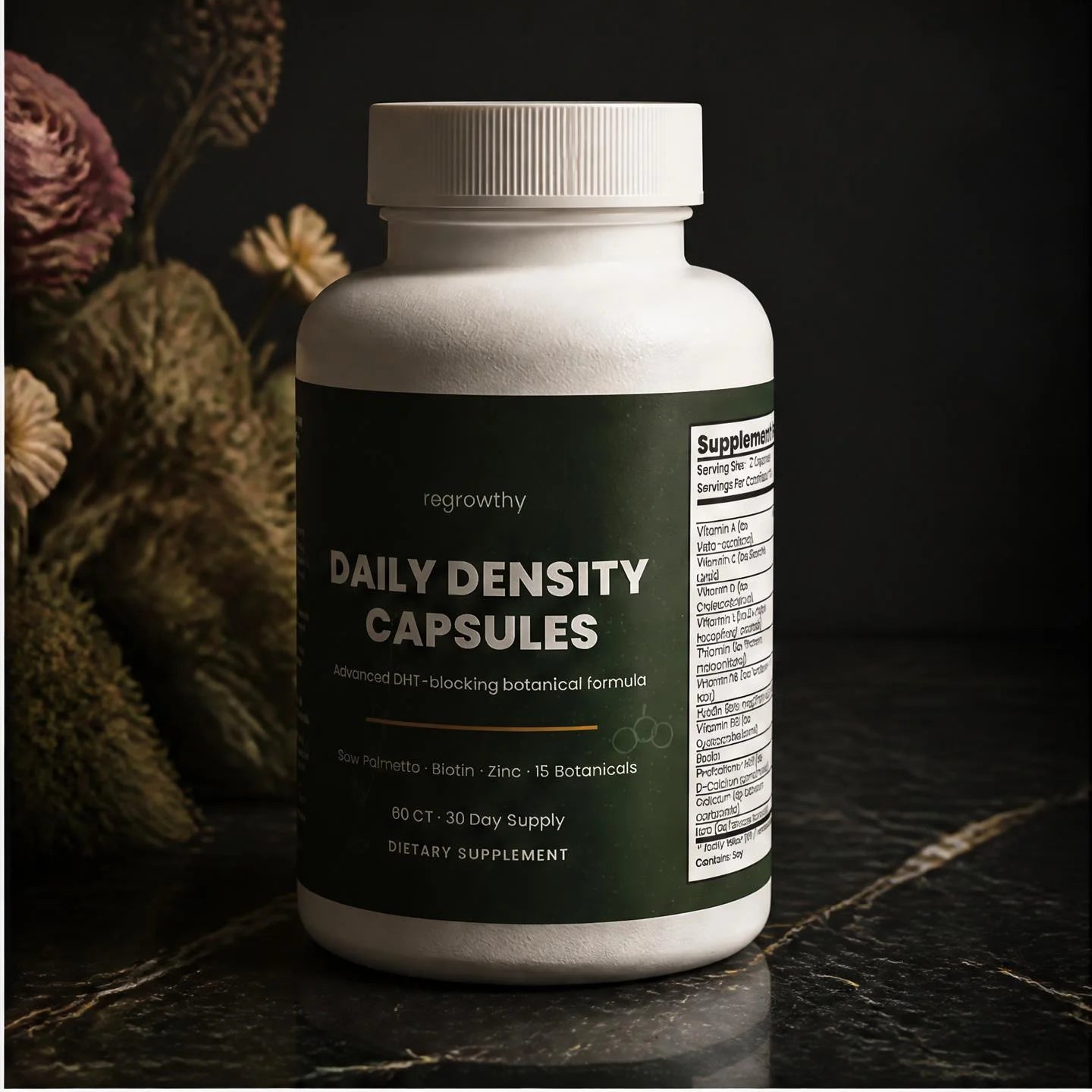
On the supplement side, this is also where formulation matters more than any single ingredient in isolation. Daily Density Pro Capsules are built around the idea that hair growth is rarely a one-ingredient problem: hormonal sensitivity, micronutrient status, and scalp condition all play a role, so a formula pairing multiple researched ingredients tends to be a more complete approach than relying on pumpkin seed oil alone at whatever dose you can find on a supplement shelf. If you're specifically drawn to the DHT angle, it's worth knowing what dose of pumpkin seed oil (or comparable ingredients) you're actually getting, since many commercial products fall well short of the 400 mg studied.
A More Realistic Way to Use It
If you want to try pumpkin seed oil based on what the research actually supports, here's a grounded way to think about it. Look for a product that discloses its actual pumpkin seed oil content in milligrams, ideally close to the 400 mg studied, rather than a proprietary blend that hides the dose. Commit to it for a full 24 weeks before drawing conclusions, since that's the timeframe the study used and hair growth simply doesn't move faster than that. Track your results with consistent photos taken in the same lighting and position each month, the same approach the clinical trial used, since memory alone is an unreliable way to judge gradual change.
It's also worth pairing any single ingredient with an overall routine rather than treating it as a standalone fix. Ingredients like biotin support the structural building blocks of hair, scalp care products can address the environment the follicle is actually growing in, and light-based devices work on cellular energy rather than hormones. Pumpkin seed oil's plausible role in that picture is narrow and specific: helping modulate the DHT pathway that drives pattern thinning in the first place, not replacing everything else that contributes to healthy hair growth.
The honest takeaway is this: pumpkin seed oil has one real, well-designed clinical trial behind it, and that trial found a meaningful, statistically significant benefit for men with mild to moderate pattern hair loss over six months. That's genuinely more than most natural hair ingredients can claim. But it's one study, on oral capsules, at one specific dose, in one specific population, and it deserves to be treated with the same measured confidence you'd give any single piece of evidence, promising, worth considering, but not a substitute for a broader, evidence-based approach to hair health.
From the routine
Mentioned in this article
Common questions
Frequently asked questions
Does pumpkin seed oil actually block DHT?+
What dose of pumpkin seed oil was used in the hair loss study?+
Is pumpkin seed oil as effective as finasteride or minoxidil?+
Does pumpkin seed oil work for women's hair loss?+
How long before you'd see results from pumpkin seed oil?+
Is topical pumpkin seed oil the same as the oral supplement studied?+
The Regrowthy System
Ready to start regrowing at home?
Hands-free. Non-prescription. 660nm clinical wavelength, backed by a 30-day guarantee.
Continue Reading
Ingredient Science
Peppermint Oil for Hair Growth: The Circulation Science
9 min read
Ingredient Science
Tea Tree Oil for Scalp Health: Antifungal and Antimicrobial Science
9 min read
Ingredient Science
Rosemary Oil for Hair Growth: What the Research Actually Shows
9 min read
Ingredient Science