Ingredient Science
Peppermint Oil for Hair Growth: The Circulation Science
Peppermint oil keeps showing up in hair growth conversations for one reason: circulation. Here is what the actual research found, including the surprising minoxidil comparison, and where it honestly falls short.
Updated July 1, 2026
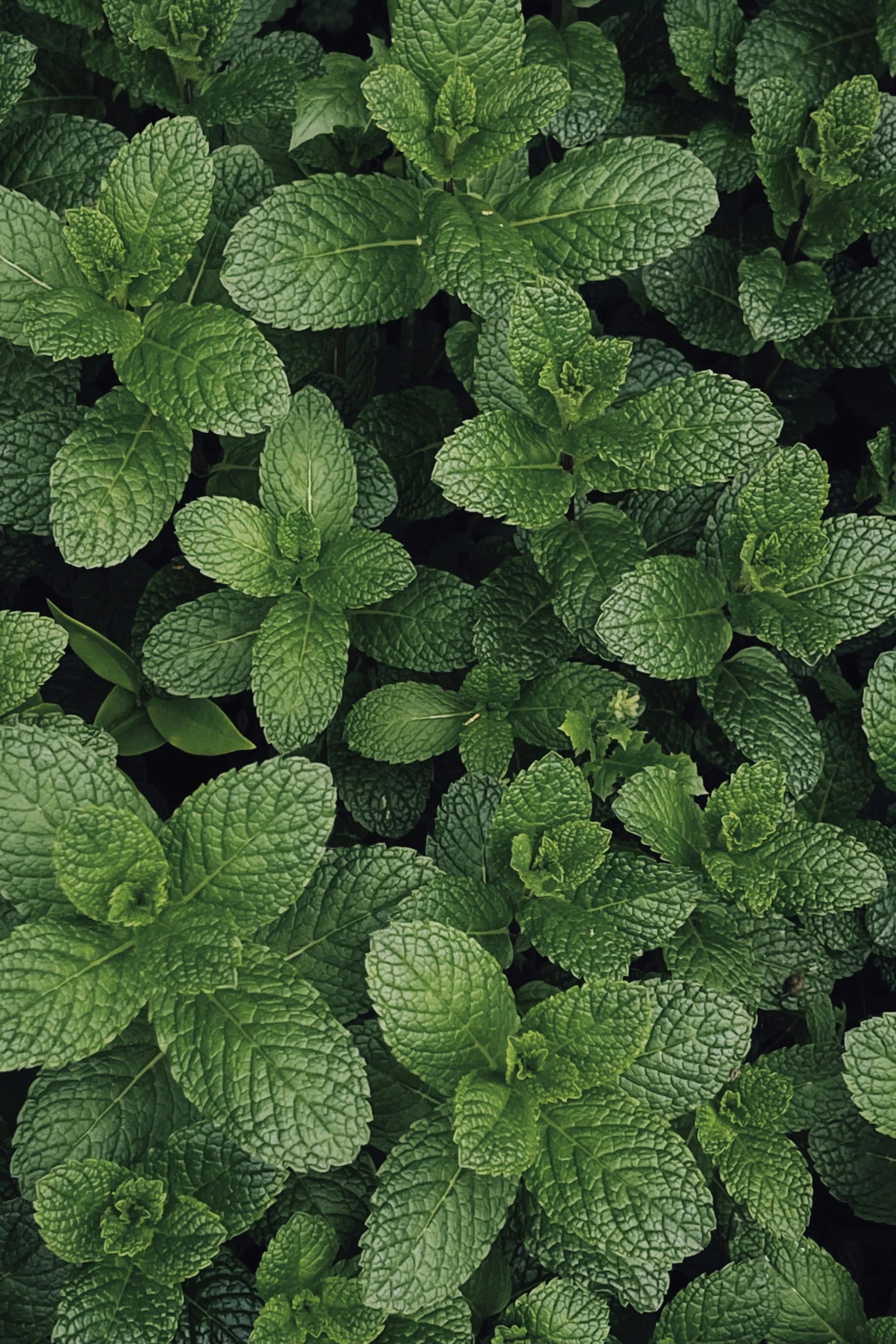
If you've spent any time researching natural options for thinning hair, you've probably run into a claim that sounds almost too simple: peppermint oil, the same stuff in your toothpaste and gum, might help your scalp grow more hair. It sounds like the kind of thing that gets repeated on the internet until it becomes true by volume. But peppermint oil actually has a real mechanism behind it, a real study behind it, and a real, honest set of limitations. Let's go through all three.
Why Peppermint Oil Is in the Hair Loss Conversation
Peppermint oil earned its place in hair care conversations for a reason that has nothing to do with trends and everything to do with basic scalp physiology. Hair follicles are living tissue. Like any living tissue, they need a steady supply of oxygen and nutrients delivered through blood flow to function well, and that supply arrives through the small capillary network surrounding each follicle. When circulation to that network is sluggish, follicles can spend more time in resting or shedding phases and less time in active growth.
Peppermint oil produces a distinct, immediate sensation on skin: a cooling, tingling feeling that shows up seconds after application. That sensation is not just a pleasant side effect. It is a visible signal of a physiological response happening underneath the skin, and it is the entire reason peppermint oil ended up being studied for hair growth in the first place.
This is also why peppermint oil shows up as a talking point alongside other circulation-focused ingredients, and it is worth reading about rosemary oil's hair growth science if you want to compare mechanisms, since the two oils are frequently discussed together but work through slightly different pathways.
Menthol and the Circulation Mechanism
The active compound responsible for peppermint oil's effects is menthol, which makes up a large percentage of peppermint essential oil by volume. Menthol interacts with a receptor in skin called TRPM8, a cold-sensing receptor that is also activated by actual cold temperature. This is why menthol feels cool on skin even though nothing about its actual temperature has changed. It is tricking your nerve endings into registering a cold sensation.
That receptor activation triggers a local vasodilation response, meaning the small blood vessels near the surface of the skin widen. Wider vessels mean more blood volume can move through the area, which in theory means more oxygen and nutrients reaching the follicle and the surrounding dermal tissue. This is the entire proposed mechanism behind peppermint oil for hair growth: better local circulation supporting a healthier environment for the follicle to do its job.
It is a genuinely reasonable hypothesis, and it is worth saying clearly that mechanism and outcome are two different things. A plausible mechanism tells you why something might work. It does not, on its own, prove that it does work in humans at scale. That is what the actual research needs to answer, so let's look at what exists.
Key Point
The cooling, tingling sensation from peppermint oil is not decoration. It is the visible sign of local vasodilation, the same circulation response researchers believe is behind its effects on follicle activity. But a sensation is not a clinical outcome, and the two should not be confused when you're evaluating whether an ingredient actually works.
The Study Behind the Buzz
Most of what gets cited online about peppermint oil for hair growth traces back to a single, well-known study conducted in mice. Researchers applied topical peppermint oil daily and compared the results to a saline control group and a minoxidil comparison group. The peppermint oil group showed a meaningful increase in several measurable markers of follicle activity, including follicle depth, follicle number, and dermal thickness, a rough measure of how much of the skin layer is dedicated to supporting active hair growth.
This is a legitimate, frequently cited piece of research, and it is the reason peppermint oil is taken seriously in ingredient science conversations rather than dismissed outright. But it is important to be precise about what kind of study it is. It was conducted in animal models, not in a large human clinical trial. Animal studies are a normal and valuable part of how ingredient science develops, since they are often the first step before human research is designed and funded. They are not, however, a substitute for human trial data, because skin physiology, dosing, and absorption do not always translate one-to-one between species.
To date, this finding has not been replicated in a large-scale human clinical trial. That is the honest state of the science: a promising signal from legitimate research, not yet a settled human result. Any source telling you peppermint oil is clinically proven for human hair regrowth is overstating what currently exists.
Peppermint Oil vs Minoxidil: What the Comparison Actually Shows
The detail that gets the most attention from that animal study, understandably, is that the peppermint oil group outperformed the minoxidil comparison group on the specific markers measured. Minoxidil is a well-established, FDA-approved topical treatment for pattern hair loss with decades of human clinical data behind it, so seeing an essential oil edge it out in any study tends to generate a lot of excitement.
Here is the more careful way to read that result. It was one study, in an animal model, measuring specific biological markers over a defined period, not human hair count or density over months of real-world use. Minoxidil's track record is built on a large body of human clinical trials measuring actual regrowth in real patients over time. Comparing a single animal study result to that decades-deep human evidence base is not an apples-to-apples comparison, even though the headline sounds dramatic.
The fair, honest takeaway on peppermint oil vs minoxidil is this: peppermint oil shows a genuinely interesting circulation-based mechanism with legitimate early support, but it has not been through the level of human clinical testing that would let anyone responsibly claim it replaces minoxidil. Think of it less as a competitor to proven treatments and more as a complementary, non-prescription ingredient worth including as part of a broader scalp care approach.
This is also exactly why circulation-focused strategies tend to work better in combination than any single ingredient does alone. Scalp blood flow responds to more than just topical stimulation. Consistent light-based stimulation is another route to the same goal, which is part of why a nutrient-focused approach paired with a device like the Laser Therapy Cap is generally a more complete strategy than betting everything on one ingredient.
How to Use Peppermint Oil on Your Scalp
If you want to try peppermint oil directly on your scalp, dilution is not optional. Peppermint essential oil is potent enough that applying it undiluted can cause real irritation, burning, or a rash, especially on scalp skin, which tends to be more sensitive than people expect. Essential oils are typically diluted into a carrier oil, such as jojoba, argan, or coconut oil, before scalp application.
- Start with a low dilution, generally no more than a few drops of peppermint oil per tablespoon of carrier oil, especially the first time you use it.
- Do a patch test on your inner arm 24 hours before applying anything new to your scalp.
- Massage the diluted blend gently into the scalp rather than saturating the hair itself, since the scalp skin is where the circulation response actually happens.
- Leave it on for a defined period, then rinse thoroughly. Peppermint oil left on too long or too concentrated is a common cause of scalp irritation complaints.
- Watch for redness, itching, or a burning sensation that goes beyond a mild, brief tingle. That is your signal to dilute further or stop.
If mixing and diluting your own essential oil blend sounds like more trial and error than you want to deal with, that is a completely reasonable thing to want to skip. It is also exactly why peppermint oil tends to work better as one ingredient in a properly formulated product than as a standalone home remedy, since a formulation has already solved the dilution and irritation question for you.
Where Peppermint Oil Fits in a Real Routine
Peppermint oil is best understood as a supporting ingredient rather than a standalone solution, and that is true of almost every natural ingredient in the hair loss space, not just this one. Circulation matters, but it is one piece of a larger picture that includes hormonal factors like DHT, follicle nutrient supply, and how consistently active growth stimulation reaches the scalp over time.
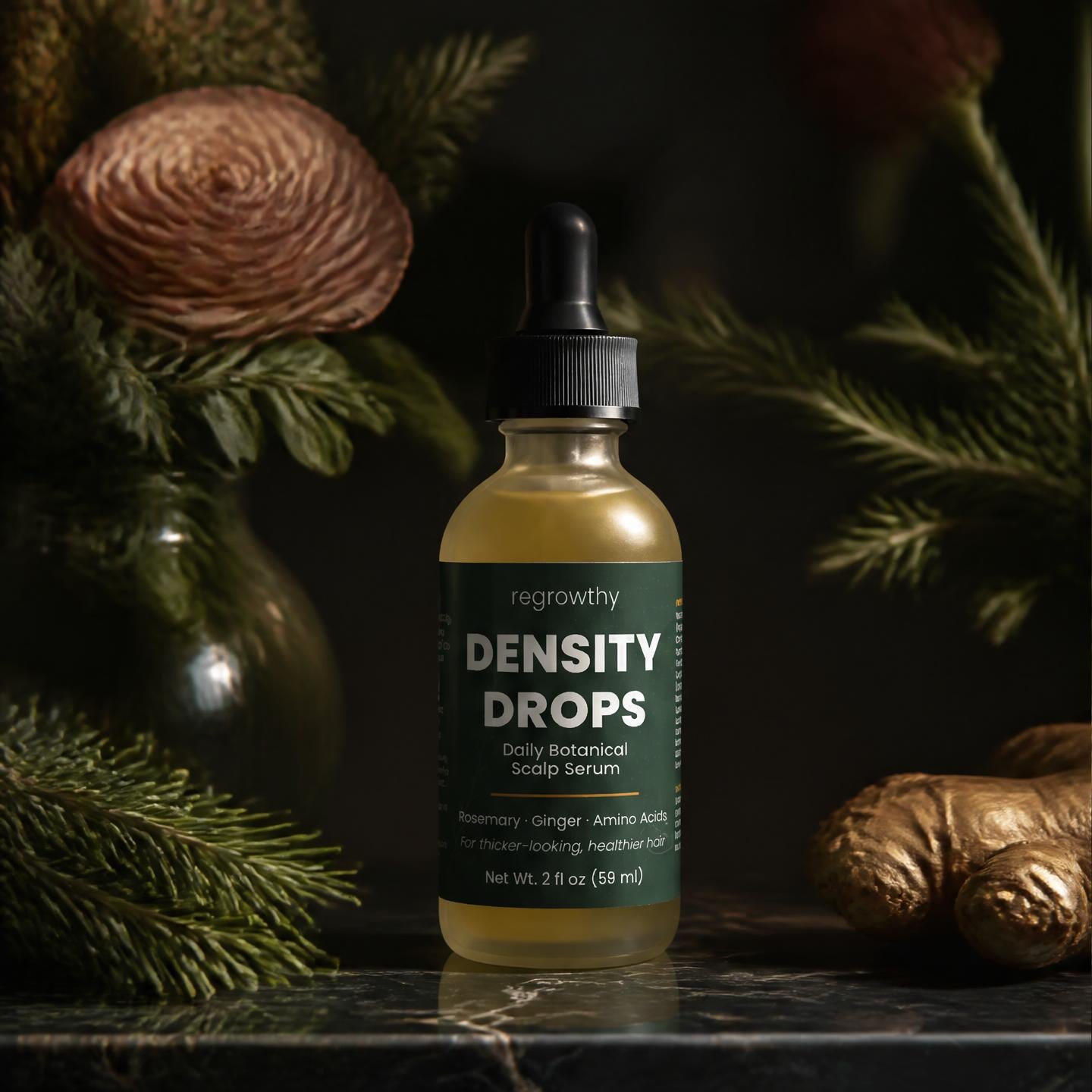
This is the thinking behind including peppermint oil alongside other circulation and growth-support botanicals in Density Drops, rather than relying on it in isolation. Pairing a topical, circulation-focused ingredient with a light-based stimulation tool is a genuinely complementary approach, since they work through different mechanisms toward a similar goal of supporting a more favorable environment at the follicle. The Laser Therapy Cap uses 660nm red light, absorbed by mitochondria in scalp cells, to support cellular energy production at the follicle, which is a different pathway than menthol-driven vasodilation but a compatible one.
Consistency ends up mattering more than any single ingredient's theoretical potency. A promising mechanism applied once a week for a month will always underperform a modest mechanism applied correctly, every day, for months. That is true of peppermint oil, and it is true of nearly everything else in this space.
How It Compares to Other Essential Oils for Hair Loss
Peppermint oil is one name in a broader category of essential oils for hair loss that has grown significantly over the past several years, and it helps to know roughly where it sits relative to the others. Rosemary oil has the most robust human comparative data of the group, with a randomized trial finding it produced hair count improvements over six months comparable to a standard topical minoxidil regimen. That puts rosemary oil in a stronger evidentiary position than peppermint oil today, even though both work partly through circulation-related mechanisms.
Tea tree oil takes a different approach entirely, focusing on clearing buildup and calming an irritated or flaky scalp rather than directly stimulating circulation. A scalp that is inflamed or clogged with product buildup is not an ideal environment for a follicle to grow in, so tea tree oil's role is more about removing obstacles than adding a growth signal. You can read more in our tea tree oil scalp science breakdown. Saw palmetto, while not an essential oil, often gets mentioned in the same conversations because it works on the hormonal side of the equation, specifically the DHT pathway, rather than the circulation side.
The honest summary: no single essential oil in this category has enough standalone human clinical evidence to be called a proven regrowth treatment on its own. What the evidence supports is that several of them, including peppermint oil, have legitimate, mechanism-backed reasons to be included as part of a broader routine, particularly when paired with a scalp cleansing step, a nutrient strategy, and a proven stimulation method rather than expected to do the job alone.
Peppermint oil is not a miracle ingredient, and nothing in the actual research suggests it should be marketed as one. What it is, is a legitimate, mechanism-backed botanical with a genuinely interesting animal study behind it and a plausible role in supporting scalp circulation as part of a broader routine. If you are exploring natural options for thinning hair, understanding exactly what the science does and does not say, rather than the flattened version that circulates online, is the difference between a reasonable expectation and a disappointing one. Used correctly, diluted properly, and paired with approaches that address the other pieces of the puzzle, peppermint oil earns a real place in that routine. It just is not the whole routine by itself.
From the routine
Mentioned in this article
Common questions
Frequently asked questions
Does peppermint oil actually regrow hair on its own?+
Is peppermint oil really better than minoxidil?+
Can I put pure peppermint oil directly on my scalp?+
How does peppermint oil actually improve scalp circulation?+
How long does it take to feel or see results from peppermint oil?+
What is the difference between peppermint oil and other essential oils for hair loss?+
The Regrowthy System
Ready to start regrowing at home?
Hands-free. Non-prescription. 660nm clinical wavelength, backed by a 30-day guarantee.
Continue Reading
Ingredient Science
Tea Tree Oil for Scalp Health: Antifungal and Antimicrobial Science
9 min read
Ingredient Science
Argan Oil for Hair: What It Can and Cannot Do
9 min read
Ingredient Science
Rosemary Oil for Hair Growth: What the Research Actually Shows
9 min read
Ingredient Science