Ingredient Science
Copper Peptides for Hair Growth: The Follicle Signaling Science
Copper peptides work on the follicle's environment instead of its hormones. Here is the GHK-Cu science behind copper peptide serums, and where they realistically fit in a hair loss routine.
Updated July 1, 2026
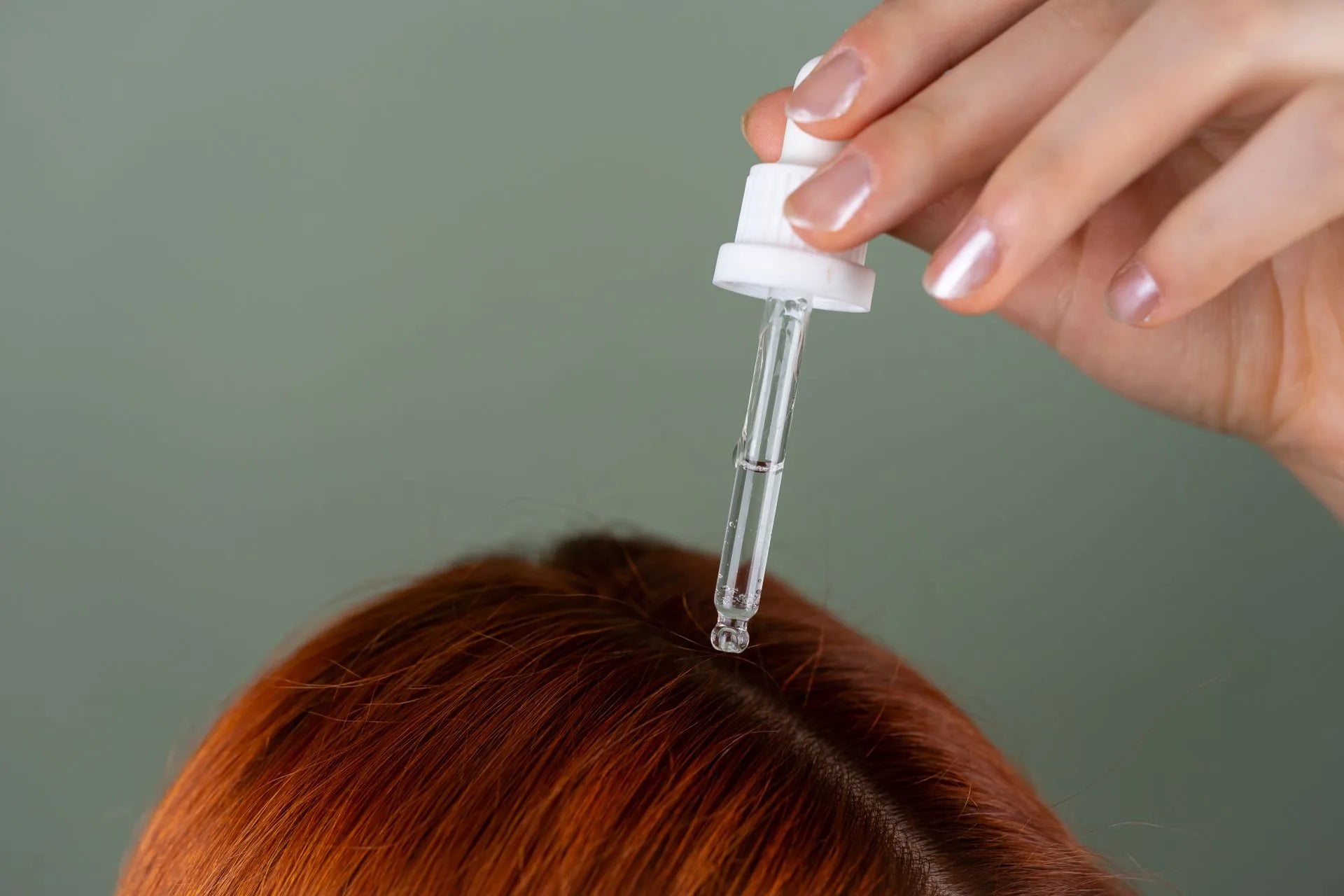
If you have spent any time researching hair loss ingredients beyond the usual suspects, you have probably run into a small blue-tinted peptide complex with a strange name: GHK-Cu. It shows up in wound-healing research, in high-end skincare, and increasingly in topical hair serums marketed for thinning hair. The pitch is that copper peptides hair growth support works differently than almost anything else on the market, not by blocking a hormone, but by talking directly to the tissue around the follicle. That claim deserves a careful look, because the science behind it is real, but it is also more nuanced than most product pages let on.
Copper peptides are not a new discovery dressed up in marketing language. GHK-Cu (glycyl-histidyl-lysine bound to a copper ion) is a naturally occurring molecule that your own body already produces in small amounts, and it has been studied in dermatology and wound care literature for decades. What is newer is the specific interest in what copper peptides do inside the scalp, where the follicle lives in a dense, living bed of connective tissue that needs to be maintained, repaired, and resupplied with blood just like any other organ system.
This article breaks down what copper peptides actually are, how GHK-Cu appears to interact with the follicle environment, where it fits next to more familiar approaches like DHT-blocking ingredients, and what a realistic role for a copper peptide serum hair loss routine looks like once you separate the biology from the hype.
What Are Copper Peptides, Exactly?
"Copper peptides" is a broad term, but in hair and skin research it almost always refers to GHK-Cu, a tripeptide (three amino acids: glycine, histidine, and lysine) that binds tightly to a copper ion. This complex was first isolated from human plasma, and it has since been found in saliva and urine as well. It is not something a lab invented from scratch. It is something the body already makes, and researchers noticed that its levels tend to decline steadily with age, roughly paralleling the slowdown in tissue repair that comes with getting older.
That correlation is what originally pulled GHK-Cu into wound-healing and skin research. If a naturally occurring signaling molecule drops off as skin gets thinner and heals more slowly, does replacing it topically help restore some of that tissue-repair activity? Decades of skincare research have explored that question for skin. The extension of that same logic to the scalp and the hair follicle is more recent, and it rests on a simple observation: a hair follicle is a mini-organ that depends on the same kind of structural support, blood supply, and cellular turnover as the skin around it.
Why the Follicle's Environment Matters
It is easy to think of a hair follicle as an isolated little factory that either makes hair or does not. In reality, each follicle sits inside a small ecosystem: a dermal papilla (a cluster of specialized cells that governs the hair growth cycle), a surrounding matrix of collagen and other connective proteins, and a network of tiny blood vessels that deliver oxygen and nutrients. When that surrounding environment degrades, whether from chronic inflammation, reduced blood flow, or simple aging of the connective tissue, the follicle can miniaturize even if the hormonal signals driving hair loss are otherwise under control.
Copper itself is not a bystander in this system. It is a required cofactor for enzymes like lysyl oxidase, which cross-links collagen and elastin to keep connective tissue strong, and for antioxidant enzymes that help cells manage everyday oxidative stress. Severe copper deficiency, seen in rare genetic conditions, is well documented to cause abnormal, fragile hair, which is a strong (if extreme) illustration of how tied copper metabolism is to normal hair structure. Most people are not copper-deficient in a clinical sense, but that baseline biology is part of why researchers became interested in copper-carrying peptides as a tool for supporting the follicle's physical environment rather than its hormonal one.
How Copper Peptides May Signal Hair Follicles
The ghk-cu hair research that exists, much of it in laboratory and animal models rather than large human trials, points to a few plausible mechanisms rather than one single explanation. Studies on GHK-Cu in skin and wound tissue have found it can influence the activity of growth factors involved in tissue remodeling, support the production of collagen and glycosaminoglycans (the gel-like molecules that give connective tissue its structure), and encourage the small blood vessel growth needed to keep a healing or actively growing tissue well supplied.
Applied to the follicle, the working theory is that a healthier, better-supplied dermal environment gives hair follicles a better chance of staying in the anagen (active growth) phase longer and cycling through the growth cycle in a more orderly way. This is a "supporting the terrain" model of hair growth rather than a "blocking a specific hormone" model, and it is worth being honest that this research is earlier-stage and less extensively studied in humans than some other hair loss ingredients. It is promising and biologically plausible, not a settled, heavily replicated clinical fact.
Key Point
Copper peptides are not a hormone blocker. Their proposed benefit is supporting the connective tissue, blood supply, and structural environment around the follicle, which is a different mechanism than hormone-focused approaches and one reason they are often used alongside them rather than instead of them.
Copper Peptides vs. DHT: Two Different Mechanisms
Most conversations about hair loss eventually circle back to DHT, the androgen hormone that binds to receptors in genetically sensitive follicles and gradually shortens their growth cycle, a well-established mechanism behind pattern hair thinning. Ingredients like saw palmetto are popular specifically because they interfere with the enzyme that converts testosterone into that androgen, tackling the problem at its hormonal root.
Copper peptides do not work that way, and that is not a weakness, it is a different tool for a different part of the problem. A follicle can be relatively protected from that hormone and still be sitting in a scalp environment with poor microcirculation, thinning connective tissue, or chronic low-grade inflammation. That is the layer copper peptides are aimed at. Thinking of it as complementary rather than competitive is the more accurate way to frame it: a hormone-focused ingredient addresses the signal telling the follicle to shrink, while copper peptides address whether the surrounding tissue is in good enough shape to support strong, sustained growth once that signal is dialed down.
What to Look for in a Copper Peptide Serum
If you are evaluating a copper peptide serum hair loss product, a few practical details matter more than marketing claims. Concentration and formulation stability are the biggest ones. GHK-Cu is a delicate molecule, and it can be deactivated if it is mixed directly with certain ingredients, most notably vitamin C and benzoyl peroxide, both of which can strip the copper ion away from the peptide and neutralize its activity. That is a real formulation chemistry issue, not a scare tactic, and it is why copper peptide products typically recommend not layering them in the same application with those ingredients.
Consistency of use matters more than the product's marketing copy. Because the proposed mechanism is about gradually supporting the follicle's connective tissue and blood supply rather than delivering an instant effect, copper peptide serums are a slow-and-steady category, closer in philosophy to a skincare retinoid than to a fast-acting topical. A clean scalp is also part of getting any topical serum to actually reach the follicle, which is one reason a scalp-clarifying step like Dense Cleanse is often paired with active serums: removing buildup gives topical ingredients a clearer path to the skin instead of sitting on top of oil and product residue.
Combining Copper Peptides With a Broader Routine
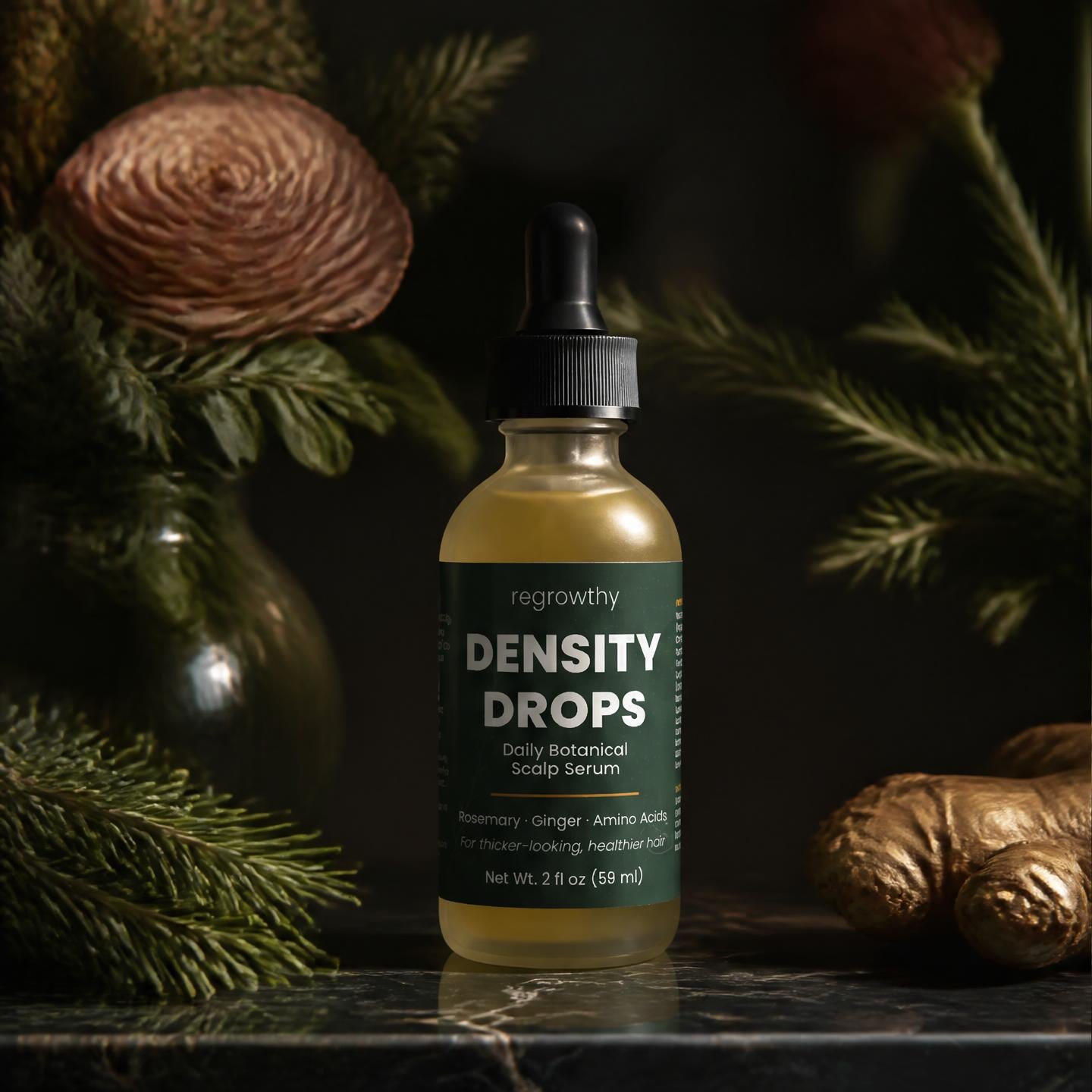
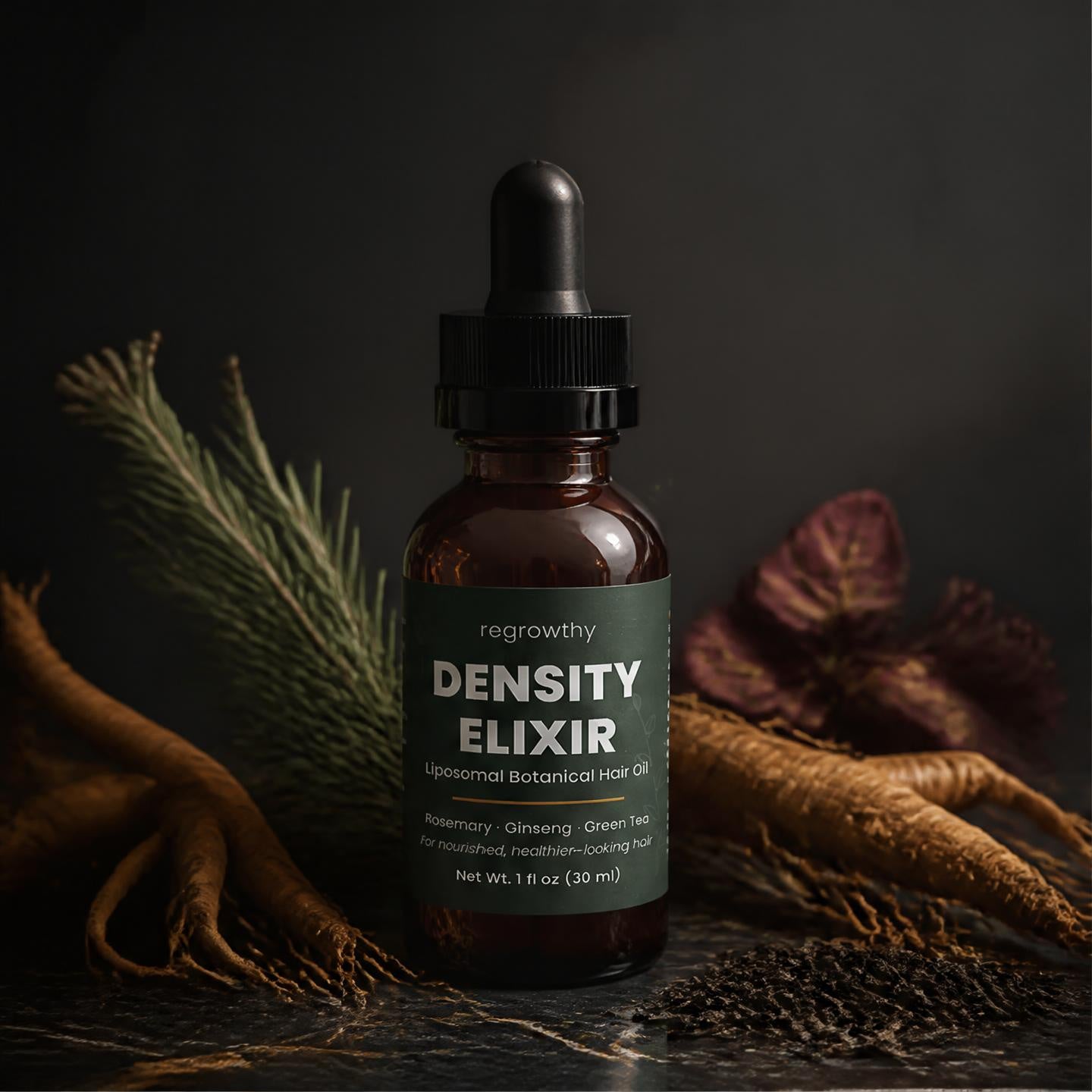
Because copper peptides work on the follicle's structural environment rather than its hormonal signaling, they tend to pair logically with approaches that hit hair loss from other angles. Regrowthy's own Density Elixir is built around this same "support the terrain" philosophy, layering topical actives designed to nourish the scalp and follicle environment, and it is a natural fit alongside a copper peptide-focused routine since neither is trying to do the other's job.
Photobiomodulation is another angle worth understanding here. A Laser Therapy Cap uses low-level red light to stimulate mitochondrial activity in scalp cells, essentially giving follicle cells more cellular energy to work with, which is a mechanism distinct from both hormone-blocking and copper peptide signaling. Using light therapy, a topical peptide serum, and a nutrient-support strategy together is not redundant, it is addressing energy supply, tissue environment, and hormonal signaling as three separate levers, rather than pulling the same lever three times.
Nutrition is the fourth piece that is easy to overlook. Copper itself is one input among several minerals and vitamins that support normal hair structure and growth cycling, and it does not work in isolation. If you are already thinking about the nutritional side of hair health, it is worth reading up on how biotin supports the hair growth cycle and why vitamin D deficiency is linked to hair shedding, since a copper-focused topical works best as one piece of a broader nutritional and scalp-care picture rather than a stand-alone fix.
Realistic Expectations and Limitations
It is worth being direct about where the science currently stands. Copper peptides have a strong, well-documented history in wound healing and skin research, and a biologically sound rationale for why that same tissue-remodeling activity could help support hair follicles. What is thinner is large-scale, long-term human clinical data specifically on GHK-Cu for hair density and regrowth, as opposed to skin repair. That does not mean the ingredient does not work, it means the honest answer is "promising and mechanistically sound, with more follicle-specific human research still needed" rather than "proven to regrow hair on its own."
Timelines matter too. Because the follicle growth cycle unfolds over months, not days, any topical approach aimed at the follicle's environment, copper peptides included, typically needs consistent use across a few full growth cycles before a fair judgment can be made. People also respond differently depending on how much of their thinning is hormonally driven versus environmentally driven, which is part of why layering a few different, non-redundant strategies tends to outperform betting everything on a single ingredient.
A small minority of people can be sensitive to topical copper formulations, so patch testing on a small area before regular use is a reasonable precaution, and anyone with a diagnosed copper metabolism disorder or who is pregnant or breastfeeding should check with a doctor before adding a new topical peptide product to their routine.
Copper peptides are not a miracle ingredient, and no honest source should tell you otherwise. What they are is a scientifically grounded, mechanistically distinct addition to a hair loss strategy, one that works on the structural health of the scalp rather than the hormones driving thinning. For someone who has already addressed the hormonal side of the equation and is looking for the next reasonable layer to add, understanding what GHK-Cu does, and just as importantly what it does not do, is the difference between a routine built on realistic expectations and one set up to disappoint.
From the routine
Mentioned in this article
Common questions
Frequently asked questions
What exactly is GHK-Cu, and is it the same thing as copper peptides?+
Can a copper peptide serum regrow hair on its own?+
Can I use a copper peptide serum alongside hormone-blocking ingredients?+
How long before I see results from a copper peptide serum?+
Can I combine copper peptides with a Laser Therapy Cap?+
Are there any side effects or reasons to avoid copper peptides?+
The Regrowthy System
Ready to start regrowing at home?
Hands-free. Non-prescription. 660nm clinical wavelength, backed by a 30-day guarantee.
Continue Reading

Ingredient Science
Vitamin D and Hair Loss: Why Deficiency Matters
9 min read
Ingredient Science
Rosemary Oil for Hair Growth: What the Research Actually Shows
9 min read
Ingredient Science
Biotin for Hair Growth: How It Works and Who Actually Needs It
9 min read
Ingredient Science