Conditions & Hair Types
Lichen Planopilaris: A Complete Guide
Lichen planopilaris is a scarring form of hair loss that can permanently damage hair follicles if left untreated. Here is what causes it, how it is diagnosed, and what actually helps.
Updated July 1, 2026
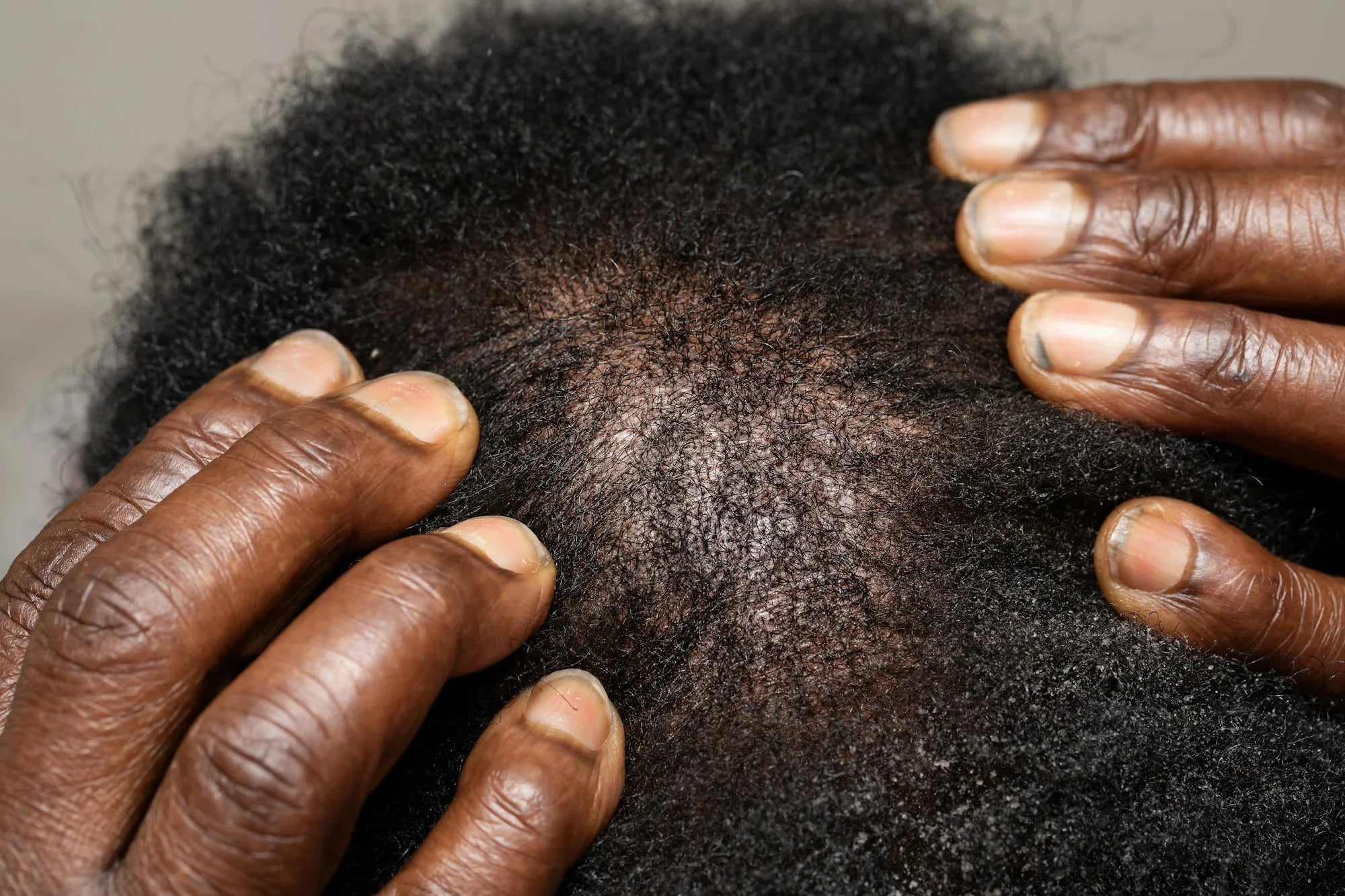
Most hair loss articles are about hair that might grow back. This one is different. Lichen planopilaris is a scarring alopecia scalp condition, meaning the inflammation it causes can permanently destroy the follicles it touches. That makes early recognition and a fast trip to a dermatologist more important here than with almost any other type of hair loss, and it is why this guide focuses as much on what to do right now as on what the condition actually is.
What Is Lichen Planopilaris?
Lichen planopilaris (LPP) is an inflammatory form of hair loss classified as a primary scarring alopecia. It is considered a scalp-specific variant of lichen planus, a broader inflammatory skin condition that can also affect the skin, nails, and mucous membranes. In LPP, the immune system mistakenly targets the stem cells located in the upper portion of the hair follicle, in an area called the bulge. Once those stem cells are destroyed and replaced by scar tissue, the follicle can no longer produce hair.
This puts LPP in a different category from the more familiar causes of thinning, like female pattern hair loss, where follicles shrink but generally remain alive and capable of producing hair again with the right treatment. LPP is less common than pattern hair loss and tends to affect adult women more often than men, though men can develop it too. Because the window to intervene before permanent scarring sets in is limited, dermatologists generally treat any suspected case of LPP as something that deserves prompt evaluation rather than a wait-and-see approach.
Symptoms of LPP Hair Loss
LPP hair loss often announces itself before the hair is even visibly gone. Many people notice scalp discomfort in the weeks or months before they see a bald patch, which is one reason the condition is sometimes diagnosed later than it should be. Common signs include:
- Itching, burning, or tenderness in a specific area of the scalp, often before any hair loss is obvious
- Redness and scaling clustered around individual hair follicles (perifollicular erythema and scale), which is a hallmark finding on close exam
- Smooth, shiny patches of scalp skin where the follicle openings are no longer visible once scarring has occurred
- Patchy hair loss that may start small and irregular, then gradually expand or merge with nearby patches over months to years
- Hairs near the active edge of a patch that come out easily when gently tugged, while hair in long-standing scarred areas does not
- A pattern that can flare and quiet down repeatedly rather than progressing in a straight line
Not everyone experiences obvious itching or burning, and in some people the first sign is simply a patch of hair that will not fill back in the way it used to after shedding. Any combination of scalp irritation and unexplained patchy thinning is worth having examined rather than assumed to be dandruff or stress-related shedding.
What Causes Lichen Planopilaris?
LPP is considered an autoimmune or immune-mediated condition. In simple terms, T-cells, a type of immune cell, mount an inflammatory attack against the stem cells in the hair follicle bulge as if they were a foreign threat. Why the immune system starts doing this in a given person is not fully understood, and in most cases no single external trigger is ever identified.
This is an important distinction from androgenetic hair loss, where hormonal and thyroid-related factors are frequently involved. LPP is not driven by DHT the way pattern hair loss is, and it is not caused by anything the person did, such as a particular shampoo, hairstyle, or diet. Genetics may play some role in susceptibility, and researchers have observed that some people with LPP also have other autoimmune or thyroid conditions, which is one reason a dermatologist may ask about your broader health history or order bloodwork alongside a scalp exam. Clinical research into the exact immune pathways involved is ongoing, and treatment recommendations continue to evolve as that understanding improves.
Types of Lichen Planopilaris
LPP is not a single, uniform presentation. Dermatologists generally describe a few recognized patterns, though they share the same underlying inflammatory process.
Classic LPP
This is the pattern most people picture: multiple small, irregular patches of scarring hair loss, most often on the crown or vertex of the scalp, sometimes merging into larger areas of alopecia over time.
Frontal Fibrosing Alopecia (FFA)
FFA is now understood to be a clinical variant of LPP that specifically targets the frontal and temporal hairline, causing it to gradually recede in a band-like pattern. It often comes with thinning or complete loss of the eyebrows and can be mistaken in its early stages for ordinary hairline recession or even traction alopecia from tight hairstyles, which is why a proper exam matters before assuming the cause. FFA has traditionally been more common in postmenopausal women, though it is increasingly recognized in younger women and occasionally in men.
Graham-Little-Piccardi-Lassueur Syndrome
This is a rare variant that combines scarring LPP on the scalp with non-scarring hair loss in the underarm and pubic areas, plus lichen planus lesions elsewhere on the skin. It is uncommon, but dermatologists watch for it when LPP is diagnosed since it can point toward a broader lichen planus process.
How LPP Is Diagnosed
Diagnosis usually starts with a close scalp exam, often using a handheld dermoscope, a technique called trichoscopy. On dermoscopy, dermatologists look for perifollicular scaling and redness concentrated right at the base of individual hairs, along with a loss of visible follicular openings in affected areas, patterns that help distinguish LPP from other causes of patchy hair loss like alopecia areata.
A scalp biopsy is generally considered the most reliable way to confirm the diagnosis. Under the microscope, LPP typically shows a band of lymphocytic inflammation concentrated around the upper portion of the follicle, with fibrosis (scar tissue) gradually replacing the normal follicular structure. A biopsy also helps rule out other conditions that can look similar on the surface but require different management, such as discoid lupus of the scalp. Depending on your history, a dermatologist may also order bloodwork to screen for related autoimmune or thyroid conditions.
Key Point
Once a follicle has fully scarred over, that hair loss is permanent. Nothing, prescription or otherwise, can regrow hair from a truly scarred patch. This is exactly why the priority with LPP is stopping active inflammation as early as possible, not chasing regrowth after the fact.
Treatment Options for LPP
Because scarred follicles cannot be revived, treatment for lichen planopilaris is aimed squarely at calming the immune response and preventing further follicle loss, not at regrowing hair that has already been lost to scarring. This is why LPP is managed medically, under the direction of a board-certified dermatologist, rather than through at-home or over-the-counter approaches alone.
Depending on how active and widespread the condition is, a dermatologist may recommend:
- Topical or intralesional corticosteroids, applied or injected directly into active areas to reduce local inflammation
- Oral antimalarial medication such as hydroxychloroquine, which is commonly used off-label to help quiet the broader immune response in LPP
- Other systemic anti-inflammatory or immune-modulating medications, considered case by case for more stubborn or widespread disease
- Regular monitoring, often with trichoscopy and photo documentation over time, to confirm the disease has actually gone quiet rather than assuming it has
For some people whose LPP has been fully stable and inactive for an extended period, a dermatologic surgeon may eventually discuss hair transplantation into scarred areas, though results can be less predictable than transplants for non-scarring hair loss because the underlying tissue has been permanently altered. This is a decision made carefully, and only once a dermatologist is confident the inflammatory process is truly burned out rather than temporarily quiet.
Living With LPP: Scalp Care and Support
Once you have a dermatologist actively managing the medical side of LPP, there is still a lot of room for thoughtful daily care that supports your scalp without working against your treatment plan. A gentle, low-irritation approach to washing matters more here than in most other types of hair loss, since an already inflamed scalp does not need additional friction or harsh detergents added to the mix. For anyone with frontal fibrosing alopecia specifically, daily sun protection along the hairline and eyebrows is also worth discussing with your dermatologist, since some clinicians believe UV exposure may aggravate activity in that area.
General nutritional support for hair and scalp health, things like adequate protein intake and balanced hormone and nutrient status that matter across many hair conditions, can be a reasonable complement to medical treatment. Some people incorporate a collagen-based supplement such as Density Collagen Peptides into their routine as general support for hair strength and skin structure. It is worth being clear-eyed about what this can and cannot do: it is not a treatment for the autoimmune process driving LPP, and it will not stop active scarring on its own, but it can be a sensible piece of an overall self-care routine alongside your dermatologist's plan.
People often ask about at-home devices like a low-level light or Laser Therapy Cap, since these are widely marketed for hair regrowth. It is important to understand that laser caps are designed and studied for androgenetic (pattern) hair loss, where follicles are miniaturized but still alive, not for autoimmune scarring alopecias like LPP. They are not a treatment for active LPP inflammation, and using one over actively inflamed patches is not something to do without your dermatologist's input. If your LPP has been stable for a long time and you are curious about low-level light as a general scalp wellness habit in unaffected areas, that is a conversation to have with your dermatologist first, with realistic expectations rather than hope that it will reverse scarring.
Finally, do not underestimate the emotional weight of visible, patchy hair loss. Many people benefit from talking to a therapist or a support community that understands scarring alopecia specifically, and from practical tools like hairstyling techniques, hair fibers, or a well-fitted topper or wig while treatment takes effect. None of that is a failure or a workaround; it is a legitimate part of managing a chronic condition well.
Lichen planopilaris is a serious diagnosis, but it is also a manageable one when it is caught early and treated consistently. The single most useful thing you can do if you suspect it is to get in front of a dermatologist rather than waiting to see if it resolves on its own, because the scarring process moves at its own pace and does not reverse itself once it happens. From there, the combination of active medical treatment, gentle scalp habits, and honest expectations about what supplements and devices can and cannot do will give you the best chance of holding on to the hair you still have.
From the routine
Mentioned in this article


Common questions
Frequently asked questions
Is lichen planopilaris the same as alopecia areata?+
Can hair regrow once it has fallen out from LPP?+
Is frontal fibrosing alopecia a different condition from lichen planopilaris?+
What triggers a lichen planopilaris flare?+
Can supplements or a laser cap cure lichen planopilaris?+
Should I get a scalp biopsy if I suspect LPP?+
The Regrowthy System
Ready to start regrowing at home?
Hands-free. Non-prescription. 660nm clinical wavelength, backed by a 30-day guarantee.
Continue Reading

Conditions & Hair Types
Female Pattern Hair Loss: A Complete Guide for Women
10 min read
Conditions & Hair Types
Traction Alopecia: How Hairstyles Cause Permanent Hair Loss
8 min read
Conditions & Hair Types
Thyroid-Related Hair Loss: Hypothyroidism, Hyperthyroidism, and Your Hair
10 min read
Conditions & Hair Types