Ingredient Science
Hydrolyzed Collagen for Hair: The Follicle Structure Science
Your hair follicle is held together by collagen, yet most hair-loss conversations skip right past it. Here is what hydrolyzed collagen actually does for follicle structure, and where it fits alongside proven treatments.
Updated July 1, 2026
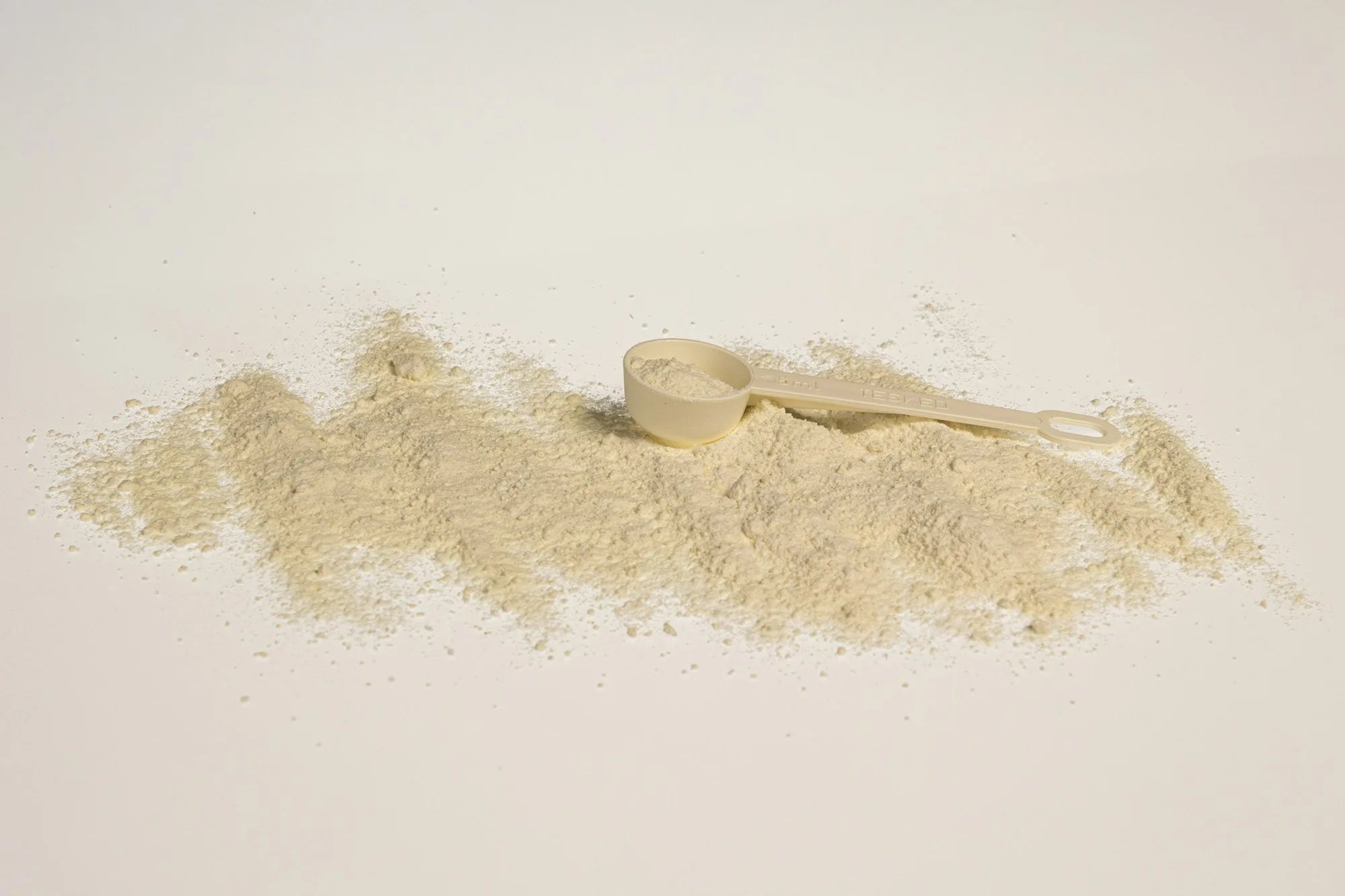
Most hair-loss conversations start with DHT, follicle miniaturization, or the latest topical serum. Rarely does anyone mention collagen, even though it is the single most abundant protein in your body and a literal structural component of the follicle that produces every strand on your head. If you have been researching collagen for hair growth and wondering whether it is worth adding to your routine, the honest answer starts with understanding what collagen is actually doing at the follicle level, not what a supplement label promises.
This article walks through the structural biology of hair follicles, where collagen fits into that structure, what current research does and does not support, and how hydrolyzed collagen compares to other hair-support ingredients you have probably already heard about. No miracle claims. Just a clear look at the science so you can decide if it belongs in your routine.
What Is Hydrolyzed Collagen?
Collagen is a fibrous structural protein built from long chains of amino acids, most notably glycine, proline, and hydroxyproline. It is the main building block of connective tissue throughout the body: skin, tendons, cartilage, blood vessels, and, relevant here, the dermis of the scalp where every hair follicle is rooted.
In its natural state, collagen exists as large, tightly wound triple-helix fibers. Those fibers are too large for your digestive system to absorb intact, which is why raw collagen (from bone broth, for example) has limited bioavailability. Hydrolyzed collagen solves that problem. Through a process called hydrolysis, manufacturers break those long collagen chains down into smaller peptides, sometimes just two or three amino acids long, that the gut can absorb far more efficiently.
This is the key distinction behind the phrase hydrolyzed collagen hair supplements are built around: it is not just about consuming collagen, it is about consuming a form your body can actually use. Once absorbed, these peptides circulate and become available as raw material for tissues that are constantly rebuilding themselves, including the skin and connective structures surrounding your hair follicles.
The Follicle Is Built on Collagen
A hair follicle is not just a hole in the scalp that hair grows out of. It is a complex, multi-layered organ, and much of that layered structure is made of collagen-rich connective tissue. The follicle sits within a collagen matrix that gives it shape, anchors it in place, and separates it from surrounding structures.
Two collagen-containing layers matter most for hair health. The outer root sheath is surrounded by a basement membrane rich in type IV and type XVII collagen, which physically anchors the follicle to the surrounding dermis. Below that, the perifollicular dermis, the connective tissue sleeve wrapping the follicle, is composed largely of type I and type III collagen fibers that provide tensile strength and structural support.
When this collagen scaffolding is compromised, whether from aging, sun exposure, or general connective tissue breakdown, the follicle loses some of its structural support. Dermatology research on skin aging has documented that collagen density in the dermis declines measurably over time, and the scalp is not exempt from that process. A follicle sitting in a weaker, thinner collagen matrix is a follicle with less structural stability, which is part of why hair often becomes finer and follicles smaller as we age, independent of hormonal hair loss.
Collagen and the Dermal Papilla
At the very base of each follicle sits the dermal papilla, a small cluster of specialized cells that essentially acts as the command center for hair growth. The dermal papilla signals to surrounding matrix cells when to grow, how fast to grow, and when to eventually enter the resting phase of the hair cycle.
The dermal papilla does not float freely. It is embedded in and supported by an extracellular matrix that is substantially built from collagen, along with other proteins like elastin and glycosaminoglycans. This matrix is not just packing material. Research into follicle biology suggests the extracellular environment around the dermal papilla influences how effectively those cells can communicate with the rest of the follicle, which in turn affects the health of the hair growth cycle.
This is the mechanistic thread that connects collagen peptides hair loss discussions to actual biology. It is not that collagen is a hair growth stimulant in the way a drug is. It is that collagen is a structural input the follicle and its surrounding tissue rely on, and supporting that structure is one piece of a broader strategy for a scalp environment that can support healthy hair cycling.
Key Point
Collagen is not a DHT blocker and it does not work the way saw palmetto or a laser cap does. Its role is structural: supporting the connective tissue and extracellular matrix that houses the follicle and the dermal papilla. Think of it as reinforcing the foundation the follicle sits in, not as a direct growth trigger.
Does Collagen Help Hair? What the Research Shows
So does collagen help hair in a way you would actually notice? The honest, evidence-minded answer is nuanced. Clinical research on oral collagen peptides has generally focused on skin hydration, elasticity, and wrinkle depth, where results have been reasonably consistent: supplementation appears to increase skin collagen density and improve measurable skin quality over consistent use.
Hair-specific research is thinner but growing, and dermatology reviews increasingly point to a plausible mechanism rather than a proven standalone cure. Because collagen peptides break down into amino acids, including proline and glycine, that also happen to be building blocks used in keratin production and follicle connective tissue, supplementation may support the raw material supply your body draws on for hair structure. Some small studies and clinical observations have reported improvements in hair thickness or reduced shedding when collagen was combined with other nutrients, though isolating collagen's individual contribution in those studies is difficult.
What is fair to say: collagen is not going to reverse androgenic hair loss on its own, and no responsible source should claim it will. What current evidence supports is a supporting role, providing amino acid building blocks and structural nutrients that complement, rather than replace, treatments that address the actual drivers of hair loss like DHT sensitivity or insufficient scalp stimulation.
This is why collagen tends to perform best as part of a layered routine rather than a solo strategy. Pairing structural support with a treatment like rosemary oil, which is often studied for improving scalp circulation, or with consistent use of a Laser Therapy Cap to stimulate follicles directly, addresses more of the full picture than any single ingredient can on its own.
Collagen Peptides vs. Keratin and Biotin
It helps to understand how collagen differs from the other proteins and nutrients most associated with hair health. Keratin is the actual structural protein that makes up the visible hair shaft itself, the part you can see and touch. Collagen, by contrast, is found in the tissue surrounding and supporting the follicle, not in the hair shaft.
Biotin, meanwhile, is a B-vitamin cofactor involved in enzymatic processes that support keratin production, but it is not a structural protein at all. If you have already read up on biotin for hair growth, you know biotin deficiency is genuinely linked to hair thinning, but supplementing beyond a normal, sufficient level has limited additional benefit for most people.
- Keratin: The structural protein that makes up the visible hair shaft.
- Collagen: The structural protein supporting the dermis, basement membrane, and connective tissue around the follicle.
- Biotin: A B-vitamin cofactor that supports enzymatic processes involved in keratin synthesis.
- Amino acids from hydrolyzed collagen: Raw material your body can direct toward multiple tissues, including hair-adjacent structures, depending on overall nutritional status.
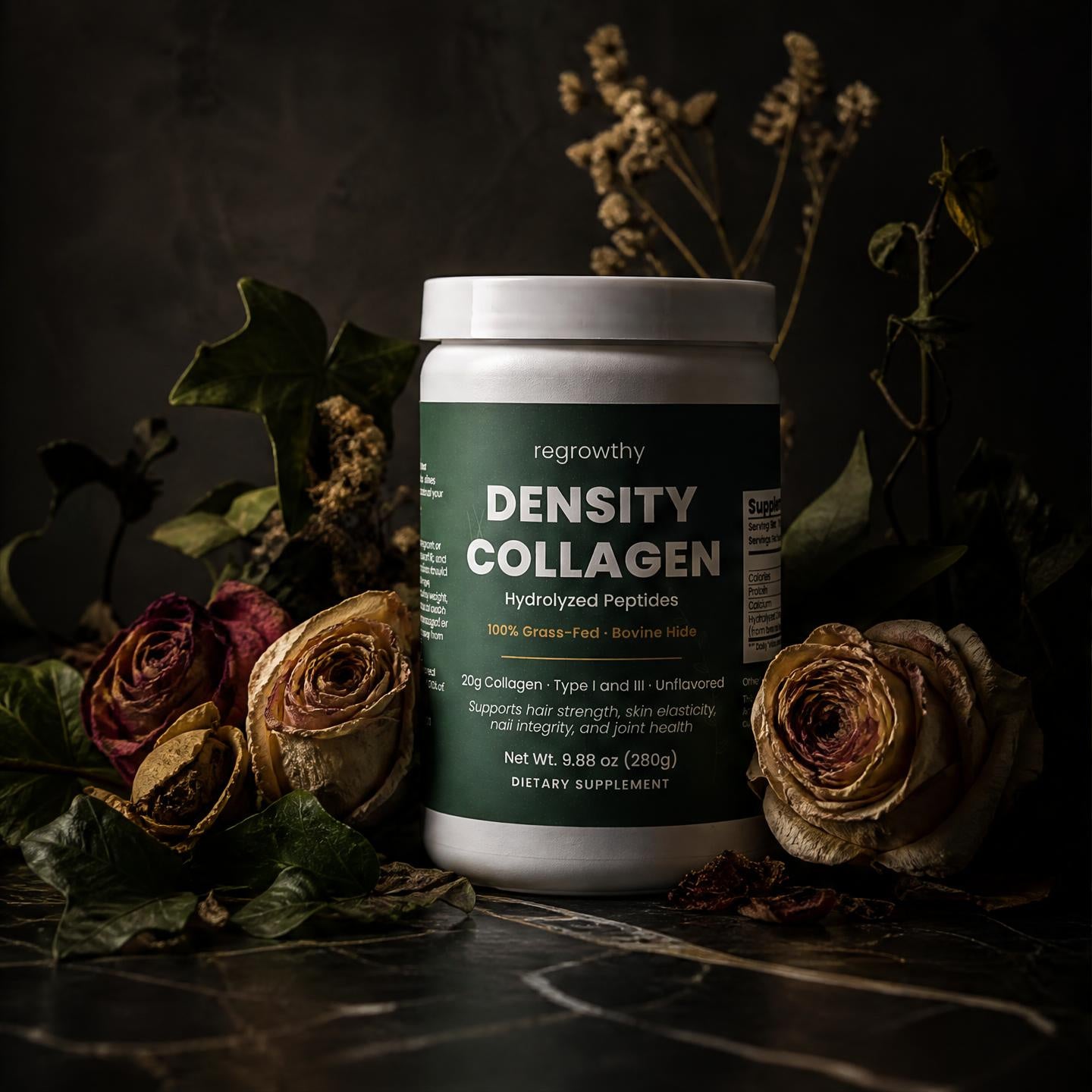
None of these ingredients replace one another, which is part of why formulations like Density Collagen Peptides are built to work alongside, not instead of, a full hair-support routine. Collagen supports the structural environment, while other ingredients and treatments address hormonal, circulatory, or follicle-stimulation pathways separately.
Scalp Skin, Collagen, and Follicle Anchoring
There is a second, often overlooked way collagen relates to hair: the health of the scalp skin itself. The scalp is skin, and like skin anywhere else on the body, its collagen content affects thickness, elasticity, and resilience. A scalp with well-supported connective tissue provides a more stable environment for follicles to anchor into, while thinner, less elastic scalp tissue can mean less structural support for each individual follicle.
This matters because scalp condition is not separate from follicle health, it is directly connected to it. A tight, poorly circulated, or structurally weakened scalp is a harder environment for a follicle to thrive in regardless of what internal signals it is receiving. This is one reason scalp care routines that combine internal nutritional support with topical scalp treatments, like a clarifying wash such as Dense Cleanse, tend to be recommended together rather than in isolation.
It also connects to why mechanical and energy-based treatments matter. Consistent stimulation from something like the Laser Therapy Cap is thought to support blood flow to the scalp, which in turn supports the delivery of oxygen and nutrients, including the amino acids from collagen and other proteins, to the follicle and its surrounding tissue. Structure and stimulation work together rather than as competing strategies.
Silica, another structural mineral increasingly discussed alongside collagen, is thought to play a supporting role in connective tissue strength as well. If you want to go deeper on that angle, our piece on silica and horsetail extract covers how mineral-based structural support compares to protein-based approaches like collagen.
How to Actually Use Collagen for Hair
If you are considering adding hydrolyzed collagen to your routine, a few practical points matter more than the marketing around any specific product. First, consistency matters more than dose size. Because collagen works by supplying amino acid building blocks over time, benefits (where they exist) tend to show up gradually over months, not days, similar to most nutritional interventions for hair.
Second, form matters. Hydrolyzed collagen peptides, which dissolve easily and absorb efficiently, are generally preferred over unprocessed collagen or gelatin for this purpose. Look for a product that specifies hydrolysis and peptide molecular weight rather than simply listing collagen as an ingredient.
- Pick a hydrolyzed form. Peptide-based collagen absorbs more efficiently than whole or gelatinized collagen.
- Be consistent. Daily use over a period of several months is where most reported benefits, in skin and connective tissue research generally, tend to appear.
- Pair it with a full routine. Structural support from collagen works best alongside treatments that address circulation and follicle stimulation directly.
- Track more than hair alone. Because collagen supports connective tissue broadly, some people notice changes in skin and nail quality alongside any hair-related benefits, which can help you gauge whether it is working for you.
This is exactly the thinking behind formulating Density Collagen Peptides as part of a broader Density Line rather than a standalone claim to fame. Collagen is a supporting player: a real, biologically grounded one, but a supporting player nonetheless. Combined with Daily Density Pro for broader nutritional support, Density Drops or Density Elixir for topical follicle support, and mechanical stimulation from a laser cap, you are addressing structure, nutrition, and stimulation together instead of hoping one ingredient does all the work.
Hair loss is rarely caused by a single deficiency, and it is rarely solved by a single ingredient either. Collagen's role is real but specific: it is one of the structural materials your follicles and the tissue around them are built from, and keeping that supply consistent is a reasonable, low-risk piece of a larger routine. If you are already managing DHT sensitivity, supporting circulation, and stimulating follicles directly, adding hydrolyzed collagen is a sensible way to make sure the structural foundation underneath all of that is not the weak link. It will not replace the treatments that address the root causes of thinning, but as part of a layered, evidence-minded approach, it earns its place.
From the routine
Mentioned in this article
Common questions
Frequently asked questions
Does collagen actually help with hair growth, or is it mostly marketing?+
How is hydrolyzed collagen different from regular collagen or gelatin?+
How long does it take to see results from collagen peptides for hair?+
Can I take collagen peptides alongside other hair supplements like biotin?+
Will collagen help with hair loss caused by DHT and male pattern baldness?+
Are there side effects or risks to taking hydrolyzed collagen supplements?+
The Regrowthy System
Ready to start regrowing at home?
Hands-free. Non-prescription. 660nm clinical wavelength, backed by a 30-day guarantee.
Continue Reading

Ingredient Science
Silica and Horsetail Extract for Hair: What the Research Shows
8 min read
Ingredient Science
Green Tea EGCG for Hair Growth: The Antioxidant Science
9 min read
Ingredient Science
Rosemary Oil for Hair Growth: What the Research Actually Shows
9 min read
Ingredient Science