Ingredient Science
Caffeine for Hair Growth: Topical Science Explained
Coffee for your scalp sounds like a gimmick, but topical caffeine has real mechanistic science behind it. Here is what caffeine actually does inside a hair follicle, and where its limits are.
Updated July 1, 2026
If you've spent any time researching hair loss, you've probably seen caffeine show up in shampoo ingredient lists and wondered whether it's a legitimate treatment or just marketing dressed up as science. The honest answer is more interesting than either extreme: caffeine for hair growth has a real, testable mechanism behind it, but it's not a standalone cure, and how it's delivered to the scalp matters enormously.
This article walks through what topical caffeine actually does at the cellular level, what the research does and doesn't support, and how it fits into a realistic, evidence-based hair loss protocol. No miracle claims, just a clear look at the mechanism and its limits.
What Is Topical Caffeine, Really?
Caffeine is a naturally occurring stimulant compound best known for its effects on the central nervous system, but it also acts locally when applied directly to skin and hair follicles. In the context of hair loss, researchers have been interested in caffeine for one specific reason: hair follicles are metabolically active structures, and caffeine appears to influence how follicle cells behave when it's absorbed at the scalp rather than swallowed.
This is an important distinction. Drinking coffee does not meaningfully affect your hair follicles, because very little of that caffeine ever reaches scalp tissue in a concentrated way. Topical caffeine, applied directly in a shampoo, serum, or drop formulation left in contact with the scalp, is a completely different exposure route, and it's the one that laboratory and clinical research has actually studied.
The interest in caffeine for hair growth originated from in vitro (lab-based) studies on isolated human hair follicles, which showed that caffeine could counteract some of the suppressive effects that androgens have on follicle growth. That early research is what launched caffeine into shampoo and topical formulations across the hair care industry.
How Caffeine Reaches the Hair Follicle
One of the most common misunderstandings about caffeine shampoo for hair loss is assuming that a quick wash-and-rinse is enough for the compound to do anything meaningful. Caffeine is a small, water-soluble molecule, which actually helps it penetrate the outer layers of skin relatively efficiently compared to larger cosmetic ingredients. Studies looking at caffeine penetration through hair follicles found that follicles themselves act as a kind of shortcut, allowing topical caffeine to bypass some of the skin's normal barrier function and reach deeper into the follicular unit.
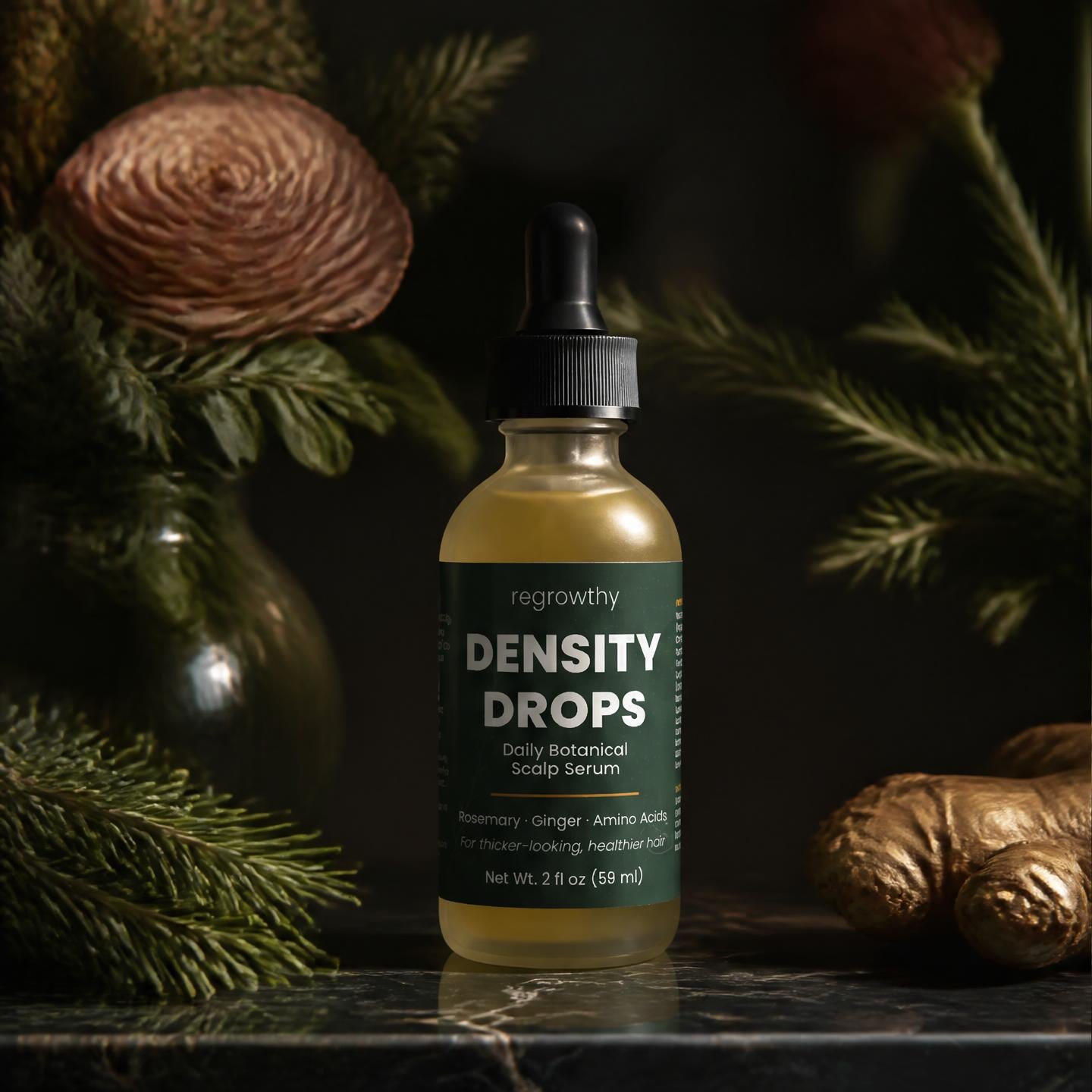
That said, contact time matters. A caffeine shampoo that's rinsed out within 30 to 60 seconds gives the compound far less opportunity to penetrate than a formulation designed to stay on the scalp, such as a leave-in serum or drop-based product. This is one reason product formulation is just as important as the ingredient itself. A well-formulated leave-on product like Density Drops is built around prolonged scalp contact specifically because caffeine (and other actives) need dwell time to be absorbed into the follicle rather than sitting on the surface for a few seconds before being washed away.
Concentration also plays a role. Most caffeine shampoos on the market use relatively low concentrations diluted across a large volume of surfactant-heavy product, meaning the actual caffeine exposure per wash is modest. This doesn't mean caffeine shampoo hair loss products are useless, but it does mean expectations should be calibrated. They function best as a supporting layer in a broader routine rather than a primary treatment on their own.
Key Point
Topical caffeine only does meaningful work when it actually reaches the follicle. Contact time, concentration, and formulation determine whether a caffeine product is a token ingredient on a label or an active part of your routine.
Topical Caffeine and DHT: What the Science Shows
To understand why caffeine is discussed alongside DHT-focused treatments, it helps to revisit the basic mechanism of pattern hair loss. Dihydrotestosterone (DHT), a byproduct of testosterone created by the enzyme 5-alpha reductase, binds to androgen receptors in genetically susceptible follicles. This binding shortens the growth phase of the hair cycle and gradually miniaturizes the follicle, producing progressively finer, shorter hairs over successive cycles.
Laboratory research on isolated hair follicles has found that caffeine can help counteract some of the growth-suppressing effects that testosterone and DHT exposure produce in follicle tissue. The proposed mechanism isn't that caffeine blocks 5-alpha reductase the way a prescription drug does. Instead, caffeine appears to work downstream, supporting follicle metabolism and cellular energy production in a way that offsets some of the growth-inhibiting signal that androgens send to the follicle.
This is why you'll often see topical caffeine DHT research described in fairly measured terms in the dermatology literature: it's a supportive, follicle-level effect rather than a systemic hormone blocker. It doesn't lower DHT levels in your bloodstream and it isn't a substitute for a genuine DHT-blocking strategy. But at the local, topical level, it appears to make follicles somewhat more resilient to androgen exposure, which is a meaningfully different (and generally safer) mechanism than systemic hormonal intervention.
This is also why caffeine is frequently formulated alongside other topical DHT-related ingredients like rosemary oil or saw palmetto. Each ingredient appears to influence the androgen pathway or follicle environment through a slightly different route, and combining them is a more realistic strategy than expecting any single compound to fully offset genetic sensitivity to DHT.
Caffeine's Effect on the Anagen (Growth) Phase
Hair growth happens in cycles: anagen (active growth), catagen (transition), and telogen (resting, followed by shedding). In pattern hair loss, the anagen phase of affected follicles becomes progressively shorter with each cycle, which is part of why hair gets finer and shorter over time even before it disappears entirely.
Research on isolated human hair follicle organ culture has shown that caffeine exposure can extend the duration of the anagen phase and increase hair shaft elongation compared to untreated follicles in the same experimental conditions. The proposed explanation involves caffeine's role as a phosphodiesterase inhibitor, which increases cyclic AMP levels inside follicle cells. Higher cyclic AMP is associated with increased cellular energy metabolism, which in turn appears to support the proliferation of the matrix cells responsible for producing the hair shaft.
In plain terms: caffeine appears to give follicle cells a metabolic nudge that helps them stay in growth mode a bit longer and produce hair more efficiently while they're in that phase. This is a meaningfully different mechanism from something like red light therapy, which stimulates follicle cells through mitochondrial photobiomodulation rather than a biochemical pathway, but the two mechanisms are complementary rather than redundant.
It's worth being precise about what this research does and doesn't establish. Most of the strongest anagen-phase data on caffeine comes from isolated follicle and cell culture studies, which are useful for understanding mechanism but don't automatically translate into a guaranteed cosmetic outcome for every scalp. Human clinical trials on topical caffeine tend to be smaller and more limited than the large trials behind prescription treatments, so it's fair to describe caffeine's growth-phase benefits as biologically plausible and mechanistically supported, rather than as dramatically proven at a population level.
Caffeine Shampoo vs. Leave-In Formulas
This is one of the most practical questions for anyone shopping for a caffeine-based hair loss product: does the delivery format actually matter? Based on what's understood about skin penetration and contact time, the answer is yes, and it matters more than most product labels let on.
- Caffeine shampoo: Convenient and easy to build into an existing routine, but short contact time (typically under a minute before rinsing) limits how much caffeine actually penetrates to the follicle. Best treated as a mild supporting layer, not a primary active.
- Leave-in serums and drops: Designed for extended scalp contact, often applied and left in place for hours or overnight. This dramatically increases the window for absorption and is generally considered a more efficient delivery method for follicle-level ingredients like caffeine.
- Scalp cleansers with actives: Some shampoos, like Dense Cleanse, are formulated to also clear follicle buildup and excess oil, which can help any leave-on treatment applied afterward absorb more evenly into a clean scalp environment.
If you're specifically trying to get the most out of caffeine's follicle-level effects, a leave-in approach is going to outperform a rinse-out shampoo simply on the basis of contact time. That doesn't mean caffeine shampoo for hair loss is a waste of money, but it does mean it should be understood as one part of a routine rather than the centerpiece of one.
Formulation quality within each category also varies widely. A leave-in product needs the right concentration, a stable delivery vehicle, and ideally complementary ingredients that support absorption and follicle health together, rather than a single active floating in a generic base.
What Caffeine Cannot Do
It's worth being direct about the limits here, because overselling any single ingredient does readers a disservice. Topical caffeine is not a systemic DHT blocker in the way that prescription medications are. It does not reduce circulating DHT levels in the bloodstream, and it will not fully neutralize a strong genetic predisposition to androgenic hair loss on its own.
Caffeine also will not regrow hair from follicles that have been fully dormant for years. Like most topical interventions, it works best on follicles that are miniaturized but still biologically active, which is generally the case in earlier stages of thinning rather than advanced, longstanding baldness.
Finally, caffeine's effects, like most hair care interventions, are use-dependent. The follicle-level metabolic support it provides doesn't accumulate permanently. Consistent, ongoing application is what the underlying mechanism actually calls for, not a short course followed by stopping.
Combining Caffeine With Other Treatments
Given caffeine's realistic role as a supportive, follicle-level ingredient rather than a standalone solution, the more useful question is how it fits alongside other approaches with different mechanisms. This is where a multi-modal routine tends to outperform any single ingredient or device used in isolation.
Red light therapy delivered through a device like the Laser Therapy Cap works through photobiomodulation, a completely separate mechanism from caffeine's biochemical pathway. Where caffeine supports follicle cell metabolism topically, 660nm red light stimulates mitochondrial activity in follicle cells directly, and the two approaches don't compete for the same biological pathway, which is part of why they're often used together rather than as alternatives to each other.
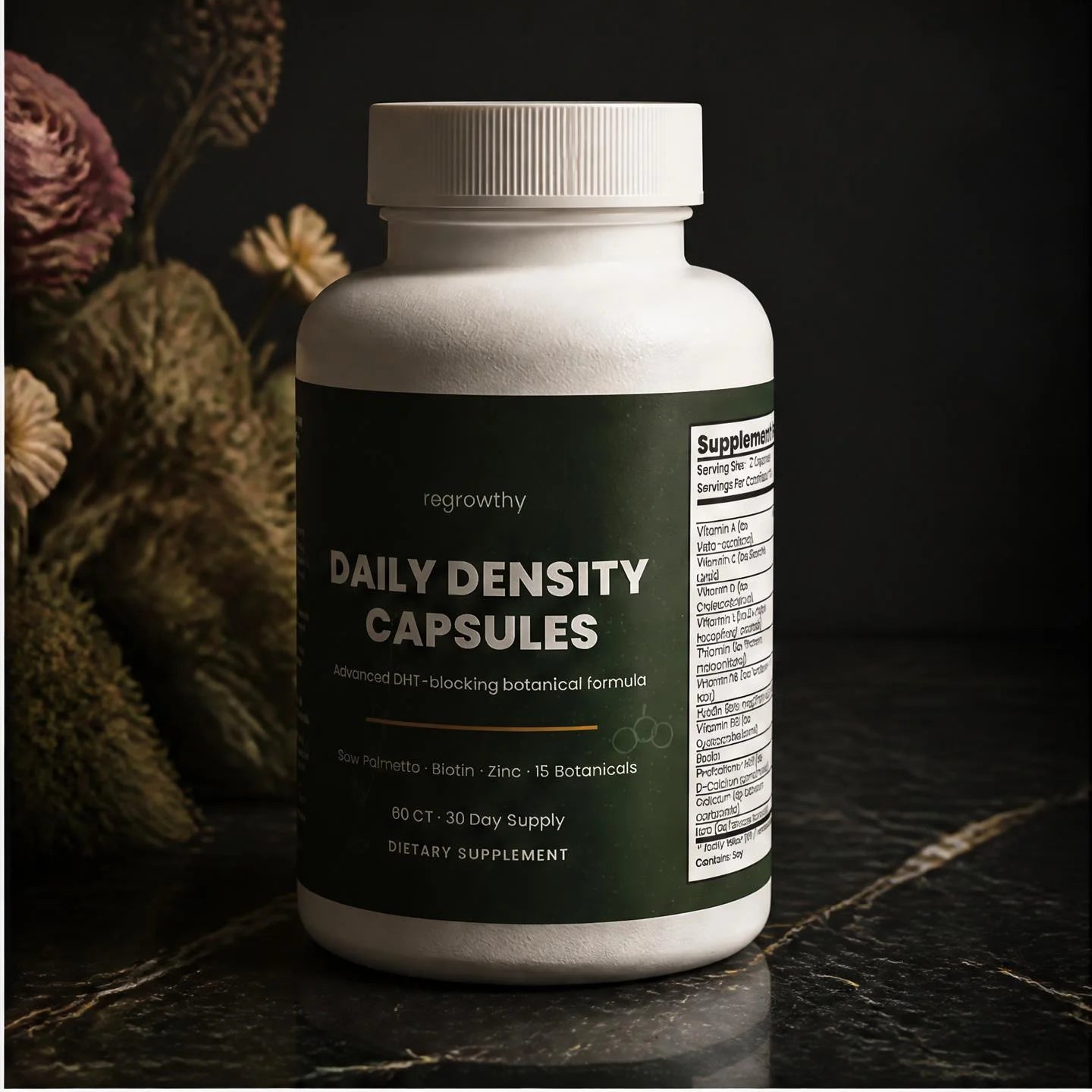
Nutritional support also plays a role that topical treatment alone can't fully cover. Ingredients like biotin and hydrolyzed collagen peptides support the structural building blocks of the hair shaft itself, which is a different piece of the puzzle from follicle-level DHT resilience. A daily supplement such as Daily Density Pro is generally formulated to address this nutritional layer, while a topical leave-in like Density Drops addresses the scalp and follicle layer.
- Topical layer: A caffeine-containing leave-in drop or serum, applied consistently to clean scalp for maximum contact time.
- Device layer: Red light therapy several times a week to stimulate follicle cells through a separate, non-chemical mechanism.
- Nutritional layer: Daily supplementation to support the raw materials (protein, biotin, key micronutrients) that a growing hair shaft actually needs.
- Scalp environment layer: A clarifying shampoo to keep the follicle opening free of buildup so topical actives can actually reach the skin.
No individual layer here is a miracle fix, and it's worth staying skeptical of any product, caffeine-based or otherwise, that claims to be one. But stacked together, addressing the follicle, the scalp, the cellular environment, and the nutritional foundation at the same time is a genuinely more defensible strategy than betting everything on one ingredient, however promising its lab data looks.
If you're new to reading ingredient labels critically, it also helps to understand how caffeine sits alongside other topical actives in the broader hair care landscape, since ingredients rarely work in isolation from the rest of your routine.
The bottom line on caffeine for hair growth is this: it has a real, mechanistically plausible role in supporting follicle health and offsetting some of the growth-suppressing effects of androgen exposure, particularly when it's formulated for genuine scalp contact time rather than a quick rinse. It is not a replacement for a broader strategy, but as one well-chosen layer in a consistent routine, it earns its place on the ingredient list.
From the routine
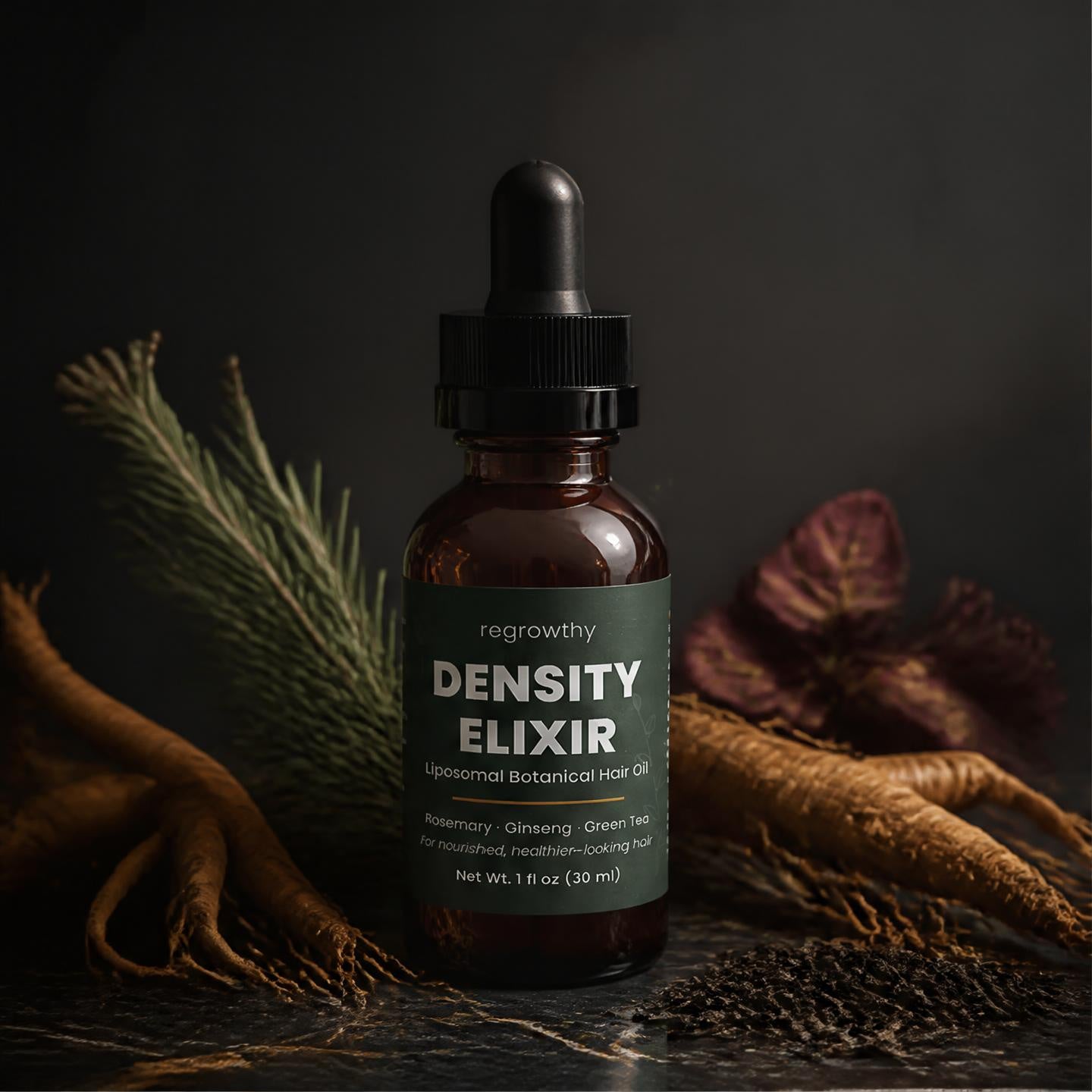
Mentioned in this article
Common questions
Frequently asked questions
Does caffeine shampoo actually work for hair loss?+
How is topical caffeine different from drinking coffee for hair growth?+
Can topical caffeine block DHT the same way finasteride does?+
How long does it take to see results from topical caffeine?+
Is caffeine safe to use with other hair loss treatments?+
Does caffeine work on advanced hair loss or only early thinning?+
The Regrowthy System
Ready to start regrowing at home?
Hands-free. Non-prescription. 660nm clinical wavelength, backed by a 30-day guarantee.
Continue Reading
Ingredient Science
Ketoconazole for Hair Loss: What the Antifungal Science Shows
9 min read
Ingredient Science
Hydrolyzed Collagen for Hair: The Follicle Structure Science
9 min read
Ingredient Science
Rosemary Oil for Hair Growth: What the Research Actually Shows
9 min read
Ingredient Science