Lifestyle & Wellness
The Complete Hair Care Routine for Women Dealing With Thinning Hair
Thinning hair behaves differently on women, and a routine that actually helps has to cover the scalp, daily habits, nutrition, and consistent treatment all at once. Here is the complete, realistic routine to build and stick with.
Updated July 1, 2026
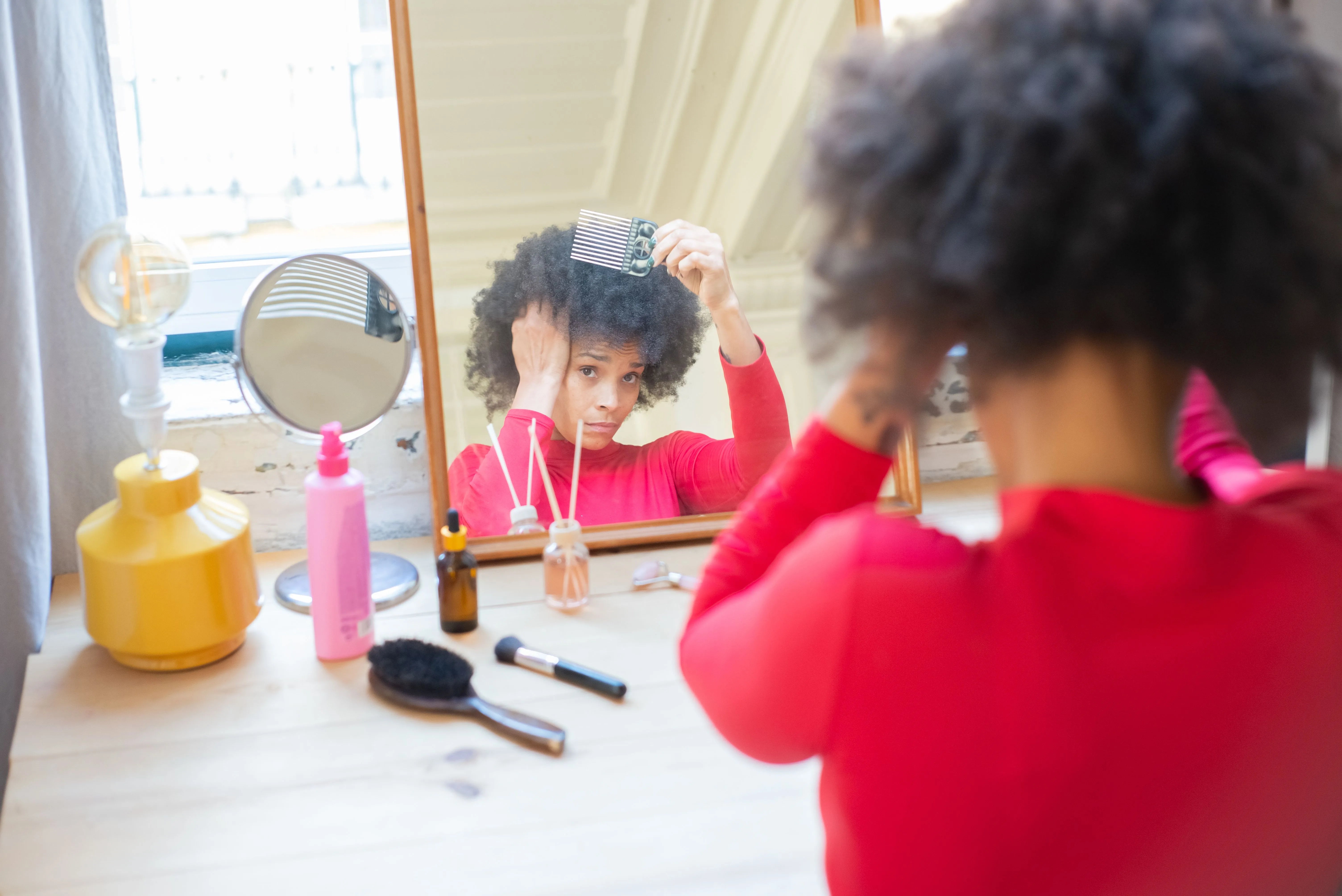
If you've noticed more strands in the shower drain, a part that looks wider than it used to, or a ponytail that feels thinner in your hand, you are not imagining it, and you are far from alone. Hair thinning in women is common, and it rarely has one single cause. That is exactly why we built this guide: a complete hair care routine women dealing with thinning hair can actually follow, step by step, without adding another hour to an already full day.
Think of this as your womens thinning hair routine, the kind you build once and repeat daily rather than something you have to relearn every time you try a new product. Below is a hair loss routine for women that combines scalp care, smart daily habits, nutrition, and one or two targeted treatments, in the order that actually moves the needle.
Why Women's Hair Thinning Is Different
Hair loss in women rarely looks like the receding hairline pattern most people associate with men. It usually shows up as diffuse thinning, most noticeable at the part line and crown, with overall density gradually decreasing rather than clear bald patches forming. This pattern, often called female pattern hair loss, is tied to genetics and to how hair follicles respond to hormones over time, including a gradual sensitivity to DHT, the same hormone byproduct involved in male pattern baldness, though the process tends to unfold more slowly and diffusely in women.
Hormonal shifts are a major piece of the puzzle. Pregnancy, postpartum recovery, perimenopause, and menopause all involve changes in estrogen that can push more hair follicles into a resting phase at once, leading to noticeable shedding a few months later. Thyroid imbalances, low iron, crash dieting, and significant physical or emotional stress can trigger a similar pattern known as telogen effluvium. In fact, the connection between chronic stress and hair loss is one of the most underestimated factors we see, since stress hormones can shorten the growth phase of the hair cycle long before thinning shows up in the mirror.
Because the causes are layered, a routine built for women needs to address more than one variable at once: what touches your scalp, what you put in your body, how you style your hair day to day, and how consistently you support the follicle itself.
Scalp Care: The Real Foundation
It is tempting to focus entirely on the hair itself, but healthy hair grows out of a healthy scalp. When oil, product buildup, and dead skin accumulate around the follicle, it can contribute to inflammation and a less hospitable environment for new growth. This is especially important for thinning hair, since miniaturizing follicles are already working with a shorter growth window and less margin for irritation.
Start by choosing a cleanser formulated for a thinning or sensitive scalp rather than a generic shampoo built for shine or fragrance. Dense Cleanse was designed specifically for this: a sulfate-free scalp shampoo that clears buildup gently while supporting a calmer, healthier scalp environment for hair that is already under stress. Washing two to three times a week is a reasonable starting point for most women, adjusted based on how oily your scalp gets, since both excess oil and over-washing can each cause their own irritation.
While you wash, spend an extra thirty to sixty seconds massaging the scalp with your fingertips, not your nails. Scalp massage is a low-effort habit that supports circulation to the follicle, and it pairs naturally with topical treatments like Density Drops or a rosemary oil based serum, both of which work best when massaged in rather than simply poured on and left alone.
Your Daily Hair Care Routine, Step by Step
Consistency matters more than complexity. Here is a realistic daily hair care routine women with thinning hair can maintain long term, broken into morning and evening steps.
- Detangle gently before washing. Use a wide-tooth comb or a wet brush starting at the ends and working up, never yanking through knots at the root, where thinning strands are most fragile.
- Cleanse the scalp, not just the lengths. Focus shampoo at the roots and let the suds rinse through the ends rather than piling product onto hair that is already fine.
- Apply a lightweight conditioner from mid-shaft down. Heavy conditioners applied at the scalp can weigh down fine hair and make thinning more visible.
- Apply scalp treatments to damp, clean skin. This is when serums and drops absorb best, before any styling product goes on.
- Air dry when you can, and use a heat protectant when you can't. Thinning hair is more vulnerable to heat damage since there is simply less hair to buffer the strand.
- Sleep on a silk or satin pillowcase. Cotton creates friction overnight that can cause unnecessary breakage on hair that is already thinner.
Key Point
A hair loss routine for women only works if it survives a busy week. Pick two or three non-negotiable steps, like scalp cleansing and a nightly serum, and treat everything else as a bonus rather than a requirement. Consistency with a simple routine beats an elaborate one you abandon after ten days.
Nourishing Hair From Within
Hair is one of the last places the body sends nutrients, which means deficiencies in protein, iron, vitamin D, zinc, or B vitamins often show up in your strands before almost anywhere else. A diet built to support hair growth should include enough protein at each meal, iron-rich foods, and a source of omega-3 fatty acids, since the follicle needs a steady supply of building blocks to produce new, strong hair.
For most women, closing nutritional gaps consistently through food alone is genuinely difficult, especially with a busy schedule. This is where a daily supplement habit earns its place in the routine rather than replacing real food. Daily Density Gummies are built as an easy way to get key hair-supporting nutrients in every day without adding another pill to swallow or another step that gets skipped when mornings get hectic. For women who prefer a more concentrated daily formula, Daily Density Pro capsules cover similar ground with ingredients like saw palmetto, which has long been studied for its role in supporting healthy DHT balance.
Whichever format fits your life, the principle is the same: nutrition is not a quick fix, it is a background input that determines how well every other part of your routine can actually work.
Weekly Treatments Worth the Time
On top of your daily habits, a few weekly additions can meaningfully support thicker-looking hair over a few months of consistent use. A deep conditioning treatment once a week helps restore moisture to strands that see regular heat styling. A gentle scalp exfoliation, even just once every one to two weeks, helps clear the kind of buildup that a daily cleanser can miss.
Light therapy is another tool worth building into a weekly rhythm rather than reaching for occasionally. Devices like the Laser Therapy Cap use low-level red light to support circulation and cellular activity at the follicle, and they are designed to be worn for a set number of minutes several times a week, typically while doing something else entirely, like reading or watching a show, so the routine slots into an existing schedule instead of demanding new time on the calendar. As with most things related to hair growth, the benefit comes from steady, repeated sessions over months, not a single use.
Styling Choices That Protect Thinning Hair
How you style your hair day to day can either support your routine or quietly undo it. Tight ponytails, buns, and braids worn in the same spot every day put continuous tension on the follicle, which can contribute to a type of hair loss called traction alopecia over time. Alternating your part, loosening up your usual ponytail, and giving your hairline a break from constant pulling are small changes that protect the hair you have while the rest of your routine works on the hair you are trying to regrow.
Chemical processing deserves the same caution. Frequent bleaching, relaxing, or keratin treatments can weaken strands that are already more fragile due to thinning, so spacing these out and prioritizing a good bond-building treatment when you do color your hair goes a long way. On the styling front, a volumizing mousse applied at the root, a strategic layered cut, and root-lifting blow-drying techniques can all make existing hair look considerably fuller while your routine does its slower work underneath.
Lifestyle Habits That Support the Routine
No topical routine can fully offset a lifestyle that is working against it. Sleep is when much of the body's repair and cell turnover happens, hair follicles included, so consistently short sleep can blunt the results of an otherwise solid routine. Regular movement, stress management practices like short daily walks or breathing exercises, and simply protecting a few minutes of downtime each day all support the hormonal balance that keeps hair in its growth phase longer.
Patience is the hardest habit to build, but it matters most. Hair grows in cycles, and it typically takes three to six months of consistent care before you can honestly evaluate whether a routine is working. Take a photo under the same lighting once a month rather than checking the mirror daily, since day-to-day changes are nearly impossible to judge accurately and can lead you to abandon a routine that was actually working.
A hair care routine for women dealing with thinning hair is not about doing everything at once. It is about choosing a handful of habits, scalp care, smart styling, consistent nutrition, and a treatment or two you can actually stick with, and giving them the months they need to work. Build it once, protect it on your busiest weeks instead of abandoning it, and let the process work the way hair actually grows: slowly, and then all at once.
From the routine
Mentioned in this article


Common questions
Frequently asked questions
How long does it take to see results from a new hair care routine?+
Can I use scalp treatments and hair oils on the same day?+
Is it better to wash thinning hair every day or less often?+
Do tight hairstyles actually make thinning worse?+
Do I need a supplement if I already eat a healthy diet?+
Can stress alone cause noticeable hair thinning?+
The Regrowthy System
Ready to start regrowing at home?
Hands-free. Non-prescription. 660nm clinical wavelength, backed by a 30-day guarantee.
Continue Reading

Lifestyle & Wellness
Stress and Hair Loss: The Science Behind Telogen Effluvium
9 min read
Lifestyle & Wellness
The Best Diet for Hair Growth: Foods That Feed Your Follicles
10 min read
Lifestyle & Wellness
Intermittent Fasting and Hair Loss: What You Should Know
9 min read
Lifestyle & Wellness