Results & Progress
Your First Month of Hair Loss Treatment: What to Actually Expect
Thirty days into a new hair loss routine, the mirror rarely shows much. Here is what is actually happening beneath the surface during month 1, and why that quiet is normal.
Updated July 1, 2026
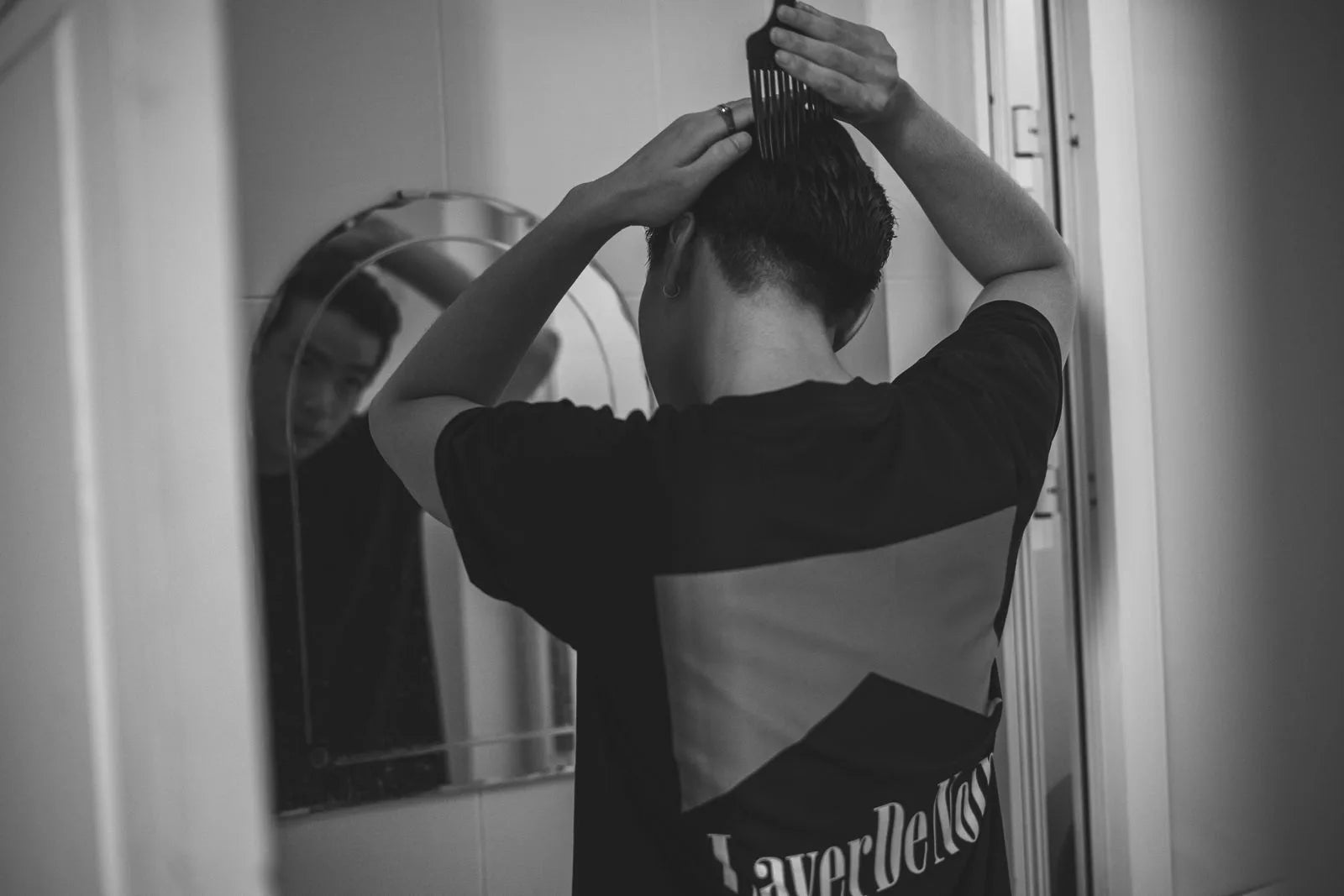
You started using your Laser Therapy Cap or opened your first bottle of capsules three weeks ago, and you are already checking the mirror every morning looking for a difference that hair biology simply cannot deliver on that kind of schedule. That impatience is normal. It is also the single biggest reason people quit a hair loss routine before it has had a chance to work. Understanding what actually happens during your first month of hair loss treatment, and why so little of it is visible, is what keeps you consistent long enough to reach the point where results actually show up.
This is not a story about miracle timelines. It is a realistic, week by week look at what is happening under the surface during month 1 hair regrowth efforts, what you should and should not expect to see, and how to build a routine you will still be following in month six, when it actually counts.
What's Actually Happening Inside Your Follicles Right Now
Hair loss driven by genetics is, in most cases, a slow process of follicle miniaturization caused by dihydrotestosterone, or DHT, a byproduct of testosterone that binds to receptors in genetically susceptible follicles and gradually shortens their growth phase. That process typically took years to become visible. It is not going to reverse in thirty days, no matter how good your routine is.
What can happen in month 1 is the beginning of a shift in the environment around those follicles. Reducing DHT's effect at the follicle, improving blood flow and cellular energy with red light, and supporting the scalp with proper nutrients and a cleaner follicle environment are all things that can start in week one. But follicles operate on cycles that last months, not days. A follicle that is currently in its resting phase is not going to suddenly sprout a visible hair because you started treatment three weeks ago. It has to cycle back into an active growth phase first, and that takes time you cannot rush.
This is the part almost nobody tells you before you start, and it is the reason month 1 is more about laying groundwork than seeing proof.
Weeks 1 and 2: The Adjustment Phase
The first two weeks are almost entirely about building the habit, not evaluating the results. If you are using a laser cap, you will likely feel warmth or a mild tingling on the scalp during sessions. That is a normal response to the light and does not mean anything is malfunctioning or that anything dramatic is happening beneath it either. If you have added a topical treatment, expect a short adjustment window where your scalp gets used to a new product touching it daily.
This is also when people are most likely to notice small, non-hair related things: a slightly oilier or drier scalp than usual, mild tingling from certain topicals, or simply the friction of remembering to do something new every day. None of this predicts whether the treatment is working. It predicts whether you are consistent enough to find out.
A simple way to protect this phase is to treat it like brushing your teeth rather than an experiment you are grading in real time. Set the same time each day, keep the routine boring and automatic, and resist the urge to inspect your scalp under bright light every morning. That kind of daily scrutiny mostly produces anxiety, not information.
Why You Might See More Shedding, Not Less
Somewhere between week two and week four, a subset of people starting a new hair loss routine notice more hair in the shower drain or on the pillow, not less. This catches almost everyone off guard, and it is one of the most common reasons people stop a treatment right before it would have started working.
What is likely happening is that follicles which had been sitting dormant, or holding onto thinning hairs longer than they should, are being nudged into a new cycle. Older, weaker hairs get shed to make room for a new growth phase. It looks alarming in the moment, but it is generally a sign that follicles are responding, not failing. We cover this pattern in detail in our piece on hair shedding during treatment, including how long it typically lasts and what would actually be a red flag versus what is just noise.
The practical takeaway for month 1 is this: do not let a week or two of extra shedding talk you out of a routine you just started. Shedding that resolves within a few weeks and is followed by stabilization is a very different story than shedding that continues to worsen for months with no plateau.
Key Point
Nothing you do in week one determines whether treatment works. What determines it is whether you are still doing it, consistently, in month four and month five. Month 1 is about protecting the habit, not judging the outcome.
Building a Routine You Will Actually Keep for Months
The routines that hold up long term tend to be the boring, stackable kind, not the complicated ones. If you are using a Laser Therapy Cap, most people do best sticking to a schedule of roughly every other day for around 10 to 20 minutes a session, applied consistently at the same point in your day so it becomes automatic rather than something you have to remember to fit in.
If you are also using something like Density Elixir or a daily capsule such as Daily Density Pro, pair it with an existing habit, like your morning coffee or your nighttime skincare, rather than treating it as its own standalone task. Ingredients like saw palmetto are included in some formulations specifically because they work on the DHT pathway from a different angle than a topical or a device does, which is part of why combining approaches, rather than relying on one alone, tends to make more sense for most people dealing with genetic thinning.
The goal in month 1 is not intensity. It is building a routine simple enough that you are still doing it without thinking in month 3, because that is roughly when the biology starts to catch up with the effort.
What You Should Not Expect Yet (and Why That's Normal)
It is worth saying plainly: visible thickening, a noticeably fuller hairline, or a head full of short new hairs are not realistic expectations for the first month of hair loss treatment, and any product promising that on a thirty day timeline should make you skeptical rather than excited. Hair grows roughly half an inch a month at most, and a follicle has to first re-enter an active growth phase before it produces anything visible at all.
What is reasonable to expect in month 1 is simply less than what you are hoping for and more than nothing: a routine that is becoming automatic, a scalp that may feel different in small ways, and possibly the temporary shedding phase described above. Real visual change for most people starts to become noticeable somewhere in the month 3 to month 4 range, and continues building from there. If you are looking for a sense of what to expect starting hair treatment beyond month 1, that later window is where the more meaningful changes tend to show up.
Tracking What Actually Matters in Month One
Because month 1 will not show dramatic visual change, what you track matters more than usual. Photos taken in the same lighting, same angle, and same hair styling, ideally on the same day each week, are far more reliable than memory, which tends to either exaggerate or completely miss gradual change. Our guide on tracking hair growth progress walks through a simple system for this that does not require special equipment.
Beyond photos, a few other things are worth logging during month 1:
- Approximate hair count in the shower drain or on your pillow, tracked loosely by week rather than obsessively by day, so you can see the shape of the shedding pattern rather than fixating on any single bad day.
- Scalp comfort and any irritation, especially if you introduced a new shampoo like Dense Cleanse alongside other products, so you can identify what is causing what if something needs adjusting.
- Simple adherence: did you actually complete your laser sessions and take your supplements as intended that week. This single number predicts outcomes more than almost anything else you could measure.
None of these numbers will look impressive after thirty days, and that is expected. Their value comes later, when you compare month 1 to month 3 and can actually see the trend line instead of guessing from memory.
Common Mistakes That Quietly Derail Month One
A few patterns show up again and again in people who give up too early or undermine their own results without realizing it. The first is inconsistency dressed up as busyness: skipping a laser session here, forgetting a capsule there, telling yourself you will double up tomorrow. Hair growth does not really work on a catch up basis. Consistency over the full month matters more than any single session.
The second is changing too many variables at once. Starting a device, a supplement, and a new shampoo all in the same week makes it nearly impossible to know what, if anything, is causing a change in your scalp, whether that change is good or bad. Where practical, staggering new additions by a week or two makes the whole process easier to interpret.
The third is treating a normal shedding phase as proof of failure and stopping right before the follicle cycle would have turned a corner. And the fourth, maybe the most common, is simply expecting month 1 to look like month 4 and feeling discouraged when it does not, which has more to do with unrealistic timelines than with whether the treatment is actually working.
None of these mistakes are complicated to avoid. They mostly require knowing, ahead of time, that month 1 is quiet by design, so quiet does not get mistaken for failure.
Thirty days into treating hair loss, you will not have a mirror moment. What you should have is a routine that has become close to automatic, a rough sense of your baseline shedding and scalp condition, and enough patience left to make it to month 3, which is where this story actually starts to get interesting. Hair follicles work on their own timeline, not yours, and the people who see real change six months from now are, almost without exception, the ones who treated month 1 as a foundation to build on rather than a verdict to react to.
From the routine
Mentioned in this article


Common questions
Frequently asked questions
Will I see any actual regrowth in my first month of treatment?+
Is it normal to shed more hair after starting treatment?+
How often should I use my laser cap during month 1?+
Should I start all my supplements and products at the same time?+
What if I don't notice any change by day 30?+
How do I know if my month 1 experience is normal versus a problem?+
The Regrowthy System
Ready to start regrowing at home?
Hands-free. Non-prescription. 660nm clinical wavelength, backed by a 30-day guarantee.
Continue Reading

Results & Progress
How to Track Hair Growth Progress: Photos, Metrics, and Tools
7 min read
Results & Progress
Hair Shedding During Treatment: Why It Happens and When to Worry
7 min read
Results & Progress
When Will You See Results From Laser Therapy?
8 min read
Results & Progress