Results & Progress
Why Is My Hair Shedding More, Not Less, on Treatment?
More hair in the drain right after starting treatment doesn't mean it's failing. Here's why shedding increases before it improves, how long the phase usually lasts, and how to tell normal shedding from a real warning sign.
Updated July 1, 2026
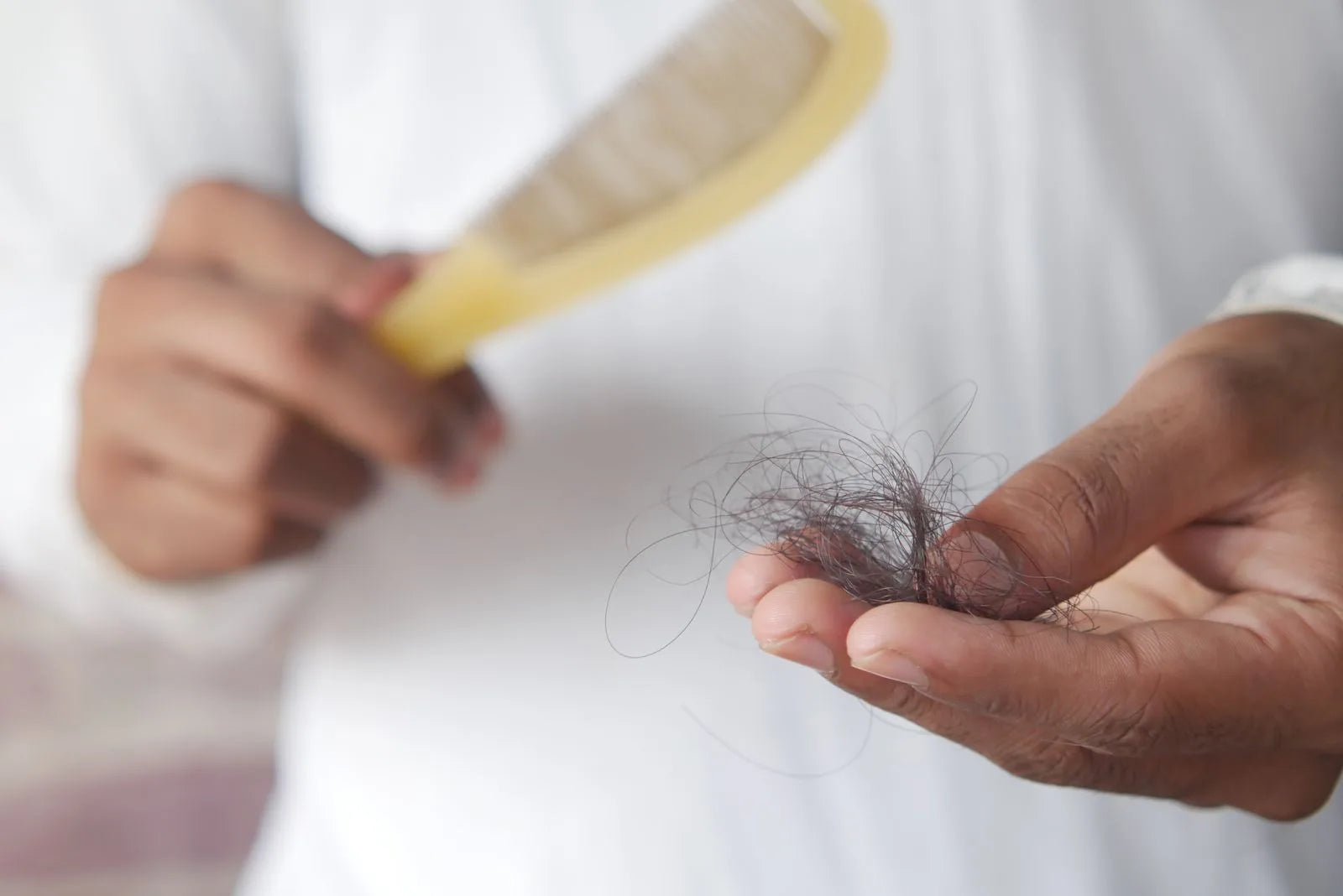
If you started a hair regrowth treatment expecting the shedding to slow down right away, and instead you're finding more hair in the shower drain, on your pillow, or caught in your brush, you're not imagining it and you're not alone. Hair shedding more on treatment is one of the most common, and most alarming, experiences people report in the first few months of a new routine, whether that routine centers on a topical, a Laser Therapy Cap, or a supplement regimen. The honest answer to "why is my hair falling out more" right after you started trying to fix it is usually reassuring: this is a known, well documented phase, and it often means the treatment is doing exactly what it's supposed to do.
The Shedding Phase Is a Real, Documented Response
Increased shedding after starting a new hair regrowth treatment has a nickname in dermatology circles: the "dread shed." It's most widely documented with topical minoxidil, where the increased shedding minoxidil users experience in the first several weeks is common enough that most dermatologists mention it as a possibility before a patient ever starts. But the same pattern shows up around other treatments that stimulate the scalp or the follicle, including laser and light-based therapies, because the underlying mechanism isn't specific to any one ingredient or device. It's a byproduct of pushing a stalled hair growth cycle back into motion.
This matters because it reframes the question. The shed usually isn't evidence that a treatment has failed or made things worse. In most cases it's evidence that follicles which had been sitting dormant, or that were producing progressively thinner hairs under the influence of DHT, are finally being cycled out to make room for something healthier. That doesn't make watching it happen any less unsettling, especially if you already feel self-conscious about your hair. But understanding what's happening physiologically tends to make the next few weeks easier to sit through.
Why Treatment Can Trigger More Shedding Before It Triggers Less
To understand the shed, it helps to understand the hair growth cycle itself. Every hair on your head moves through phases: anagen (active growth, lasting years), catagen (a short transition), telogen (a resting phase lasting a few months), and exogen (the shedding of the resting hair so a new one can begin growing in its place). At any given time, roughly 85 to 90 percent of your hair should be in anagen and only a small share in telogen. Normal daily shedding of 50 to 100 hairs reflects that small share cycling out on a staggered, unsynchronized schedule.
When you introduce something that increases blood flow and cellular activity at the follicle, whether that's the low-level light from a laser cap or the vasodilating effect of a topical treatment, you're effectively telling a batch of resting or miniaturized follicles that it's time to move on. Hairs that were lingering in telogen, or that were being slowly choked down by DHT into finer and finer strands, get pushed out ahead of schedule so a new anagen hair can take their place. Because a larger-than-usual batch of follicles gets this signal at roughly the same time, the shedding becomes synchronized instead of staggered, and that synchronization is what you actually notice as a sudden increase.
Key Point
A temporary increase in shedding after starting treatment usually means old, weak, or miniaturized hairs are being cycled out to make room for new growth, not that the treatment is damaging your hair. The hairs that grow in to replace them are typically thicker and healthier than the ones that fell.
How Long Increased Shedding Typically Lasts
For most people, the increased shedding phase runs somewhere between four and eight weeks, though it can stretch closer to twelve weeks in some cases, particularly with treatments that work more aggressively on the follicle. If you're using a Laser Therapy Cap, the shed, when it happens at all (not everyone experiences a noticeable one), tends to be milder than what's commonly reported with topical minoxidil, since light-based stimulation tends to work more gradually. Either way, the shedding should taper off well before it would count as a permanent trend, and it should be followed by visibly finer, shorter regrowth at the hairline and part line within a few more months.
It's worth setting your expectations around timeline before you start any new routine, not after you're already a few weeks in and worried. Reading up on realistic hair regrowth expectations before you start, or even now, mid-shed, can help you recognize this phase for what it is instead of assuming the worst.
Normal Shedding vs. a Sign Something's Wrong
Not every increase in shedding is the harmless kind, so it's worth knowing what separates a normal treatment-related shed from something that needs attention. A few questions can help you tell the difference:
- Timing: Did the increase start within the first few weeks of a new treatment, product, or dose change? That points toward a normal cycling response. Shedding that appears out of nowhere, with no new product, illness, or stressor behind it, deserves a closer look.
- Pattern: Diffuse shedding spread evenly across the scalp is consistent with a cycling response. Sudden patchy bald spots, a receding patch with a distinct, well-defined border, or clumps coming out in one localized area point toward something else, like alopecia areata or a scalp condition, and are worth a dermatologist's opinion.
- Duration: A shed that resolves within two to three months and is followed by visible regrowth is typical. A shed that continues past three to four months with no sign of new growth is atypical and worth discussing with a doctor.
- Scalp symptoms: Itching, redness, flaking, or pain alongside the shedding suggests a scalp health issue rather than a simple cycling response, and it's worth addressing directly, including with a gentle, sulfate-free option like Dense Cleanse, before assuming it's just the shed.
If your experience matches the normal-shed profile, the most useful thing you can do is stay consistent and give the cycle time to finish playing out. If it doesn't match, that's a signal to get a professional opinion rather than trying to wait it out on your own.
What You Can Do While You Ride Out the Shed
You can't skip the shedding phase, but you can make it easier on yourself and support the follicles that are working to replace what's falling out.
- Stop counting hairs in the shower. Daily hair counts are notoriously unreliable and mostly just feed the anxiety. Take a photo under the same lighting once a month instead; it's a far more honest measure of what's actually happening over time.
- Keep the scalp environment healthy. A clean, balanced scalp gives new anagen hairs the best possible conditions to grow in. Washing with a scalp-focused formula like Dense Cleanse a few times a week can help clear buildup without stripping the scalp of the oils it needs.
- Support the follicle from the inside. Gaps in iron, protein, biotin, or vitamin D can make any shedding phase feel worse than it needs to be. A daily supplement such as Daily Density Pro, or a liquid option like Density Elixir, is one way to make sure the follicle has the raw materials it needs while it's cycling into a new growth phase.
- Don't stack five new things at once. If you add a topical, a supplement, a laser cap, and a new shampoo in the same week, you'll have no way of knowing which one is behind any change you see, good or bad. Introduce one variable at a time when you reasonably can.
- Give it a real runway. Four to twelve weeks of patience is usually the difference between quitting right before the payoff and seeing the regrowth you started the whole routine for in the first place.
When to Loop In a Doctor or Dermatologist
Most shedding tied to a new hair regrowth routine resolves on its own and doesn't need medical intervention. But there are situations where it makes sense to get a professional evaluation rather than assuming it will pass:
- Shedding that continues, unchanged or worsening, past three to four months
- Visible bald patches with a distinct, well-defined edge, rather than general thinning
- Shedding accompanied by fatigue, unexplained weight change, or other symptoms that could point to a thyroid or hormonal issue
- Shedding that started around a major stressor, illness, surgery, or medication change, since that pattern needs a different diagnostic approach than a treatment-related shed
- Scalp pain, scarring, or a burning sensation, none of which are typical of a cycling shed and all of which warrant an exam
A dermatologist can run basic bloodwork to rule out thyroid, iron, or hormonal causes, and can tell you definitively whether what you're seeing is a textbook shedding phase or something that calls for a different treatment plan altogether.
Why Quitting Now Is the Real Risk to Your Progress
The hardest part of the shedding phase usually isn't the hair in the drain, it's the temptation to stop treatment because it feels like proof things are getting worse. This is exactly the moment most people quit, and it's exactly the wrong moment to quit. The follicles shedding right now were already on their way out, cycling toward telogen with or without treatment. Stopping doesn't save those particular hairs. What stopping does is deny the follicles underneath them the stimulation they need to finish growing back in as thicker, sturdier anagen hairs.
This is where building a consistent treatment routine earns its keep. A routine you can actually stick with through an uncomfortable few weeks matters more than a theoretically perfect one you abandon at the first sign of trouble. If the shed is making you anxious, treat that as a reason to simplify your routine down to the essentials you can commit to, not as a reason to abandon it altogether.
Seeing more hair than usual right after you've started trying to fix your hair loss feels like a cruel joke, but for the vast majority of people it's a short, predictable chapter rather than a setback. Give it the weeks it needs, watch for the handful of signs that would call for a doctor's input, and resist the urge to judge your results from the shower drain. The hair that matters most is the hair growing in behind the hair that's falling out, and that part of the story simply takes a little longer to show itself.
From the routine
Mentioned in this article


Common questions
Frequently asked questions
Is it normal for shedding to get worse before a hair regrowth treatment starts working?+
Is increased shedding with minoxidil different from shedding caused by a laser cap?+
Should I stop my treatment if I notice more shedding than usual?+
How many hairs falling out per day is considered too many?+
Can diet or scalp health make the shedding phase feel worse?+
When should I expect to see new growth after the shedding phase ends?+
The Regrowthy System
Ready to start regrowing at home?
Hands-free. Non-prescription. 660nm clinical wavelength, backed by a 30-day guarantee.
Continue Reading
Results & Progress
Realistic Hair Regrowth Expectations: What Treatment Can and Can't Do
8 min read
Results & Progress
Building a Consistent Hair Treatment Routine That Sticks
7 min read
Results & Progress
Hair Regrowth Timeline: What to Expect Month by Month
9 min read
Results & Progress