Hair Loss Science
The Androgen Receptor Gene and Hair Loss: How It Actually Works
Why do some people go bald while others with the same DHT levels keep a full head of hair? The androgen receptor gene is the biological reason, and understanding how it works changes how you approach treatment.
Updated July 1, 2026

If you have ever wondered why one brother goes bald by thirty while another keeps a full head of hair into his sixties, the answer usually traces back to a single gene most people have never heard of. The androgen receptor gene hair loss connection is one of the most well established findings in dermatology genetics, and understanding it can change how you think about your own hair loss risk, timeline, and treatment options.
This is not about willpower, shampoo choices, or how often you wear a hat. AR gene baldness is a biological reality written into your DNA, and it works through a surprisingly specific mechanism involving hormone receptors, follicle location, and a hormone called DHT. Let's break down exactly how it works, what the science actually supports, and what you can do about it once you understand the pathway.
What Is the Androgen Receptor Gene?
Every cell in your body carries instructions for building proteins, and the androgen receptor (AR) gene contains the blueprint for a protein called the androgen receptor. Think of this receptor as a lock sitting inside certain cells, including the cells of your hair follicles. Androgens, the family of hormones that includes testosterone and its more potent derivative DHT, act as the key.
When an androgen binds to the receptor, it triggers a chain reaction inside the cell. The receptor changes shape, moves into the cell's nucleus, and switches specific genes on or off. In most tissues, this process supports normal, healthy functions like muscle development, voice deepening during puberty, and bone density. In genetically susceptible hair follicles, though, this same signaling process gets redirected toward shrinking the follicle instead of supporting it.
The AR gene sits on the X chromosome, a detail that turns out to matter quite a lot when we talk about inheritance patterns later in this article. For now, the key point is simple: the AR gene does not cause hair loss directly. It builds a receptor, and how that receptor behaves in your scalp is what determines whether your hair follicles are vulnerable to androgen-driven shrinkage.
How the AR Gene Connects to Hair Loss
Hair loss driven by genetics and hormones, known clinically as androgenetic alopecia, depends on two things happening at once: your body needs to produce DHT, and your hair follicles need androgen receptors that are sensitive enough to respond strongly to it. The AR gene governs that second half of the equation.
Some men and women inherit a version of the AR gene that produces receptors which are more abundant or more reactive in scalp follicles, particularly along the hairline, temples, and crown. When DHT binds to these more sensitive receptors, it shortens the follicle's growth phase and gradually shrinks the follicle itself, a process called miniaturization. Over successive growth cycles, the hair produced gets finer, shorter, and lighter until the follicle stops producing visible hair altogether.
This is why androgen sensitivity, not testosterone or DHT levels alone, explains so much of the variation in hair loss between individuals. Two men can have nearly identical hormone levels in their bloodwork and experience completely different outcomes, because the deciding factor is how their follicles respond at the receptor level, not how much DHT is circulating in the body.
Key Point
Genetics does not determine whether you will produce DHT. Nearly everyone does. Genetics determines how sensitive your specific hair follicles are to it, and that sensitivity is largely governed by the androgen receptor gene.
Why the Maternal Side Gets So Much Credit
You have likely heard the old claim that hair loss comes from your mother's father. There is real biology behind this idea, even if it oversimplifies things. Because the AR gene sits on the X chromosome, and men inherit their only X chromosome from their mother, a man's androgen receptor genetics are passed down entirely through the maternal line.
That means if your maternal grandfather experienced early, significant pattern hair loss, there is a meaningfully elevated chance you carry a similar AR gene variant. Women, who have two X chromosomes, get a more complex mix, since they inherit one X from each parent, which partly explains why female pattern hair loss tends to look and progress differently than the male version.
It is worth being careful here, though. This maternal link is a real statistical association, not a guarantee, and it is far from the whole story. Plenty of men with no family history on their mother's side still experience significant hair thinning, and plenty of men with a bald maternal grandfather keep a full head of hair well into old age. That gap points to something important: the AR gene is a major contributor, but it is not acting alone.
It Is Not Just One Gene
For years, popular science coverage treated the AR gene as the single explanation for pattern hair loss. Genetic research since then has painted a more complete picture. Large-scale genetic studies looking across the genome have identified dozens of additional locations, including regions on chromosome 20 and several others, that also influence hair loss risk and severity.
This means male pattern baldness is polygenic: multiple genes, inherited from both parents, combine to determine your overall risk, your age of onset, and how far the pattern progresses. The AR gene remains one of the most influential single contributors identified so far, largely because androgen receptor sensitivity sits so close to the actual mechanism of miniaturization, but it shares the stage with many other genetic factors, some passed down from your father's side as well.
This polygenic reality is actually useful to understand, because it explains real-world patterns that a single-gene model cannot. It explains why hair loss severity varies so widely even among relatives with similar family histories, why identical twins can occasionally show different degrees of thinning, and why no single genetic test can currently tell you with full certainty what your future hairline will look like.
Why Some Follicles Are More Sensitive Than Others
One of the more fascinating aspects of androgen sensitivity hair follicle biology is that it is not uniform across your scalp. The follicles along your hairline, temples, and crown tend to carry higher androgen receptor density and sensitivity, which is exactly why hair loss follows the predictable patterns described by the Norwood scale in men and similar diffuse patterns in women.
Meanwhile, the follicles along the back and sides of the head, in what is sometimes called the donor zone, are largely resistant to DHT regardless of how much circulates in the bloodstream. This regional difference is not a coincidence. It reflects genuinely different androgen receptor behavior at the follicle level, and it is the entire biological basis for hair transplant surgery, since follicles moved from the resistant donor zone typically continue resisting DHT even after being relocated to a thinning area.
Understanding how individual follicles are structured makes this regional sensitivity easier to visualize. Each follicle operates almost like its own small hormonal environment, with its own receptor density, its own local enzyme activity, and its own sensitivity threshold. Your genetics set the baseline for that sensitivity in every follicle you have, which is why hair loss so rarely happens uniformly across the whole scalp.
Can You Test for the AR Gene?
Genetic tests that analyze variations in the androgen receptor gene do exist, and some are marketed directly to consumers as hair loss risk predictors. These tests typically look at specific markers within or near the AR gene and estimate whether you carry a higher-risk or lower-risk variant.
The honest answer about these tests is that they can offer a useful data point, but they are far from a crystal ball. Because hair loss is polygenic, involves environmental and lifestyle factors, and depends on receptor sensitivity in ways that are not fully captured by any single marker, a test result showing a "high risk" AR variant does not guarantee significant hair loss, and a "lower risk" result does not guarantee you are safe. Age of onset, rate of progression, and eventual severity all depend on additional genetic and non-genetic variables that current commercial tests cannot fully account for.
- AR gene testing can suggest relative risk, but it is a probability, not a diagnosis.
- Family history on both sides of your family remains just as informative as a lab test in most cases.
- Visible signs like early temple recession or a widening part line are still the most reliable early indicators, regardless of what any test says.
If you are already noticing thinning, waiting on a genetic test result before taking action is rarely a good use of time. The visible signs are usually enough reason to start addressing the underlying process sooner rather than later.
What You Can Actually Do About It
You cannot edit your androgen receptor gene, and no supplement or device on the market changes your underlying DNA. What you can do is target the pathway downstream of it, which is exactly where effective hair loss treatment strategies focus their attention.
One approach is reducing how much DHT reaches sensitive follicles in the first place. Ingredients like saw palmetto have been studied for their ability to modestly interfere with the enzyme that converts testosterone into DHT, which is one reason it appears in formulations like Daily Density Pro Capsules alongside other researched nutrients that support the hair growth cycle. Because this strategy works upstream of the receptor, it can help regardless of exactly how sensitive your particular AR gene variant makes your follicles.
A second, complementary approach sidesteps the androgen pathway almost entirely. Low-level red light in the 660nm range, delivered consistently through a device like the Laser Therapy Cap, works by stimulating cellular energy production and blood flow at the follicle rather than by blocking hormones. This matters specifically for genetically sensitive follicles, because it supports the follicle's growth machinery directly instead of trying to out-compete DHT for receptor binding.
Combining both strategies, one that manages the hormonal trigger and one that supports the follicle itself, tends to produce more consistent results than relying on either approach alone, particularly for people who know or suspect they carry a genetically sensitive AR gene variant. Consistency matters more than intensity here: hair follicles operate on multi-month cycles, so meaningful changes in shedding and density typically take a minimum of three to four months of steady use to become visible.
Understanding your genetics is not about resignation. It is about being realistic regarding what you are working with, so you can choose a strategy that actually matches the biology driving your hair loss instead of guessing at random products and hoping one happens to work.
The androgen receptor gene explains a great deal about why hair loss happens to some people earlier, more severely, or in a more predictable pattern than others. It is not destiny, and it is not the only gene involved, but it is the single clearest thread connecting your DNA to the biology happening at your scalp right now. Once you understand that the real battle is happening at the receptor level inside your follicles, the case for targeting that pathway directly, rather than waiting and hoping, becomes a lot easier to see.
From the routine
Mentioned in this article


Common questions
Frequently asked questions
Does the androgen receptor gene guarantee I will go bald?+
Is it true that hair loss only comes from my mother's side?+
Can a genetic test tell me exactly how bald I will get?+
If I have a high-risk AR gene variant, is treatment still worth it?+
Why do some hair follicles resist DHT while others do not?+
Does the AR gene affect women's hair loss the same way?+
The Regrowthy System
Ready to start regrowing at home?
Hands-free. Non-prescription. 660nm clinical wavelength, backed by a 30-day guarantee.
Continue Reading

Hair Loss Science
Understanding Male Pattern Baldness: The Complete Guide
12 min read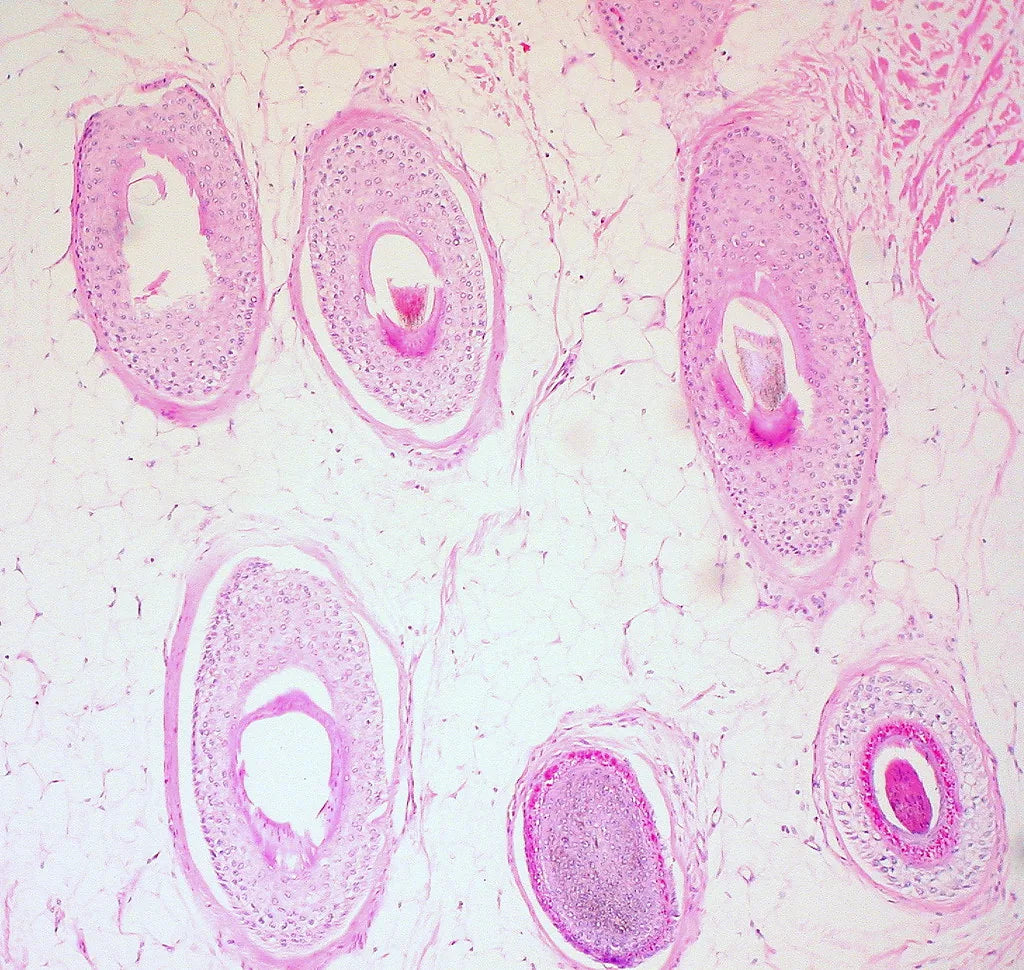
Hair Loss Science
How DHT Causes Hair Loss (And How to Block It)
11 min read
Hair Loss Science
Anagen Effluvium vs Telogen Effluvium: Key Differences
9 min read
Hair Loss Science