Hair Loss Science
How DHT Causes Hair Loss (And How to Block It)
DHT is the primary driver of male pattern baldness. Learn how it works at the follicle level and the most effective ways to block it naturally.
Updated January 25, 2026
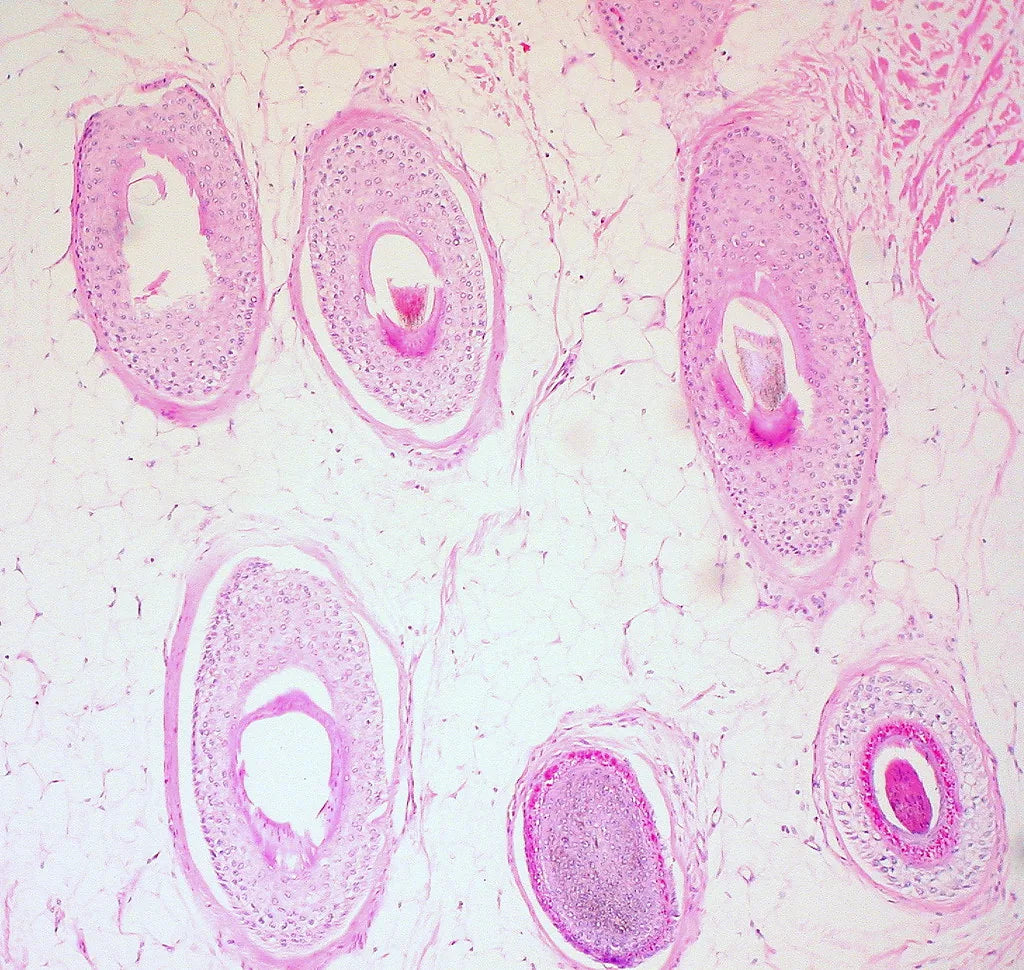
If you're researching hair loss, you've almost certainly encountered the term DHT. Dihydrotestosterone is the hormone most directly responsible for male pattern baldness, and understanding how it works is essential to choosing the right treatment strategy. In this guide, we'll explain exactly how DHT causes hair loss at the cellular level - and the most effective ways to block it.
The good news? You don't need prescription drugs to fight DHT. Modern science has identified several natural compounds that effectively reduce DHT's impact on hair follicles when applied topically, without the systemic side effects that make drugs like finasteride problematic for many men.
What Is DHT?
Dihydrotestosterone (DHT) is an androgen - a male sex hormone - derived from testosterone. The enzyme 5-alpha reductase converts approximately 5-10% of circulating testosterone into DHT. This conversion occurs in several tissues including the skin, liver, prostate, and - critically for our discussion - the scalp.
DHT is actually more potent than testosterone, binding to androgen receptors with 2-3 times greater affinity. This makes it an important hormone for male development during puberty, contributing to body hair growth, voice deepening, and muscle development. However, this same potency makes it a powerful trigger for hair follicle miniaturization on the scalp.
It's a common misconception that men with hair loss have abnormally high DHT levels. In reality, most balding men have DHT levels within normal range. The difference lies in the sensitivity of their hair follicles to DHT - which is genetically determined. Follicles on the top and front of the scalp have more androgen receptors and greater sensitivity to DHT than those at the sides and back.
How DHT Attacks Hair Follicles
When DHT binds to androgen receptors in susceptible hair follicles, it initiates a cascade of changes that progressively weaken the follicle:
- Receptor binding: DHT attaches to androgen receptors in the dermal papilla - the base of the hair follicle that controls growth signals.
- Gene expression changes: The DHT-receptor complex alters gene expression within follicle cells, triggering inflammatory pathways and reducing growth factor production.
- Shortened anagen phase: The active growth phase of the hair growth cycle becomes progressively shorter. Hair doesn't grow as long before entering the resting phase.
- Perifollicular inflammation: DHT triggers low-grade chronic inflammation around the follicle, further damaging the growth environment.
- Reduced blood supply: Over time, the blood vessels feeding the follicle constrict, limiting nutrient delivery.
- Miniaturization: Each successive growth cycle produces a thinner, shorter, less pigmented hair.
⚠️Important
Follicle miniaturization is progressive but reversible - up to a point. Once a follicle has been dormant for many years and the dermal papilla has fully atrophied, recovery becomes unlikely. This is why early intervention matters so much.
The Miniaturization Process
Miniaturization doesn't happen overnight. It's a gradual process that occurs over multiple hair growth cycles - typically spanning months to years. In the early stages, you might not even notice it's happening. The hair in affected areas simply becomes a bit finer, a bit lighter, and a bit shorter with each cycle.
A healthy terminal hair follicle produces thick, pigmented hair during a growth phase lasting 2-7 years. As DHT progressively damages the follicle, this growth phase shortens to weeks or months. The resulting hairs - called vellus hairs - are fine, soft, and nearly invisible. Eventually, the follicle may stop producing visible hair entirely.
The key insight for treatment is this: as long as the follicle still exists and retains some function, there's potential for recovery. Miniaturized follicles can be revitalized with the right approach - particularly a multi-modal treatment that addresses DHT blocking, cellular energy, and growth factor stimulation simultaneously.
How to Block DHT Effectively
There are two fundamental approaches to reducing DHT's impact on hair follicles: systemic (whole-body) and topical (scalp-targeted). Each has significant differences in effectiveness and side-effect profiles.
Systemic DHT Blockers (Prescription)
Finasteride and dutasteride work by inhibiting 5-alpha reductase throughout the entire body, reducing total DHT production by 60-70%. While effective for hair loss, this systemic approach means DHT is reduced everywhere - including in the brain, prostate, and sexual organs. This leads to side effects including sexual dysfunction, depression, and brain fog in a significant percentage of users. The risk of post-finasteride syndrome - where side effects persist even after stopping the drug - has led many men to seek safer alternatives.
Topical DHT Blockers (Non-Prescription)
Topical DHT blockers target the scalp directly, reducing DHT levels where it matters most without significantly affecting systemic hormone levels. This approach achieves meaningful results without the sexual side effects of finasteride - making it the preferred choice for men who want effective hair loss treatment without pharmaceutical risks. Key topical DHT blockers include saw palmetto extract, caffeine, ketoconazole, and pumpkin seed oil.
Natural DHT Blockers That Work
The following natural compounds have clinical evidence supporting their DHT-blocking activity when applied topically:
- Saw Palmetto Extract: Inhibits both Type I and Type II 5-alpha reductase. A 2020 meta-analysis in Complementary Therapies in Medicine confirmed its effectiveness for improving hair density. Found in quality laser caps.
- Caffeine: A 2007 Fischer et al. study showed caffeine directly counteracts testosterone's suppressive effect on hair follicles and stimulates hair shaft elongation. Effective at concentrations as low as 0.001%.
- Ketoconazole: This antifungal compound also has anti-androgenic properties when applied topically. A 1998 study showed ketoconazole shampoo increased hair growth comparable to minoxidil 2%. Found in effective Laser Caps.
- Pumpkin Seed Oil: A randomized, double-blind 2014 study showed pumpkin seed oil supplementation increased hair count by 40% over 24 weeks, likely through 5-alpha reductase inhibition.
- Biotin Peptides: While biotin doesn't directly block DHT, it strengthens hair structure and supports the keratin protein that hair is made of, helping DHT-weakened hairs maintain thickness.
Why Topical Beats Systemic
The science is clear: you don't need to manipulate your entire hormonal system to fight hair loss. Topical DHT blocking through shampoos and serums delivers active ingredients directly to the target - scalp follicles - while avoiding the systemic side effects that make finasteride problematic for so many men.
When combined with red light therapy (which increases blood flow and cellular energy) and laser therapy (which increases topical product absorption by up to 200%), the effectiveness of topical DHT blockers is dramatically amplified. This multi-modal approach is why professional hair restoration protocols use multiple treatments - not just one pill.
The modern alternative to outdated prescription protocols is a science-backed, no-side-effect system that addresses hair loss from multiple angles. The Regrowthy Laser Therapy Cap was designed around exactly this principle: block DHT topically, energize follicles with LED light, boost growth factors with laser therapy, and nourish with evidence-based active ingredients.
From the routine
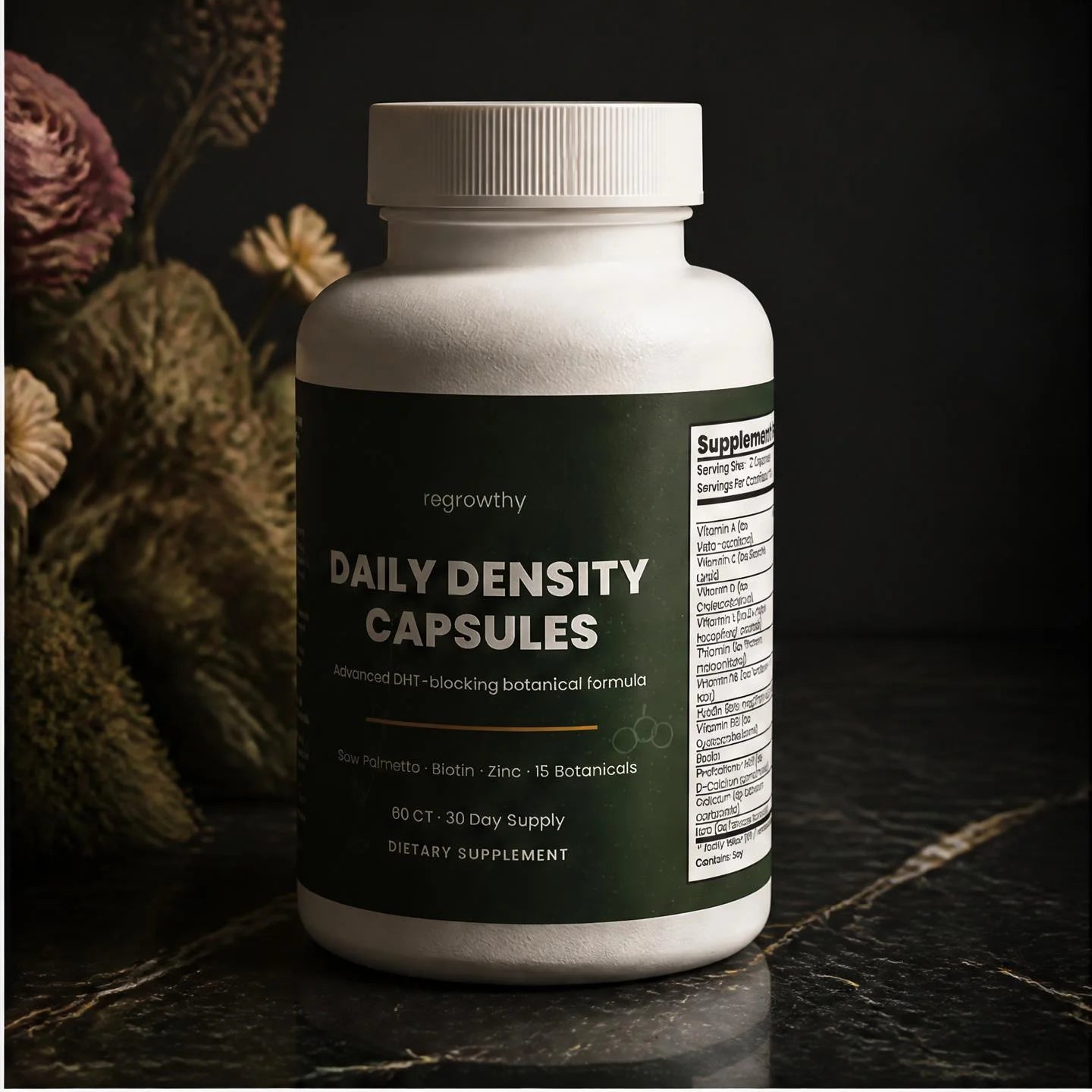
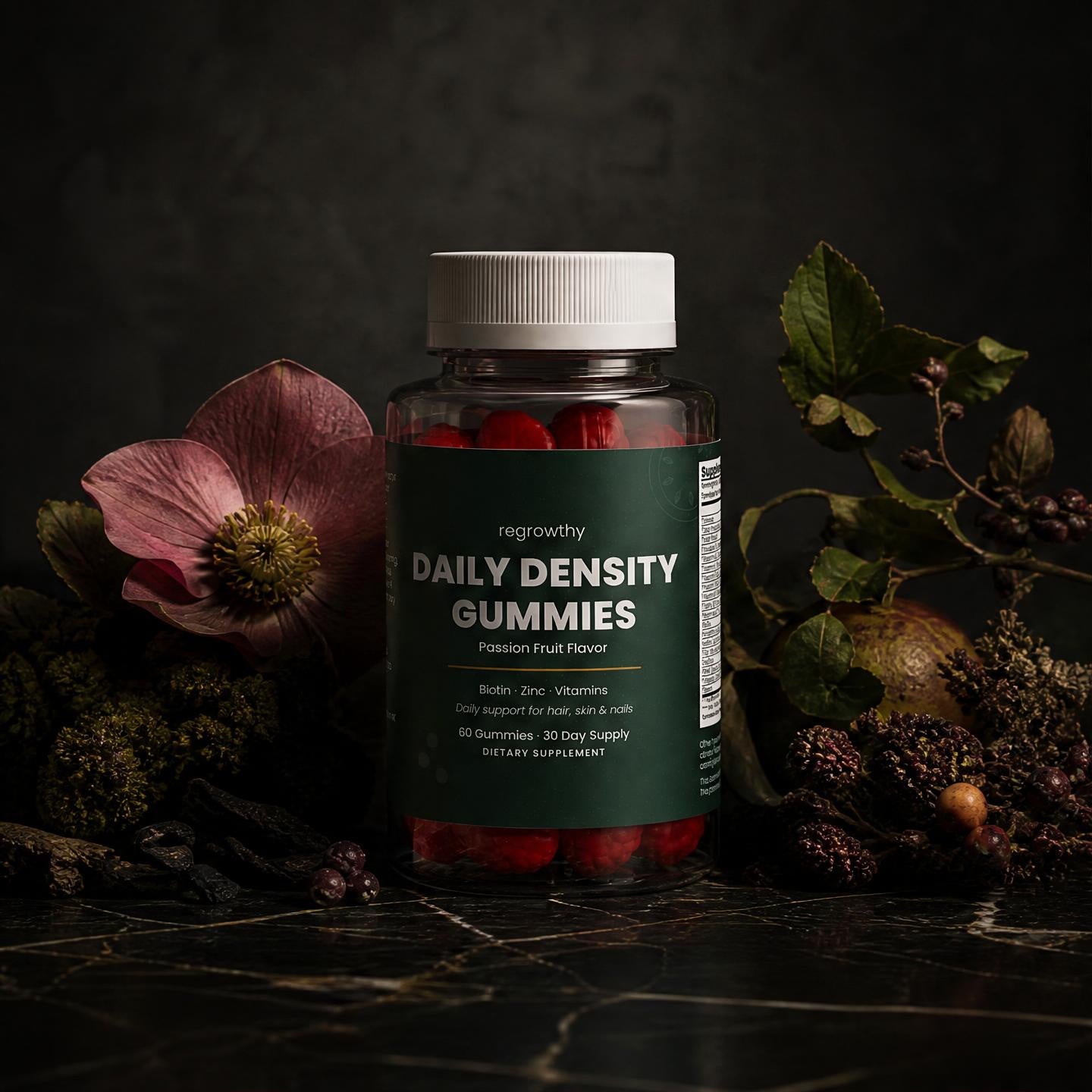
Mentioned in this article
Common questions
Frequently asked questions
Can DHT levels be too low?+
Does high testosterone mean more hair loss?+
How quickly do DHT blockers show results?+
Are natural DHT blockers as effective as finasteride?+
The Regrowthy System
Ready to start regrowing at home?
Hands-free. Non-prescription. 660nm clinical wavelength, backed by a 30-day guarantee.
Continue Reading
Hair Loss Science
Understanding Male Pattern Baldness: The Complete Guide
12 min read
Myths & Facts
Natural Remedies vs. Medical Treatments for Hair Loss: What Works?
9 min read
Lifestyle & Wellness
The Complete Scalp Care Guide for Optimal Hair Growth
8 min read
Treatment Guides