Hair Loss Science
Anagen Effluvium vs Telogen Effluvium: Key Differences
Sudden hair loss isn't always the same condition. Here's how anagen effluvium and telogen effluvium differ in cause, timing, and what recovery actually looks like.
Updated July 1, 2026
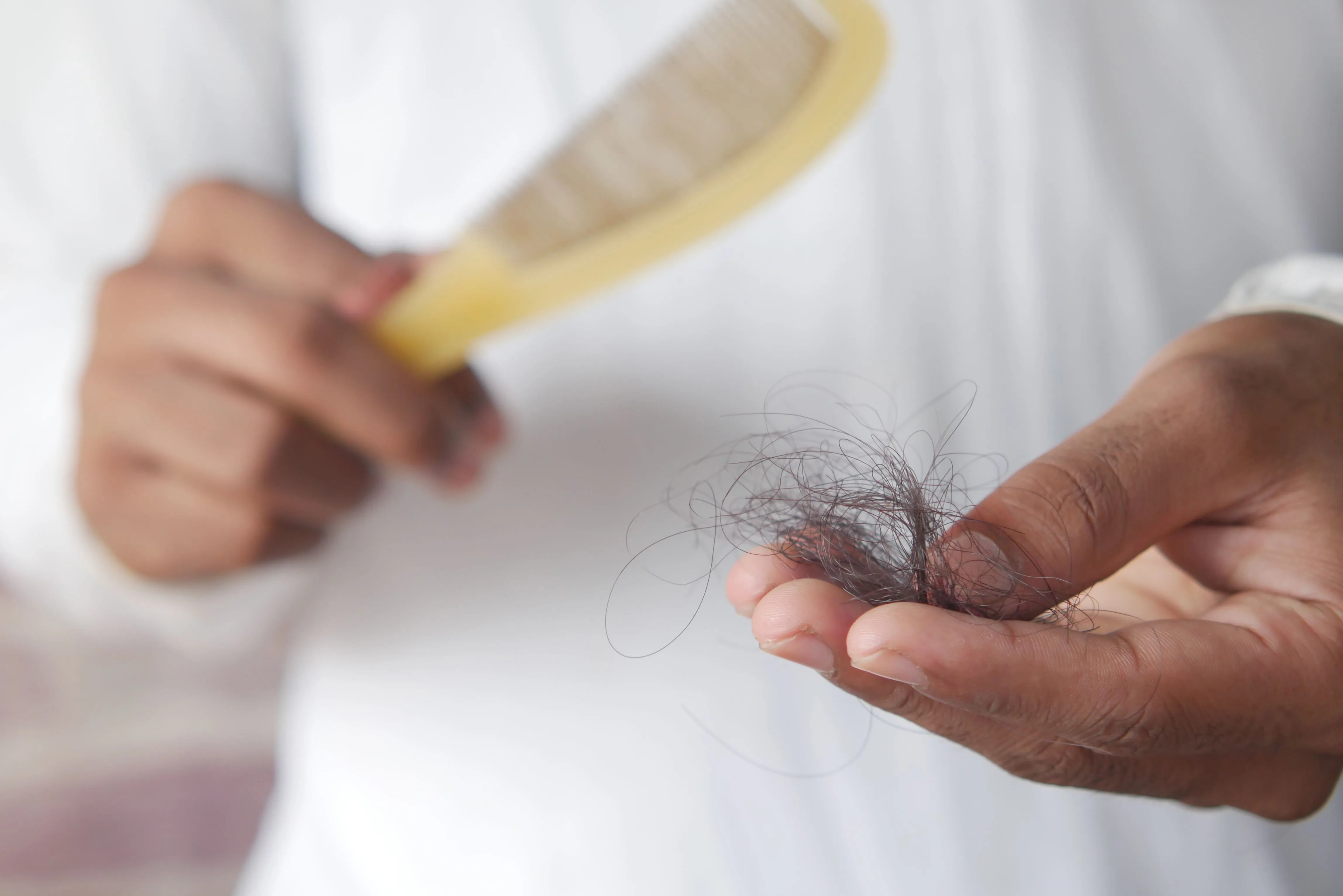
When hair starts coming out in large amounts, it's natural to fear the worst. But not all sudden hair loss is the same condition wearing different faces. Two in particular get confused constantly, partly because both can be dramatic and both can feel like they came out of nowhere: anagen effluvium and telogen effluvium. They happen for different reasons, on different timelines, and with different outlooks for regrowth. Knowing which one you or someone you love is dealing with changes how you think about recovery.
Both conditions fall under a broader category dermatologists call "effluvium," which simply means a shedding event affecting hair that would otherwise still be growing. Neither is the same as androgenetic alopecia, the slow, pattern-based thinning driven mostly by DHT's effect on the hair follicle over years. Effluviums are more sudden, more diffuse, and usually tied to a specific, identifiable trigger. That's actually good news, because it means the underlying cause is often temporary and the hair follicle itself is usually still intact.
What Is Anagen Effluvium?
Anagen effluvium is hair loss that interrupts the anagen phase, the active growing stage of the hair cycle when follicle cells are dividing rapidly to build new hair shaft. At any given time, roughly 85 to 90 percent of the hairs on a healthy scalp are in anagen, which is exactly why anagen effluvium tends to be so severe. When something disrupts that growth phase directly, it affects the large majority of hairs on the head at once rather than a small subset.
The most well-known cause by far is chemotherapy. Many chemotherapy drugs work by targeting rapidly dividing cells, which is how they attack cancer, but hair matrix cells in the anagen follicle divide just as fast and get caught in the same crossfire. Radiation therapy directed at the scalp and, less commonly, severe toxic exposures or certain heavy metal poisonings can produce a similar effect. Because the damage happens to hairs that are actively growing, the shedding tends to start fast, often within one to three weeks of starting the causative treatment, and it can be extensive enough that hair comes out in clumps or handfuls rather than a gradual thinning.
The encouraging part is that anagen effluvium is almost always reversible once the causative agent is removed. Hair matrix cells that survive the insult typically resume normal division, and regrowth usually begins within a few weeks to a couple of months after treatment ends, though the new hair sometimes comes in with a different texture or color, at least temporarily.
What Is Telogen Effluvium?
Telogen effluvium works through a completely different mechanism. Instead of damaging hairs mid-growth, it pushes a larger-than-normal share of anagen follicles prematurely into telogen, the resting phase that normally precedes shedding. Telogen hairs eventually fall out on their own as part of the ordinary hair cycle, so when a stressor forces too many follicles into that phase at the same time, the result is a wave of shedding that follows a few months later.
Common triggers include childbirth, a high fever or serious infection, major surgery, a crash diet or sudden significant weight loss, thyroid dysfunction, iron deficiency, starting or stopping certain medications, and significant emotional or psychological stress. The telogen phase itself typically lasts somewhere in the range of two to four months before a resting hair sheds, which explains one of the most confusing features of telogen effluvium: the shedding usually doesn't show up until roughly two to three months after the triggering event, long after most people have stopped connecting the dots.
When telogen hairs shed, you'll often notice a small white or translucent bulb at the root, sometimes called a club hair. That's a normal, healthy sign that the hair completed its natural cycle rather than being damaged mid-growth. Telogen effluvium is diffuse, meaning it thins the whole scalp somewhat evenly rather than creating bald patches or clumps, and in most cases it resolves within six to nine months once the underlying trigger is identified and addressed.
The Hair Growth Cycle Connection
Both conditions only make sense in the context of the normal hair growth cycle, which moves every follicle through three phases: anagen (growth), catagen (a brief transitional phase), and telogen (rest, followed by shedding). Under normal circumstances, this cycle runs on an individual, staggered schedule for each follicle, which is why healthy scalps shed a small, steady number of hairs every day without anyone noticing.
Anagen effluvium and telogen effluvium represent two different ways that staggered rhythm can get disrupted. Anagen effluvium strikes the growth phase directly and immediately, damaging the machinery that builds the hair shaft. Telogen effluvium doesn't damage anything directly, it simply signals a large batch of follicles to exit growth early and synchronize their transition to rest. That difference in mechanism is the root of nearly every other difference between the two conditions, from timing to severity to what recovery actually looks like.
Key Differences at a Glance
It helps to see the two side by side. Here's how they compare across the factors that matter most for figuring out what you're dealing with.
- Onset: Anagen effluvium begins within days to a few weeks of the trigger. Telogen effluvium is delayed, typically appearing two to three months after the trigger.
- Cause: Anagen effluvium is most often caused by chemotherapy, scalp radiation, or severe toxic exposure. Telogen effluvium is caused by physical or emotional stressors such as illness, surgery, childbirth, crash dieting, or major life stress.
- Severity: Anagen effluvium can affect up to 80 to 90 percent of scalp hair since it strikes the growth phase directly. Telogen effluvium is usually more moderate, often shedding 20 to 30 percent of scalp hair.
- Pattern: Anagen effluvium often comes out in clumps and can involve eyebrows, eyelashes, and body hair. Telogen effluvium is diffuse, even thinning across the whole scalp.
- Hair root appearance: Anagen hairs shed without the mature bulb structure and can appear tapered or broken. Telogen hairs shed with a small, intact white bulb at the root.
- Reversibility: Both are generally reversible once the trigger resolves, though anagen effluvium regrowth depends heavily on completing treatment, while telogen effluvium can occasionally become chronic if the underlying trigger isn't identified.
Key Point
The single fastest way to tell the two apart is timing. If hair loss started within days of a specific medical treatment, think anagen effluvium. If it started two to three months after a fever, surgery, birth, or a stretch of high stress, think telogen effluvium.
Chemotherapy Hair Loss vs Stress Hair Loss
In everyday conversation, "chemo hair loss" and "stress hair loss" are often used as shorthand for these two conditions, and that shorthand is fairly accurate. Chemotherapy hair loss vs stress hair loss is really just anagen effluvium vs telogen effluvium wearing more familiar names, but the comparison is worth spelling out because the emotional weight of the two situations is so different.
Chemotherapy hair loss happens because cytotoxic drugs can't tell the difference between a cancer cell and a hair matrix cell dividing at a similar rate. It's fast, it's usually near-total, and it's an expected, monitored part of treatment that oncology teams prepare patients for in advance. Stress-induced hair loss, by contrast, tends to catch people off guard precisely because the stressful event, whether it was a bad flu, a surgery, a birth, or months of overwhelming pressure at work, is already behind them by the time the shedding starts. That delay is why so many people describe stress hair loss as feeling random or unexplainable, when it's actually a delayed, mechanical consequence of something that happened months earlier.
There's also a severity gap worth naming honestly. Chemotherapy-driven anagen effluvium can be dramatic enough that many patients choose to shave their heads proactively rather than watch it fall out gradually. Stress-driven telogen effluvium, while distressing and very real, rarely produces the same degree of total hair loss and typically presents as noticeably thinner hair and a wider part rather than visible bald areas. Neither condition is a reflection of pattern baldness or a permanent change in the follicle's genetic sensitivity to hormones, which is an important distinction from androgenetic alopecia.
Diagnosis: How Doctors Tell Them Apart
A dermatologist typically starts with a detailed history, and for these two conditions, history does most of the diagnostic work. A recent chemotherapy or radiation course points squarely at anagen effluvium. A recent illness, surgery, pregnancy, dramatic weight change, or period of significant stress within the past two to four months points toward telogen effluvium.
Beyond history, a gentle hair pull test can help confirm what's happening. In telogen effluvium, several hairs typically release easily with an intact white bulb attached. A trichogram, which examines plucked hairs under magnification, can quantify the ratio of anagen to telogen hairs and confirm the diagnosis more precisely. Blood work is often ordered for suspected telogen effluvium as well, checking thyroid function, iron and ferritin levels, and other markers, since correcting an underlying deficiency or thyroid issue is often the key to stopping ongoing shedding. Anagen effluvium rarely needs this kind of workup since the cause is usually already known and documented as part of active medical treatment.
Recovery and Supporting Regrowth
Recovery timelines differ, but both conditions generally have a favorable outlook compared to progressive, hormone-driven hair loss. After chemotherapy ends, new growth from surviving follicles often becomes visible within a few weeks to a couple of months, with fuller coverage typically returning over six months to a year. Telogen effluvium usually resolves within six to nine months of the trigger being addressed, though a smaller number of cases become chronic and benefit from ongoing management and monitoring.
During either recovery window, the goal is to give regrowing follicles the best possible environment without interfering with medical treatment. A gentle, sulfate-free routine like Dense Cleanse can help keep a sensitive, recovering scalp clean without stripping it or causing additional irritation. Nutritional support matters too, since hair regrowth is metabolically demanding: a daily supplement like Daily Density Pro Capsules is formulated to supply the biotin, saw palmetto, and other nutrients that support healthy follicle function while new growth is underway. For scalp stimulation once a treating physician has confirmed it's appropriate, low-level red light devices such as the Laser Therapy Cap are used by some patients to help support circulation and follicle activity during the regrowth phase, though anyone recovering from chemotherapy or radiation should always clear any new scalp treatment with their oncology team first.
The most important thing to remember with both anagen effluvium and telogen effluvium is that time and patience do most of the work. Neither condition reflects permanent follicle damage in the way that long-term untreated pattern hair loss can, and neither requires the kind of intervention aimed at slowing DHT's effects over years. If shedding continues well beyond the expected window, or if you're unsure which type you're experiencing, a dermatologist can confirm the diagnosis and rule out anything else going on. In the meantime, tracking your timeline honestly, being gentle with a stressed scalp, and giving the hair cycle the months it needs are the most reliable paths back to fuller hair.
From the routine
Mentioned in this article


Common questions
Frequently asked questions
Can anagen effluvium happen without chemotherapy?+
How do I know if my hair loss is stress related?+
Will hair grow back the same after anagen effluvium?+
Can telogen effluvium become permanent?+
Is telogen effluvium the same as pattern baldness?+
Should I start a hair growth device during chemotherapy?+
The Regrowthy System
Ready to start regrowing at home?
Hands-free. Non-prescription. 660nm clinical wavelength, backed by a 30-day guarantee.
Continue Reading
Hair Loss Science
How DHT Causes Hair Loss (And How to Block It)
11 min read
Hair Loss Science
The Hair Growth Cycle: Anagen, Catagen, Telogen
9 min read
Hair Loss Science
Hair Follicle Anatomy: A Complete Guide to How Hair Actually Grows
8 min read
Hair Loss Science