Advanced Science
Wnt Signaling and Hair Growth: The Molecular Switch
Deep inside every follicle, the Wnt pathway acts as a molecular switch for hair growth. Understanding this pathway is key to next-generation treatments.
Updated January 20, 2026

The Wnt signaling pathway is arguably the most important molecular pathway in hair biology. It controls whether stem cells activate, whether follicles develop, and whether hair cycles proceed normally. Here's what you need to know.
What Is the Wnt Signaling Pathway?
Wnt (pronounced "wint") proteins are signaling molecules that bind to receptors on cell surfaces, activating an intracellular cascade centered on a protein called beta-catenin. When Wnt signaling is active, beta-catenin accumulates and enters the cell nucleus, turning on genes that drive cell proliferation and differentiation. In hair follicles, this translates directly to growth initiation and maintenance.
Wnt's Critical Role in Hair Growth
- Follicle development: Wnt signaling is required for hair follicle formation during embryonic development. Without it, follicles don't form at all.
- Anagen initiation: The transition from telogen (resting) to anagen (growth) requires Wnt activation in follicle stem cells. Blocking Wnt prevents new growth cycles.
- Hair shaft production: Active Wnt signaling in the hair matrix cells drives keratinocyte proliferation - the actual production of the hair shaft.
- In AGA: Research shows that DHT indirectly inhibits Wnt signaling in susceptible follicles, which is one mechanism by which it causes miniaturization.
Therapeutic Implications
Drugs that activate Wnt signaling could theoretically restart dormant follicles and promote robust growth. Several pharmaceutical companies are developing Wnt-targeting compounds. The challenge is specificity - Wnt signaling affects many tissues, so systemic activation risks unwanted effects (including cancer promotion). Topical, follicle-targeted delivery is the goal.
How Today's Treatments Connect
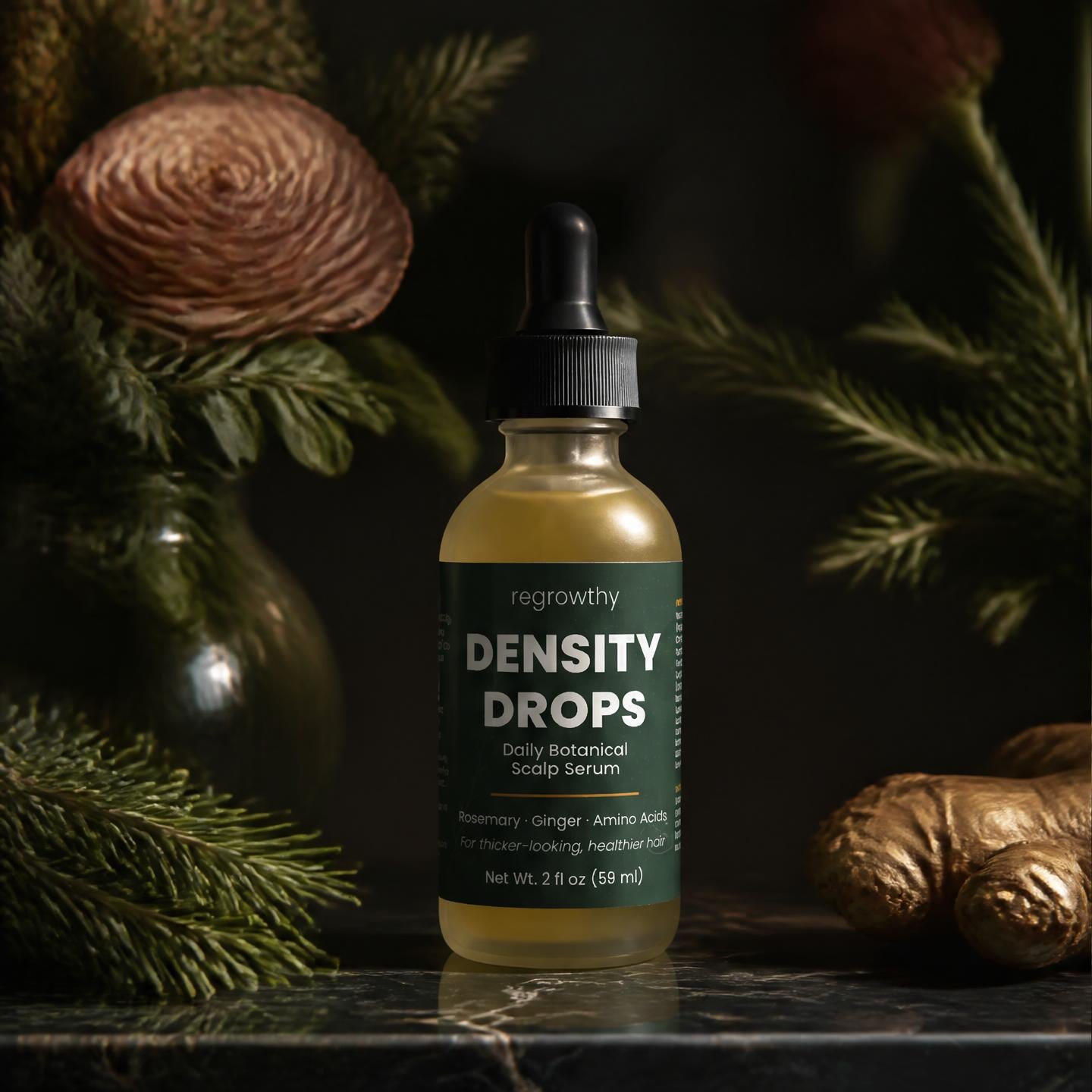
Laser-induced wound healing activates Wnt/beta-catenin signaling - this is one mechanism by which laser therapy stimulates hair growth. Certain botanical ingredients in topical serums like Density Drops (including some used in the Regrowthy formulation) have been shown to upregulate Wnt pathway activity. DHT blocking preserves Wnt signaling by removing its inhibitor.
From the routine
Mentioned in this article

Common questions
Frequently asked questions
Can I activate Wnt signaling myself?+
Is Wnt signaling the same as stem cell activation?+
Why can't we just inject Wnt proteins?+
Does DHT block Wnt signaling?+
The Regrowthy System
Ready to start regrowing at home?
Hands-free. Non-prescription. 660nm clinical wavelength, backed by a 30-day guarantee.
Continue Reading
Advanced Science
Stem Cells and Hair Regeneration: Current Research and Future Promise
10 min read
Hair Loss Science
The Hair Growth Cycle: Anagen, Catagen, Telogen
9 min read
Advanced Science
The Future of Hair Loss Treatment: What's Coming in 2025-2030
9 min read
Advanced Science