Product Comparisons
Wellbel vs Regrowthy: Supplement-Only vs a Full Routine
Wellbel offers a single hair vitamin capsule built for general wellness. Regrowthy pairs targeted supplements with a non-prescription laser device. Here is how the two approaches actually compare.
Updated July 1, 2026

If you have spent any time researching hair supplements, you have probably come across Wellbel. It is a women's wellness brand built around a single hero product: a daily hair vitamin capsule that leans on biotin, collagen, and a blend of other nutrients marketed toward thinning, shedding, and slow growth. It is a straightforward, supplement-only approach, and for some people that simplicity is exactly the appeal. But if your hair loss has a hormonal or scalp-health component that a multivitamin cannot touch, a supplement-only strategy may only get you partway there.
This comparison looks at what Wellbel actually is, what a hair vitamin can and cannot realistically do, and how that stacks up against Regrowthy's approach, which pairs internal support with a non-prescription laser device and a topical scalp routine. We are not here to trash a competitor. Wellbel makes a reasonable product for a specific job. The question is whether that job is the whole job, or just one piece of it.
This is a genuine hair supplement comparison, not a hit piece. We will be fair about what Wellbel does well and honest about where a single-supplement model runs into its own limits.
What Is Wellbel
Wellbel is a direct-to-consumer wellness brand that sells hair, skin, and nail vitamins, with its core hair product positioned as a daily capsule regimen sold on a subscription model. The pitch is simple: take the capsules consistently, and over a period of months you should notice less shedding, more shine, and visible thickness improvements. The formula typically leans on biotin, collagen or collagen-supporting nutrients, and a handful of vitamins and minerals associated with hair and nail health.
This is a familiar category. Nutrafol, Viviscal, and a long list of other hair vitamin brands occupy the same general space: capsules you take every day, sold as a subscription, with the promise that internal nutrition is the missing piece in your hair loss puzzle. Wellbel's branding leans a little more into general wellness and beauty-from-within language than some of its more clinically-postured competitors, but the underlying model is the same. It is a supplement-only company. There is no device, no topical treatment, and no scalp-care product in the core lineup.
That single-product focus is part of Wellbel's appeal. It is easy to understand, easy to commit to, and it does not ask you to layer several different products into your routine. For someone whose hair concerns are mild, or who suspects a nutritional gap is playing a role, that simplicity has real value.
Key Point
Hair vitamins work best when they are correcting an actual deficiency (low biotin, low iron, inadequate protein intake). If your hair loss is driven by DHT sensitivity, an inflamed scalp, or age-related follicle miniaturization, a multivitamin alone is unlikely to reverse it, no matter how consistently you take it.
What a Hair Vitamin Can (and Cannot) Realistically Do
It is worth being honest about the mechanism here, because this is where a lot of hair vitamin marketing gets fuzzy. Biotin deficiency is genuinely linked to hair thinning, but true biotin deficiency is uncommon in people eating a reasonably varied diet. If you are not deficient, adding more biotin is unlikely to meaningfully change your hair growth rate. The same logic applies to most of the other vitamins and minerals bundled into these formulas: they support hair health when you are lacking them, and they do very little when you are not.
This matters because the most common causes of visible hair thinning in adults, androgenetic alopecia driven by DHT sensitivity at the follicle, chronic scalp inflammation, and age-related miniaturization of the hair shaft, are not primarily nutritional problems. Dermatology research is fairly consistent on this point: general internal nutrition supports the conditions for healthy growth, but it does not directly counteract androgen sensitivity or stimulate dormant follicles the way a targeted mechanism can. That is not a knock on Wellbel specifically. It is a limitation of the entire hair vitamin category, from Wellbel to Nutrafol to the store-brand biotin gummies at your pharmacy.
This is exactly the gap that makes a hair supplement comparison useful. If you are only weighing one supplement against another, you are comparing marginal differences in a formula that was never designed to address the mechanism actually driving most adult hair loss. The more useful comparison is whether a supplement-only approach, any supplement-only approach, is enough on its own, or whether it needs to be paired with something that works on the scalp and follicle directly.
Wellbel Cost and What You're Actually Buying
Like most direct-to-consumer hair vitamin brands, Wellbel sells its core product on a recurring subscription, with a modest discount for committing to auto-ship over a one-time purchase. We are not going to quote a specific Wellbel cost figure here, since subscription pricing, bundle sizes, and promotional discounts change often enough that any number we print today could be stale by the time you read this. What is worth understanding instead is the value structure: you are paying every month for a capsule that needs to be taken daily and indefinitely, with no device, no topical component, and no scalp-targeted treatment included.
That is a fair trade for some people. If your only goal is filling a nutritional gap, a monthly vitamin subscription is a low-effort way to do it. But when you compare that cost structure to a multi-modal routine, the math starts to look different. Regrowthy's non-prescription approach combines a one-time device purchase, the Laser Therapy Cap, with an ongoing supplement subscription through The Density Line. You are not just paying for a pill that supports general hair health. You are paying for a device that works on the follicle directly through light therapy, plus internal support formulated specifically around DHT and scalp circulation, plus, if you choose it, a topical scalp routine.
In other words, the real question is not "which hair vitamin costs less per month." It is "am I paying for one mechanism or several." A single supplement subscription is often the cheaper monthly line item precisely because it is doing less.
How Regrowthy's Approach Is Different
Regrowthy was built around a simple observation: hair loss is rarely a single-cause problem, so a single-mechanism solution is rarely a complete answer. Instead of one capsule doing all the work, Regrowthy layers three distinct mechanisms that target different parts of the problem.
The foundation is the laser cap, a 660nm LED device used a few times a week at home. Red light in this wavelength range has been studied for its ability to stimulate mitochondrial activity in hair follicle cells, increasing cellular energy production in a way that can help nudge miniaturized or dormant follicles back toward an active growth phase. This is a mechanism a capsule simply cannot replicate, because it works locally at the scalp rather than systemically through digestion and metabolism.
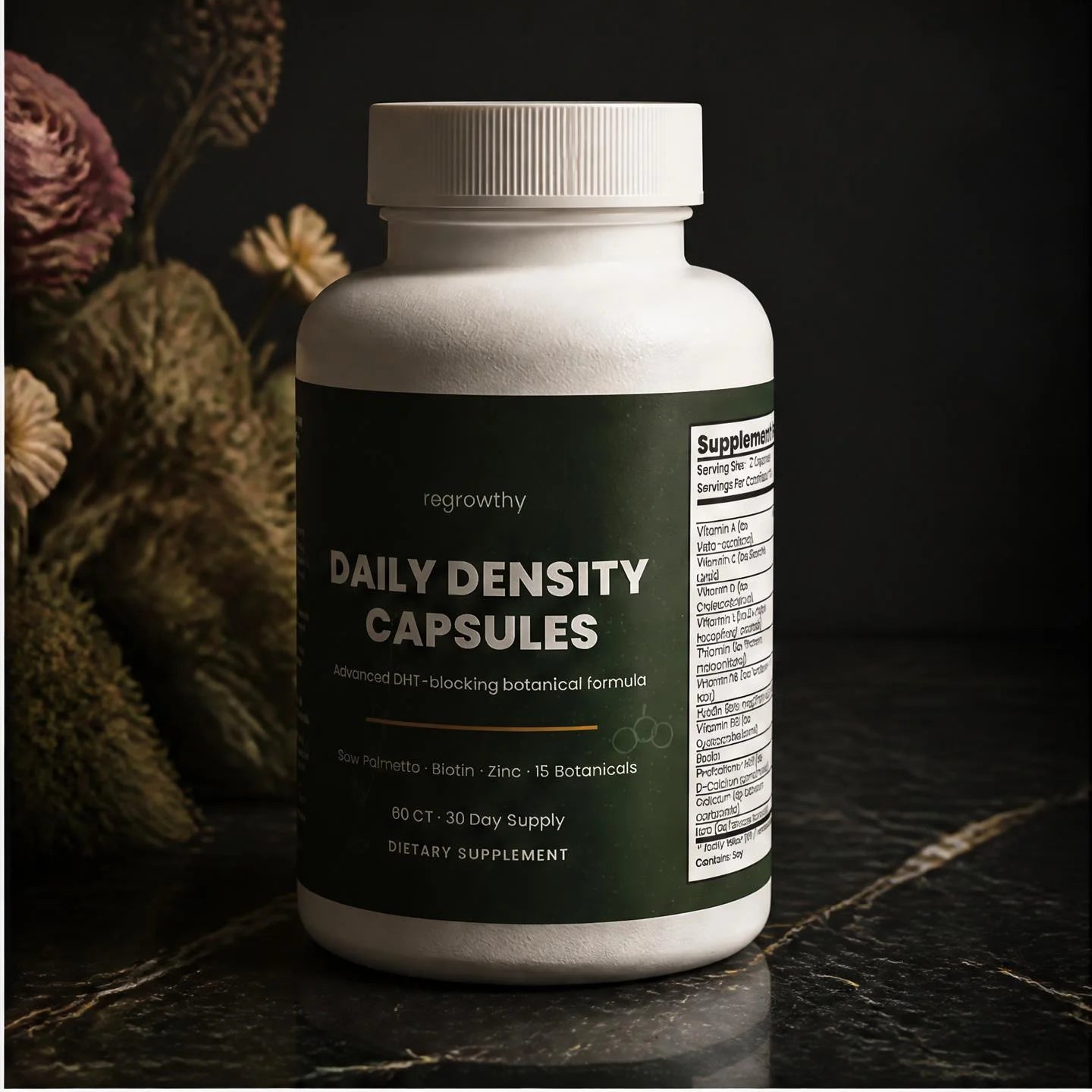
Alongside the device, The Density Line supplement collection takes a more targeted approach than a general wellness vitamin. Daily Density Pro is formulated around ingredients like saw palmetto, a botanical compound studied for its ability to interfere with the conversion of testosterone into DHT, the hormone most closely linked to androgenetic hair thinning in both men and women. That is a materially different goal than "support healthy hair from within" in a generic sense. It is trying to address one of the actual upstream drivers of pattern hair loss, not just supply nutrients that may or may not be missing from your diet.
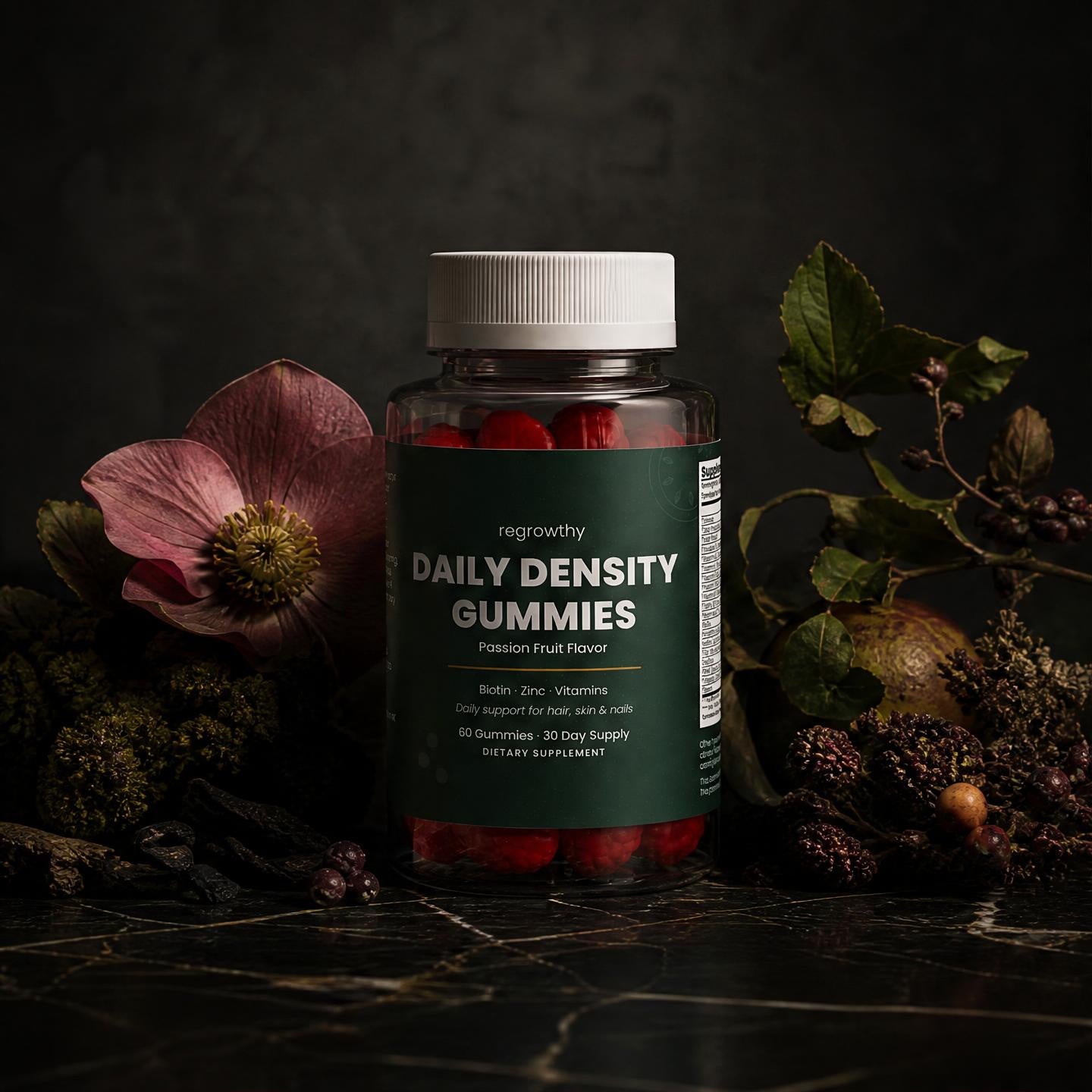
For people who want a topical layer too, Density Drops uses botanical ingredients including rosemary oil, which clinical research suggests can help stimulate scalp circulation, applied directly where thinning is happening. There is also Density Elixir, Density Collagen peptides, and a dedicated scalp cleanser in Dense Cleanse, along with Daily Density Gummies for people who prefer a gummy format to capsules. The point is not to overwhelm you with products. It is that each piece is solving a different part of the hair loss puzzle, rather than asking one multivitamin to do all of it.
Who Wellbel Is Right For
Wellbel makes sense for a specific reader. If your hair concerns are mild, if you suspect diet or a nutritional gap is playing some role, or if you simply want the lowest-effort entry point into hair care, a daily vitamin is a reasonable place to start. It requires no device setup, no topical application routine, and no real behavior change beyond remembering to take a capsule.
It is also a sensible choice if you are early in noticing changes, before visible thinning has become a significant concern, and you want a low-commitment way to support overall hair health while you watch and wait. Reading a genuine Wellbel hair vitamins review from someone in a similar situation, mild shedding, general wellness goals, no strong hormonal component suspected, can help set realistic expectations for what this category of product tends to deliver.
Where a supplement-only approach tends to fall short is when hair loss is more advanced, more clearly hereditary, or has been progressing steadily over a longer period. In those cases, a vitamin alone is often not enough, and that is true whether the vitamin in question is Wellbel, Nutrafol, or anything else on the shelf.
Who Should Consider Regrowthy Instead
Regrowthy tends to make more sense for readers who have already tried a supplement-only approach without seeing the results they hoped for, or who suspect from the start that their hair loss has a hormonal or follicle-level component that nutrition alone will not touch. If you have noticed a receding hairline, a widening part, or diffuse thinning that has been getting more noticeable over months rather than staying stable, that is generally a sign the underlying driver is more than a nutritional gap.
It also makes sense for people who want to avoid a prescription route, like the ones we cover in our comparison of prescription telehealth brands versus non-prescription options, but still want something more mechanistically active than a general wellness capsule. The device and targeted botanicals give you a middle path: not a pharmaceutical, but not a passive multivitamin either.
And practically speaking, if you are the kind of person who likes to see a routine working on multiple fronts at once, internal support, topical treatment, and a device you can physically point at the problem, the multi-modal structure tends to feel more tangible than a single pill you take on faith.
Making the Decision
There is no universal winner in a wellbel vs regrowthy comparison, because the two brands are not really trying to do the same job. Wellbel is a supplement company offering one product built around general hair, skin, and nail wellness. Regrowthy is a multi-modal system built around a device and a supplement line, both aimed more specifically at the mechanisms behind pattern hair loss.
If you are early in noticing changes, want the simplest possible entry point, and suspect a nutritional gap more than a hormonal one, starting with a hair vitamin is a fair, low-risk choice. If your thinning has been progressing, if you have a family history of pattern hair loss, or if you have already tried a vitamin-only routine without meaningful results, it is worth looking at an approach that works on the scalp and follicle directly rather than relying on nutrition alone to carry the whole effort.
Neither path requires a prescription, and neither is a miracle cure. The honest answer is that supplements, whether from Wellbel or from Daily Density Pro Capsules, work best as one part of a broader routine, not as a stand-alone fix. The real decision is how many mechanisms you want working for you at once, and how targeted you want those mechanisms to be.
Final Thoughts
Comparing a single supplement to a full routine is a bit like comparing one tool to a toolbox. That is not a criticism of Wellbel. A well-formulated hair vitamin has a legitimate place for the right person and the right kind of hair concern. But if you have been taking a hair vitamin for months without the changes you expected, that is not necessarily a sign you picked the wrong brand. It may be a sign your hair loss needs more than internal nutrition can offer on its own.
The most useful thing you can do before choosing either path is get honest about what is actually driving your hair thinning. If it is genuinely nutritional, a supplement can help close that gap. If it looks more like classic pattern hair loss, hairline recession, a widening part, gradual diffuse thinning with a family history behind it, a routine pairing internal support with a mechanism that works directly on the scalp and follicle is likely to get you further than a capsule alone.
Whichever direction you choose, give it real time. Hair growth cycles are slow, and neither a vitamin nor a full routine will show meaningful results in a few weeks. Consistency, over several months, is what actually separates the approaches that work from the ones that just sit in a cabinet.
From the routine
Mentioned in this article
Common questions
Frequently asked questions
Is Wellbel better than Regrowthy for hair loss?+
How much does Wellbel cost compared to a full hair loss routine?+
Can hair vitamins alone reverse pattern hair loss?+
What does Regrowthy offer that a supplement-only brand like Wellbel does not?+
Should I switch from Wellbel to Regrowthy if I am not seeing results?+
The Regrowthy System
Ready to start regrowing at home?
Hands-free. Non-prescription. 660nm clinical wavelength, backed by a 30-day guarantee.
Continue Reading
Product Comparisons
Hims vs Regrowthy: Two Very Different Approaches to Hair Loss
9 min read
Product Comparisons
Keeps vs Regrowthy: Prescription vs Non-Prescription Hair Loss Treatment
8 min read
Product Comparisons
Foligain vs Regrowthy: Topical DHT Blockers Compared
8 min read
Product Comparisons