Product Comparisons
Foligain vs Regrowthy: Topical DHT Blockers Compared
Foligain built its name on Trioxidil, an OTC alternative to minoxidil sold in shampoos, serums, and conditioners. Here is how that topical-only approach compares to Regrowthy's laser and supplement combination.
Updated July 1, 2026

If you've spent any time researching topical DHT blockers, you've probably come across Foligain. It's one of the more recognizable over-the-counter hair care brands, built almost entirely around a proprietary ingredient called Trioxidil. For anyone comparing Foligain vs Regrowthy, the honest answer is that these two brands are solving the same problem from fairly different angles, and understanding that difference matters more than picking a "winner."
This comparison is meant to be a fair, factual look at both. Foligain is a legitimate, widely available topical line, and plenty of people have used it as part of their hair care routine. Regrowthy takes a different approach: a non-prescription 660nm laser cap paired with an oral supplement system called The Density Line. Neither is a miracle cure, and neither replaces a conversation with a dermatologist if your hair loss is advancing quickly or has an unclear cause. What follows is a straightforward breakdown of how the two actually compare.
What Is Foligain and How Does Trioxidil Work
Foligain is a topical hair care brand sold without a prescription, most commonly as a shampoo, conditioner, or leave-in serum. Its signature ingredient is Trioxidil, a proprietary blend the brand markets as a topical alternative or complement to minoxidil. Because it's positioned as a cosmetic ingredient rather than an FDA-approved drug, Trioxidil doesn't go through the same regulatory review process that minoxidil did, which is worth knowing as context when you read a foligain review online.
The general idea behind Trioxidil-based products is to support the scalp environment around the hair follicle, often alongside botanical extracts and vitamins included in the same formula. Some versions of the product line also lean on ingredients that are meant to interact with DHT (dihydrotestosterone), the hormone byproduct widely understood to shrink genetically sensitive follicles over time in androgenetic alopecia. That said, Trioxidil itself is a branded formula, not a single, standardized compound, so its concentration and exact composition can vary by product within the lineup.
For someone doing genuine due diligence, it's worth noting that independent, peer-reviewed clinical research specifically on Trioxidil is limited compared to the research base behind minoxidil or finasteride. That doesn't make it useless, but it does mean a lot of what you'll find is brand-published material rather than independent trials. This is a distinction that comes up in nearly every topical dht blocker comparison, and it's one readers deserve to see stated plainly rather than glossed over.
What Is Regrowthy's Approach
Regrowthy is built around a different premise: that hair thinning is rarely caused by just one thing, so it deserves more than one kind of intervention. The centerpiece is a non-prescription laser cap that uses 660nm red light, a wavelength that's been studied in dermatology literature for its potential to stimulate cellular activity in the scalp and support the hair growth cycle. Unlike Foligain, there's no leave-on serum or shampoo residue involved. You wear the device for a set number of minutes several times a week.
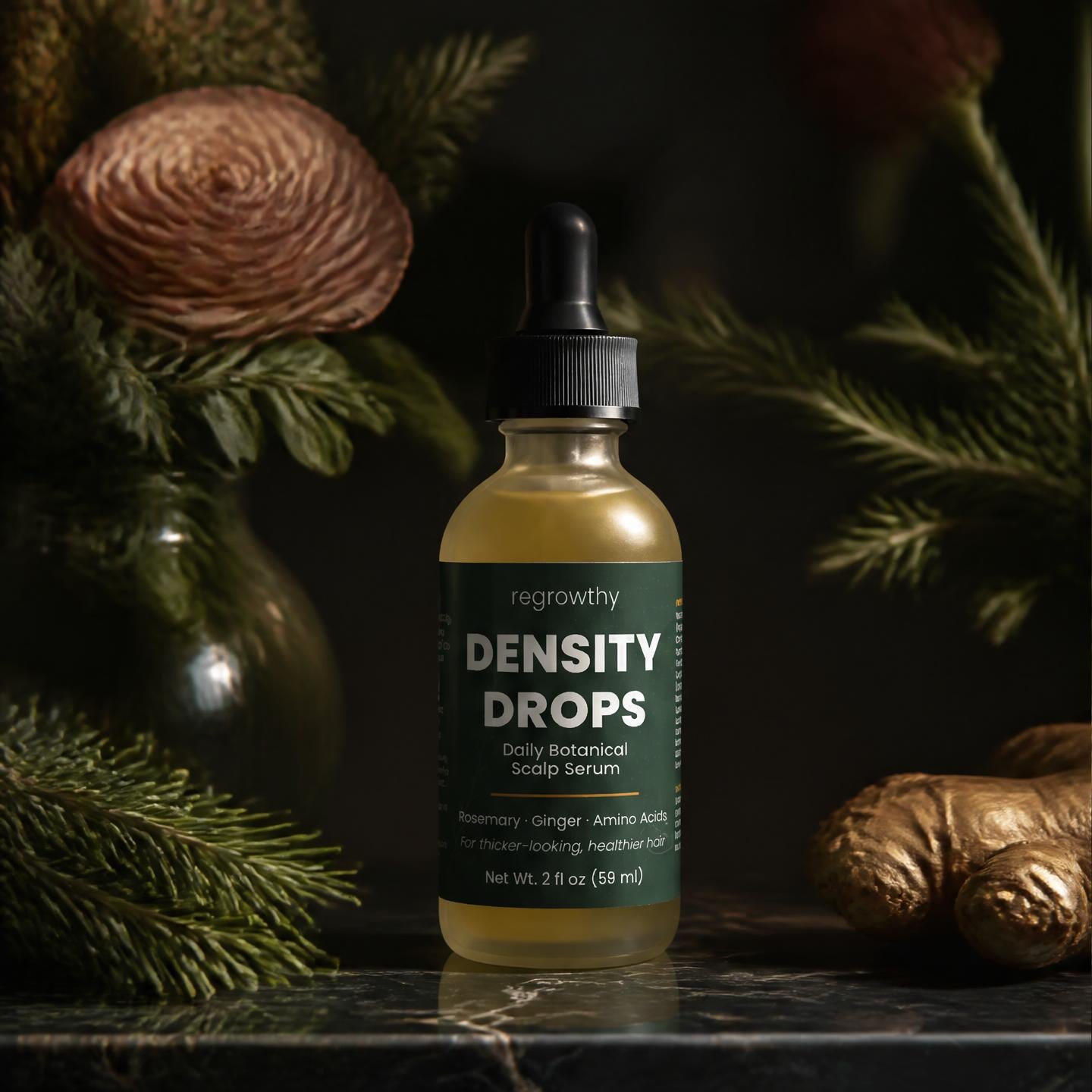
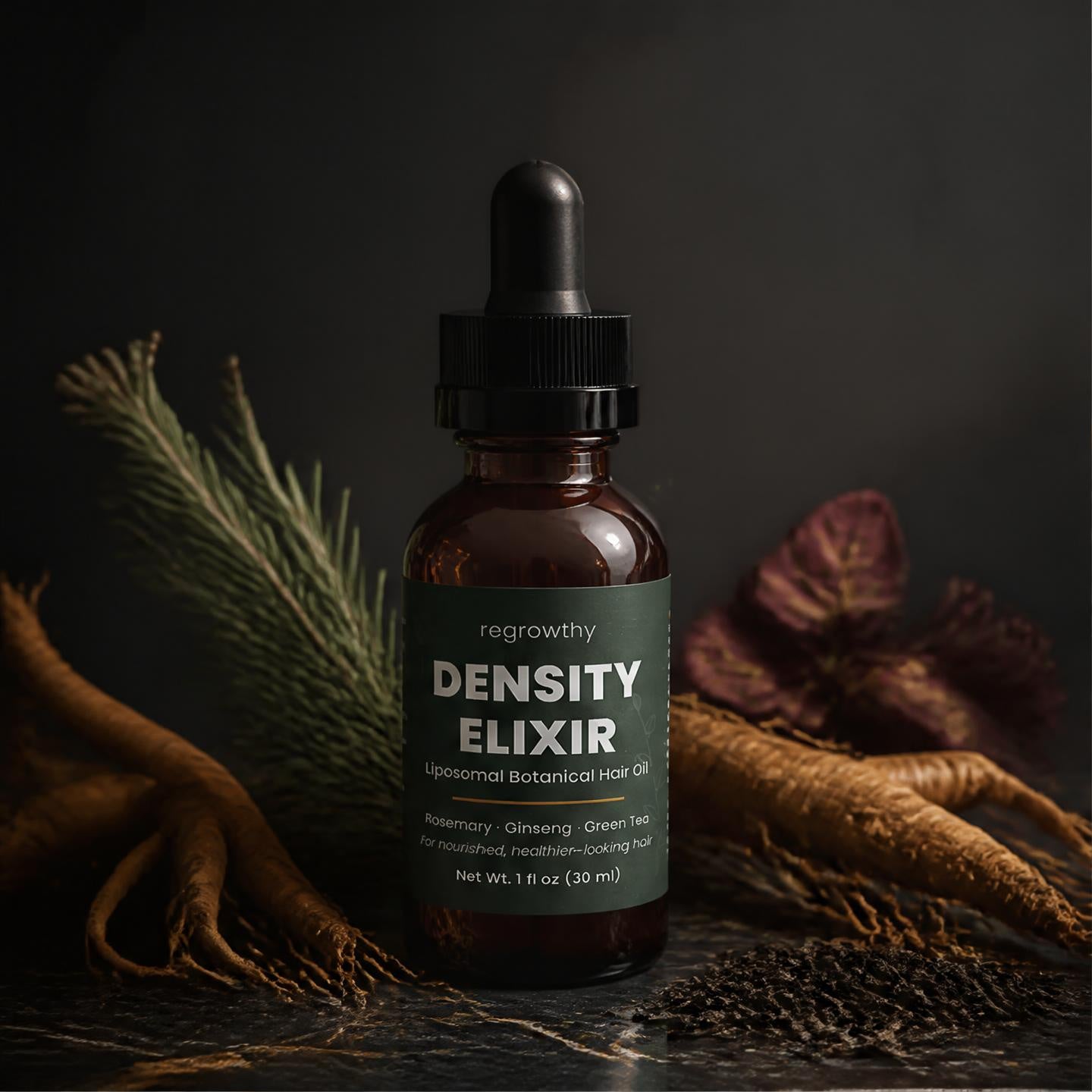
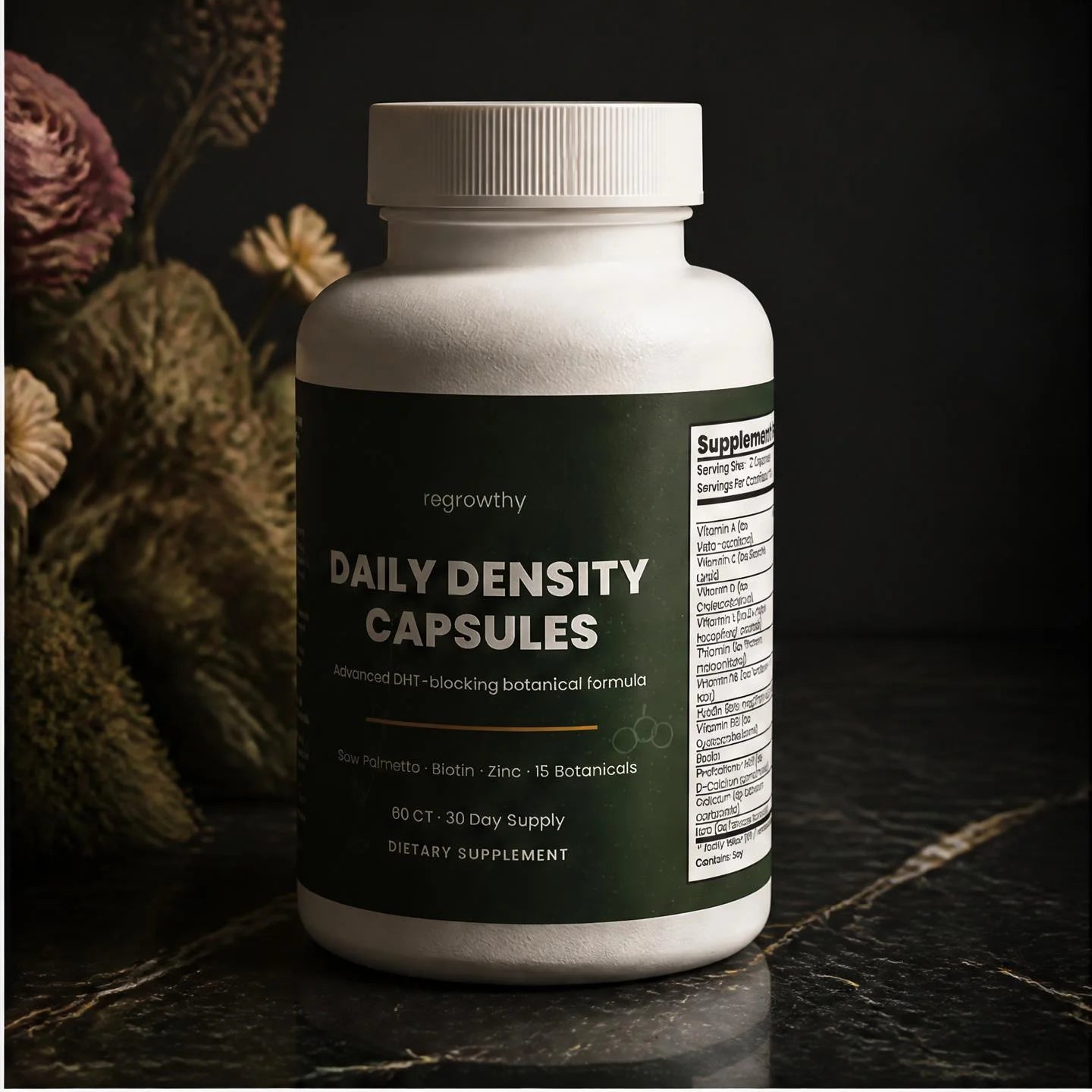
Alongside the laser cap, Regrowthy sells The Density Line, a set of oral and topical supplements meant to work from the inside as well as the outside. Daily Density Pro Capsules anchor the oral side, formulated with ingredients like saw palmetto, which has a long history of use as a natural approach to managing DHT activity, alongside supporting vitamins and minerals tied to hair follicle health. Density Drops and Density Elixir offer additional flexible formats for people who prefer liquid supplementation, while Density Collagen Peptides and Daily Density Gummies round out options for people building a routine around convenience. On the topical side, Dense Cleanse is a scalp shampoo formulated to clear buildup and support a healthier scalp environment, sometimes using rosemary oil, an ingredient that has drawn interest in dermatology circles as a gentler, plant-derived option worth discussing alongside more established treatments.
Key Point
Foligain is a topical-only line built around a single proprietary ingredient. Regrowthy combines a light-based device with an oral and topical supplement system, targeting the scalp from more than one direction at once. Neither requires a prescription, but the mechanisms behind them are meaningfully different.
Ingredients and Mechanism, Side by Side
The core mechanism question in any foligain vs regrowthy comparison comes down to this: are you trying to change the scalp environment topically, address DHT from the inside, or stimulate follicle activity with light, and does the product you're considering actually do what it claims?
- Foligain's Trioxidil formula is applied directly to the scalp, generally as part of a daily or twice-daily hair care habit, similar in routine to how minoxidil is used.
- Regrowthy's laser cap works by delivering red light energy to the scalp for a fixed session length, a mechanism supported by a growing body of dermatology research on low-level light therapy.
- Daily Density Pro and the rest of The Density Line work systemically, through ingredients taken orally, rather than sitting on the scalp surface.
- Dense Cleanse addresses scalp hygiene and buildup, which can matter for follicle health regardless of which growth-support method you're using.
One thing worth being honest about: DHT is a well-established driver of androgenetic alopecia, the medical term for the most common pattern of genetic hair thinning in both men and women. Prescription DHT blockers like finasteride work systemically and have a large body of clinical trial data behind them, but they require a prescription and carry a real, if statistically uncommon, risk profile that should be discussed with a doctor. Non-prescription approaches, whether that's a Trioxidil topical or a saw palmetto supplement, generally work more gently and gradually, and the research supporting them, while promising in some areas, is not as deep or as standardized as the research behind prescription options.
Format and Daily Routine
Routine fit is where a lot of people actually make their decision, more than ingredient lists. Foligain's shampoo and serum formats slot into a routine you probably already have. You're washing your hair anyway, so swapping in a Foligain product doesn't add a new habit, it just changes what's in the bottle. That's a real advantage for people who don't want to add another step to their day.
Regrowthy's laser cap does ask for a dedicated block of time, typically worn for a set session length several times a week, which is a bigger routine commitment upfront. The tradeoff is that it's a fully separate mechanism from anything you're putting on or in your body topically, so it can be layered on top of a supplement routine without any concern about product interaction. Capsules, drops, and gummies from The Density Line, similarly, fit into an existing vitamin routine more easily than a new topical product fits into a grooming routine, since you're just adding one more thing to a pill organizer or morning glass of water.
For people who've tried and abandoned topical serums before, often due to residue, scent, or the hassle of application timing, a device-plus-supplement model can feel like a fresh start rather than more of the same. For people who genuinely prefer a low-effort swap in an existing shower routine, Foligain's format is hard to beat on simplicity.
Cost Model and Commitment
Foligain products are typically sold as standalone purchases or repeat one-off orders, priced per bottle, which means the ongoing cost is tied directly to how often you reorder. Regrowthy's Density Line supplements, on the other hand, are structured as a subscription. That model exists because hair growth support isn't a one-time event: follicles operate on multi-month cycles, and consistent use over time is what most dermatology-minded approaches to hair thinning are built around, whether the product is prescription or not.
A subscription model has real tradeoffs. It generally costs less per unit than one-off buying, and it removes the friction of remembering to reorder right when you're running low, which matters because inconsistent use is one of the more common reasons any hair regrowth routine underdelivers. But it's also a bigger commitment to evaluate up front, since you're planning for months rather than a single bottle. The laser cap itself is a one-time purchase rather than a subscription, so the ongoing cost consideration mostly applies to the supplement side of Regrowthy's lineup.
If you're weighing a topical dht blocker comparison purely on near-term cost, a single bottle of a Foligain product will usually be the lower up-front number. If you're weighing total cost across a realistic 6 to 12 month window, the comparison gets closer, since consistent topical use also requires repeat purchases over that same stretch.
Who Each Option Is Actually For
Foligain tends to make the most sense for someone in the early stages of noticing thinning who wants a low-commitment, low-cost way to add a targeted product to a routine they already have, without overhauling anything else. It can also appeal to people who specifically want to avoid adding a device or a new supplement habit and would rather keep things simple.
Regrowthy tends to fit better for someone who has already tried a single topical product without the results they wanted, or who would rather address hair thinning from more than one angle at once: light-based stimulation on the scalp, plus systemic support through ingredients like saw palmetto in Daily Density Pro, plus scalp health through Dense Cleanse. It's also a reasonable fit for someone who prefers not to deal with daily topical application and would rather build a supplement habit into an existing routine like a morning vitamin stack.
Neither approach is a substitute for talking to a dermatologist, especially if your hair loss is sudden, patchy, or accompanied by scalp irritation, since those patterns can point to causes that need a different kind of treatment entirely. For general pattern thinning tied to genetics or age, though, both brands represent reasonable, non-prescription starting points, and the right one really does depend on whether you want a topical swap or a more layered routine. It's also worth looking at how other supplement-first brands compare to Regrowthy if you're still narrowing down what kind of approach fits your routine best.
At the end of the day, a foligain review that only looks at ingredient claims is missing half the picture. The bigger question is whether you want a single topical product added to your existing routine, or a combination approach that pairs a light-based device with oral and topical support. Both are legitimate, non-prescription paths. What matters most is picking the one you'll actually stick with consistently, since consistency, more than any single ingredient or wavelength, is what tends to separate people who see results from people who give up after a few weeks.
From the routine
Mentioned in this article
Common questions
Frequently asked questions
Is Foligain's Trioxidil the same thing as minoxidil?+
Does Regrowthy's laser cap require a prescription like finasteride?+
Can I use a topical product like Foligain alongside Regrowthy's supplements?+
Which option is better for early-stage thinning?+
Why is Daily Density Pro sold as a subscription instead of a one-time purchase?+
Is DHT the only cause of hair thinning that these products address?+
The Regrowthy System
Ready to start regrowing at home?
Hands-free. Non-prescription. 660nm clinical wavelength, backed by a 30-day guarantee.
Continue Reading
Product Comparisons
Keeps vs Regrowthy: Prescription vs Non-Prescription Hair Loss Treatment
8 min read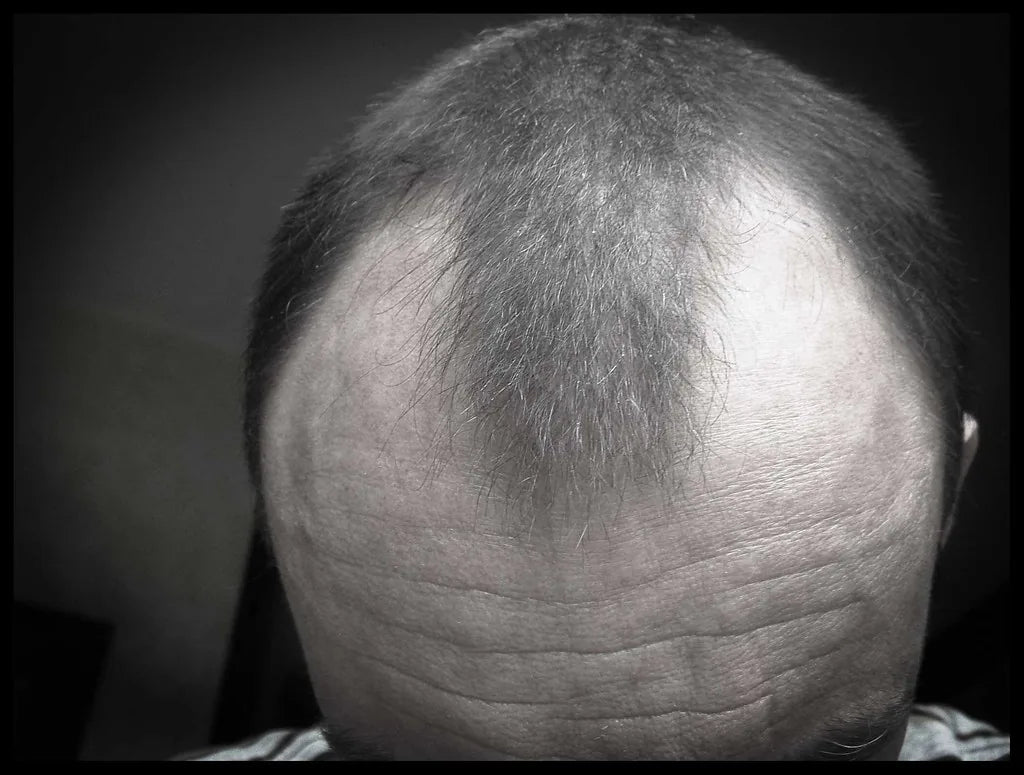
Product Comparisons
Nutrafol vs Regrowthy: Premium Hair Supplements Compared
9 min read
Product Comparisons
Nioxin vs Regrowthy: Cleansing System vs a Regrowth Routine
9 min read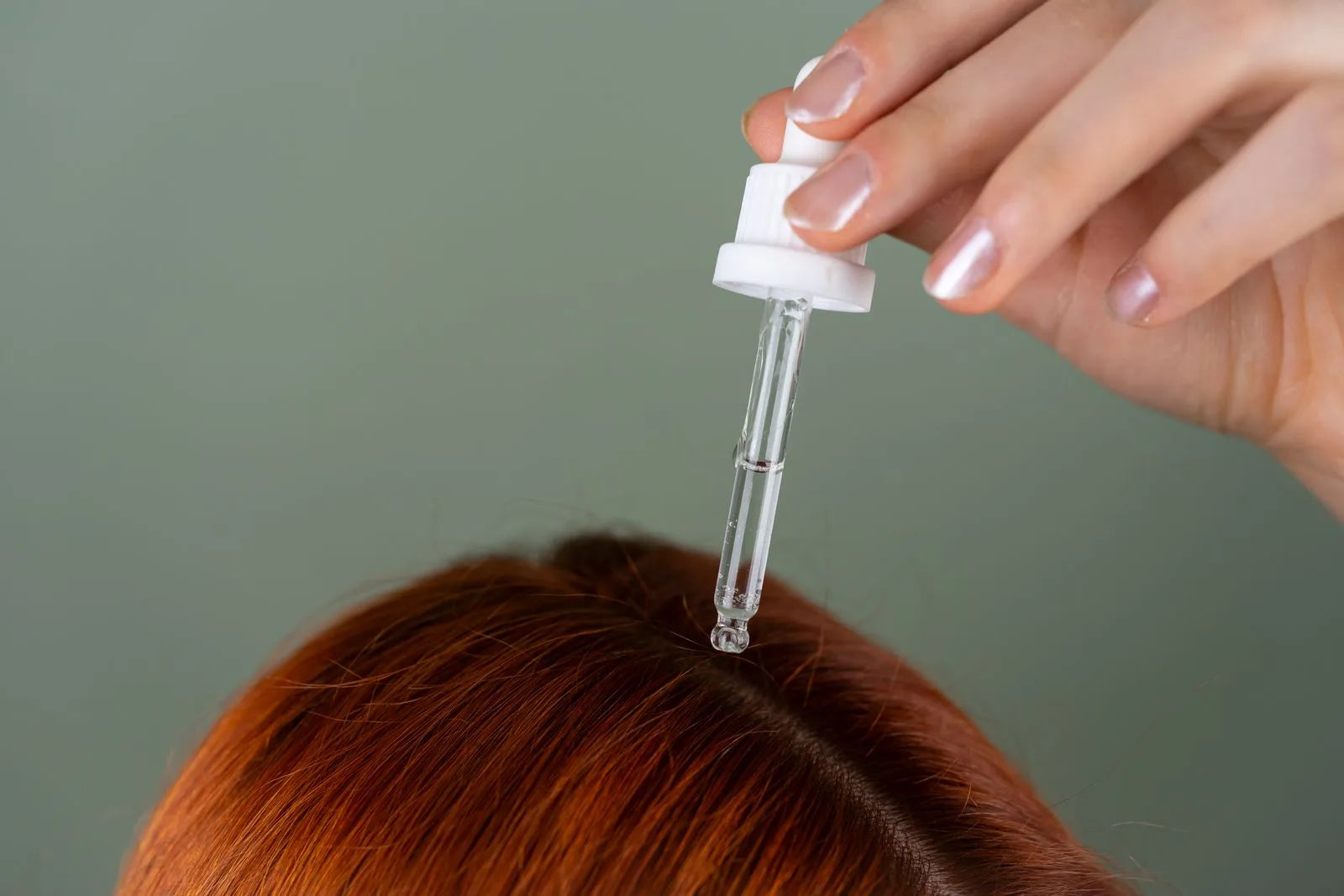
Product Comparisons