Myths & Facts
Is Hair Loss Reversible? Separating Myth From Fact
Is hair loss reversible, or is that just marketing talk? Here is the honest, evidence-based breakdown of which types of hair loss can be reversed, which can only be slowed, and which reversing hair loss myths you can finally stop believing.
Updated July 1, 2026
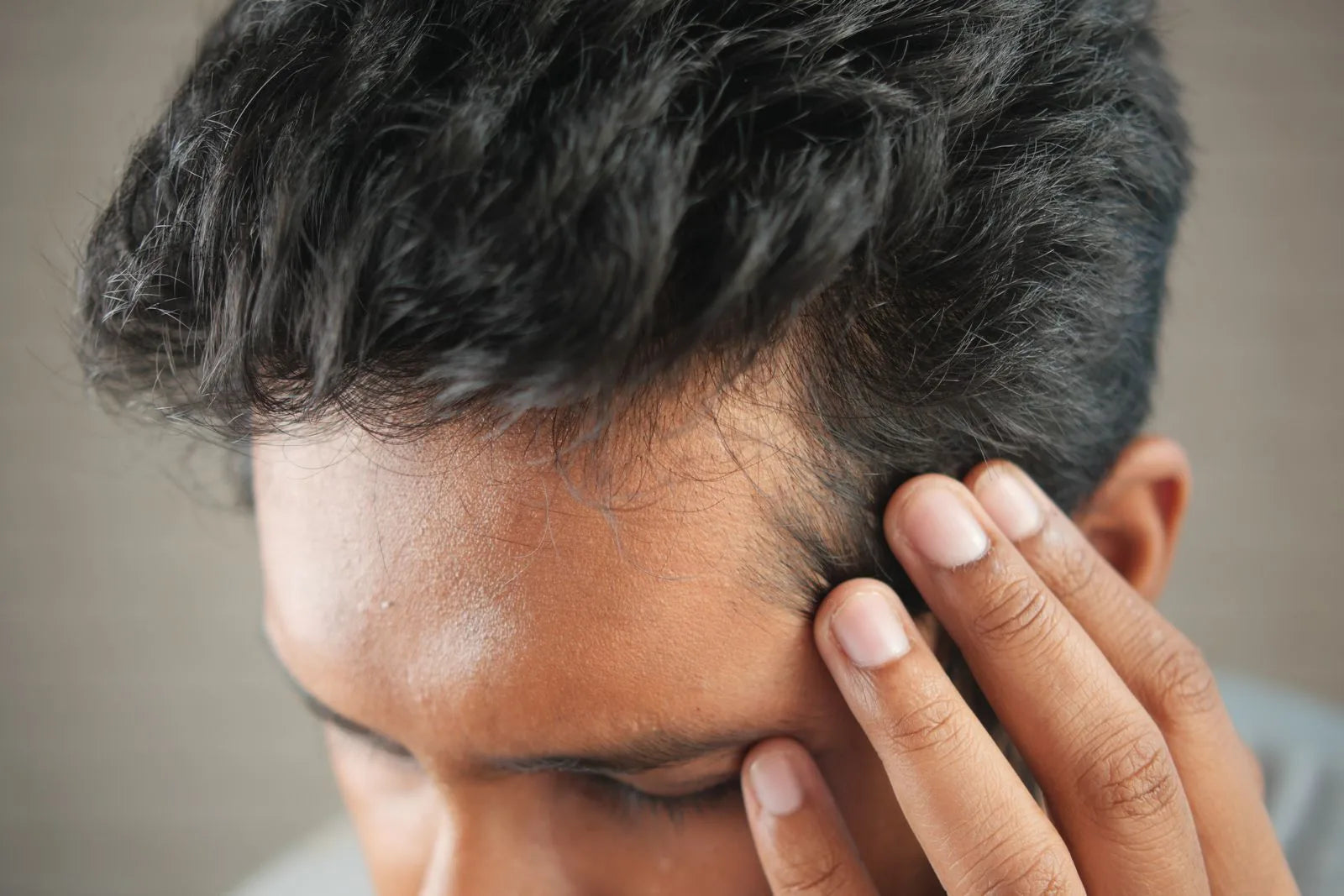
"Is hair loss reversible?" is one of the most searched questions in dermatology, and it deserves a more honest answer than the ads promise. Some hair loss is fully reversible. Some is partially reversible if you catch it early and stay consistent. And some, once it reaches a certain point, is permanent no matter what you try. The confusing part is that all three of these can look identical in the mirror during the first few months, which is exactly why so many myths about reversing hair loss have taken root.
This article is not going to tell you that every strand can grow back if you just try hard enough, because that is not true and it is not fair to anyone dealing with real thinning. Instead, we are going to walk through what "reversible" actually means medically, which causes of hair loss fall into which category, and what the evidence actually supports if you are trying to hold onto the hair you have and regrow what is still recoverable.
Why This Question Is So Confusing
Part of the confusion comes from the fact that "hair loss" is not one condition. It is an umbrella term for dozens of different processes, from genetic thinning to autoimmune conditions to simple nutrient deficiencies, and each one behaves differently. A shampoo ad can honestly show someone regrowing hair after a stressful year (telogen effluvium, which resolves on its own) and use that footage to imply the same product will regrow hair lost to years of androgenetic alopecia. Both are technically "hair loss." Only one of them is fully reversible in the way the ad implies.
The other source of confusion is timing. Hair follicles do not die instantly. In genetic hair loss, follicles shrink gradually over years in a process called miniaturization, producing progressively finer, shorter hairs before they stop producing visible hair at all. That gradual decline is exactly why the question "can hair loss be reversed" does not have one answer. Early on, a shrinking follicle can often be coaxed back to producing thicker hair. Later, once it has gone dormant for long enough, it usually cannot.
The Short Answer: It Depends on the Cause
If you want the honest short version: whether hair loss is reversible depends almost entirely on what is causing it and how far along it is. Hair loss caused by a temporary stressor, such as illness, extreme stress, a crash diet, childbirth, or a medication side effect, is generally fully reversible once the underlying trigger resolves. Hair loss caused by an ongoing hormonal or genetic process, like androgenetic alopecia (the medical term for male and female pattern hair loss), is only partially reversible, and the earlier you address it the more you can typically hold onto or regrow.
There is also a smaller category of hair loss that is neither fully reversible nor entirely hopeless: conditions like alopecia areata, which can come and go unpredictably, or traction alopecia from years of tight hairstyles, which may or may not recover depending on how much scarring has occurred. Lumping all of these together is where most of the myths about reversing hair loss come from.
What "Reversible" Actually Means in Dermatology
In dermatology, "reversible" does not mean "guaranteed to fully return to your teenage hairline." It means the follicle is still biologically capable of producing hair, and the process suppressing it can be interrupted or slowed. A follicle that has fully miniaturized and gone dormant, with no visible fine hair growing from it at all, is generally considered non-viable. A follicle that is still producing thin, short, or slow-growing hair is considered viable and is the actual target of most treatments, whether that is a topical, an oral supplement, or a device.
Key Point
Reversing hair loss almost always means intervening while follicles are still miniaturizing, not after they have gone fully dormant. This is why dermatologists consistently emphasize early action over waiting to see how bad it gets.
This is also why "reversible" exists on a spectrum rather than as a yes-or-no label. A follicle can be partially recovered, meaning it produces thicker and longer hair than it did before treatment, without ever matching its original, pre-thinning diameter. That is still a meaningful, visible result. It is just not the same as the word "reversed" implies when used in marketing copy.
Androgenetic Alopecia: Partially Reversible, Rarely Fully
Androgenetic alopecia, the pattern thinning that affects both men and women, is by far the most common cause of hair loss and the one people are usually asking about when they search "is hair loss reversible." It is driven largely by dihydrotestosterone, better known as DHT, a byproduct of testosterone that binds to receptors in genetically sensitive follicles and gradually shrinks them over successive growth cycles. This is well-established biology, not a theory, and it is the reason pattern hair loss tends to follow predictable patterns like the Norwood scale in men.
The realistic picture for androgenetic alopecia is this: it is rarely fully reversible once significant miniaturization has occurred, but it is very often partially reversible, especially in the earlier stages. Reducing DHT's effect on the follicle, improving blood flow and cellular energy at the follicle level, and reducing scalp inflammation can all help a struggling follicle produce a thicker hair than it currently is. This is a very different claim than promising a full return to a dense, youthful hairline, and if you already have a receding hairline, it is worth reading a clear-eyed look at whether a receding hairline can actually grow back before assuming the worst or the best.
Types of Hair Loss That Are Fully Reversible
Not every kind of hair loss involves a genetic clock. Several common causes are fully reversible once identified and addressed, which is genuinely good news if one of these applies to you:
- Telogen effluvium: a temporary shedding phase triggered by illness, surgery, major stress, or rapid weight loss, usually resolving within six to twelve months once the trigger passes.
- Nutrient deficiencies: low iron, low vitamin D, or inadequate protein intake can all thin hair, and correcting the deficiency typically restores normal growth.
- Medication-induced shedding: certain medications list hair thinning as a side effect, and hair usually recovers after stopping or adjusting the medication under a doctor's guidance.
- Thyroid-related thinning: both underactive and overactive thyroid conditions can cause diffuse shedding that improves once thyroid levels are properly managed.
- Traction alopecia (early stage): hair loss from tight ponytails, braids, or extensions can fully recover if caught before scarring sets in.
The common thread here is that the follicle itself was never permanently damaged, it was simply reacting to an outside stressor. Remove the stressor, and the follicle typically goes back to its normal cycle on its own.
Common Myths About Reversing Hair Loss
Because the biology is genuinely complicated, a lot of reversing hair loss myths have filled the gap. A few of the most persistent ones deserve to be addressed directly.
Myth: If it's genetic, nothing can help
This one causes real harm because it stops people from trying anything at all. Genetic hair loss is not an on-off switch, it is a slow process, and slowing or partially reversing that process is well within reach for many people, particularly earlier on.
Myth: Natural remedies alone can fully regrow a bald scalp
Ingredients like saw palmetto and rosemary oil have real, if modest, supporting evidence for scalp health and mild DHT modulation, but no natural remedy has been shown to regrow hair on a scalp with no active follicles left. Understanding where botanicals realistically fit alongside medical treatments is the difference between a reasonable expectation and a disappointing one.
Myth: Shedding always means you're going bald
Everyone sheds fifty to a hundred hairs a day as part of the normal growth cycle. A stressful month, a change in season, or a new shampoo can all temporarily increase that number without indicating permanent loss.
Myth: Cutting your hair or rinsing with cold water makes it grow faster
These habits can affect the appearance and feel of hair strands, but they do nothing to the follicle underneath the scalp, which is where actual regrowth decisions get made. A cold rinse can make the cuticle lie flatter and look shinier for a day, which is a cosmetic effect, not a follicular one.
What Actually Moves the Needle: Evidence-Based Approaches
If you are dealing with early to moderate thinning and want to know what genuinely has research support, the approaches that consistently show up in dermatology literature share a few things in common: they target the follicle directly, they require consistency over months rather than weeks, and none of them promise overnight results.
Low-level red and near-infrared light in the 650 to 660 nanometer range has a reasonable body of clinical research behind it for stimulating cellular activity in miniaturizing follicles, which is the mechanism behind a Laser Therapy Cap. Because it works at the follicle level rather than only blocking a hormone, it is often used alongside other approaches rather than as a stand-alone fix. Nutritional support matters too: follicles are metabolically demanding tissue, and consistent intake of biotin, key vitamins, and targeted botanicals is the reasoning behind a daily supplement like Daily Density Pro, taken as a steady, ongoing habit rather than a short course.
It's also worth being clear-eyed about supplements generally, since the category is full of overpromising. A closer look at what hair supplements can and can't actually do is a useful gut check before spending money on anything, including ours. The honest framing is that supplements, light therapy, scalp care, and lifestyle factors work best as a combined routine addressing the follicle from multiple angles at once, not as isolated silver bullets.
Scalp condition also plays a bigger role than most people expect. A scalp with excess buildup, inflammation, or clogged follicles is a harder environment for a struggling follicle to recover in, which is why scalp-focused steps, like using a clarifying, non-irritating scalp shampoo, are often recommended as part of a broader routine rather than as an afterthought.
When to See a Professional
Self-directed routines are reasonable for early, gradual thinning, but a few situations genuinely warrant a dermatologist visit rather than more research online: sudden or patchy hair loss, hair loss accompanied by scalp pain, redness, or scarring, hair loss alongside other new symptoms like fatigue or weight changes, and hair loss that is progressing quickly over a matter of weeks rather than months or years. These patterns can point to autoimmune conditions, thyroid disorders, or other issues that need proper diagnosis, and no over-the-counter routine should substitute for that.
A dermatologist can also give you something no article can: an actual look at your scalp and an assessment of how much follicle activity is still there. That single piece of information changes the realistic answer to "can hair loss be reversed" from a general statistic into something specific to you.
So, is hair loss reversible? The honest answer is that it depends entirely on the cause, and pretending otherwise does a disservice to anyone trying to make a real decision about their hair. Temporary triggers resolve on their own. Genetic thinning can often be slowed and partially reversed, especially early, through consistent, evidence-based habits rather than one dramatic fix. The best move available to almost everyone reading this is the simplest one: figure out what is actually causing your thinning, act on it sooner rather than later, and judge any product, including ours, by whether it is honest about what it can and cannot do.
From the routine
Mentioned in this article


Common questions
Frequently asked questions
Can hair loss be reversed without medication?+
How do I know if my hair loss is genetic or temporary?+
How long does it take to see results from a hair loss treatment?+
Is it too late to reverse hair loss if I already have visible thinning?+
Does stress cause permanent hair loss?+
The Regrowthy System
Ready to start regrowing at home?
Hands-free. Non-prescription. 660nm clinical wavelength, backed by a 30-day guarantee.
Continue Reading