Product Comparisons
Happy Head vs Regrowthy: Compounded Prescriptions vs a Non-Prescription Routine
Happy Head builds its model around compounded prescription formulas delivered via telehealth. Regrowthy takes a non-prescription route instead. Here is how the two actually compare on mechanism, safety, cost, and real-world reviews.
Updated July 1, 2026

Happy Head has built its reputation on compounded prescription formulas for hair loss, custom blends of minoxidil, finasteride, and other active ingredients mixed into a single topical or oral product by a compounding pharmacy. It is a telehealth-first model: a consultation, a provider review, and a prescription that ships to your door. Regrowthy takes a different path entirely, one built around a non-prescription routine that pairs a laser therapy device with targeted supplementation. Neither approach is right for every single person reading this, but the differences matter a lot depending on what you are looking for, how you feel about hormone-based treatment, and how much you want a physician involved in your hair loss routine.
If you searched "happy head vs regrowthy" because you are trying to decide between the two, this comparison walks through how each company actually works, what a Happy Head hair loss review tends to say once the novelty wears off, what compounded minoxidil finasteride formulas involve, and what Happy Head cost typically looks like relative to a non-prescription routine. The goal here is not to declare a winner. It is to give you the information to figure out which lane fits your situation.
What Happy Head Actually Is
Happy Head is a telehealth company that specializes in compounded prescription treatments for hair loss. After an online intake form and a review by a licensed provider, customers can be prescribed a custom topical formula, often combining minoxidil, finasteride, and sometimes additional ingredients like a low-dose steroid or other actives, mixed together by a compounding pharmacy into a single daily application. Some plans also include an oral finasteride or oral minoxidil option. The pitch is convenience: instead of juggling two separate bottles and remembering both, you use one product once or twice a day.
This compounded approach is common across the telehealth hair loss space, and Happy Head is one of several companies built around it. Compounding allows a pharmacy to combine ingredients that are not available together in a single FDA-approved product, which is why these formulas are prescribed individually rather than sold over the counter. That also means the specific concentration and combination of ingredients in a compounded formula has generally not gone through the same standardized clinical trials as a single-ingredient FDA-approved drug, even though the individual ingredients, like finasteride and minoxidil, are well studied on their own.
For someone who wants prescription-strength intervention without separately managing multiple products, that convenience is real. It is worth understanding clearly before you compare it to a non-prescription alternative.
Understanding Compounded Minoxidil Finasteride Formulas
To evaluate Happy Head fairly, it helps to understand what compounded minoxidil finasteride actually means in practice. Minoxidil is a topical vasodilator that widens blood vessels near hair follicles and is believed to extend the growth phase of the hair cycle. It is FDA-approved on its own as an over-the-counter treatment. Finasteride is an oral or topical 5-alpha reductase inhibitor that reduces the conversion of testosterone into DHT, the hormone most strongly linked to the follicle miniaturization behind male pattern baldness. Each ingredient has a substantial body of research behind it individually.
Combining the two into a single compounded topical is meant to deliver both mechanisms, vasodilation and DHT reduction, in one application. Some providers add a small amount of a corticosteroid to reduce scalp irritation, or latanoprost, an ingredient originally developed for glaucoma that has some evidence for promoting hair growth. Because compounded formulas are custom-mixed by individual pharmacies rather than mass-produced and tested as a single unit, the exact ratio and delivery vehicle can vary. This is standard practice in compounding pharmacy and is not unique to Happy Head, but it does mean you are trusting the specific formulation and the pharmacy behind it rather than referencing a single, uniform clinical trial for that exact product.
This is also where topical finasteride differs from oral finasteride in an important respect: research suggests topical application may reduce, though not eliminate, systemic absorption compared to the oral pill, which is one reason some providers prefer the topical route. That said, topical finasteride still delivers the drug through the skin and into the bloodstream to some degree, and side effect risk has not been fully eliminated in the research to date, so it is not accurate to describe it as risk-free.
Key Point
Compounded minoxidil finasteride formulas combine two well-researched individual ingredients into one custom product. The combination itself, at that specific ratio, from that specific pharmacy, typically has not been through the same standardized clinical trials as either ingredient alone. That is not disqualifying, but it is a meaningfully different evidence picture than an FDA-approved single-ingredient drug, and it is worth knowing before you commit to a prescription plan.
How the Regrowthy Routine Works Instead
Regrowthy does not involve a prescription, a compounding pharmacy, or a hormone-blocking drug. The system is built around a 660nm Laser Therapy Cap paired with The Density Line, a set of oral and topical products designed to support the hair growth cycle through non-pharmaceutical means. The laser cap uses low-level light therapy, a mechanism with a meaningful base of clinical research behind it, to stimulate cellular energy production in hair follicles and encourage dormant follicles back into an active growth phase. You wear it for a set number of minutes several times a week, no prescription or provider visit required.
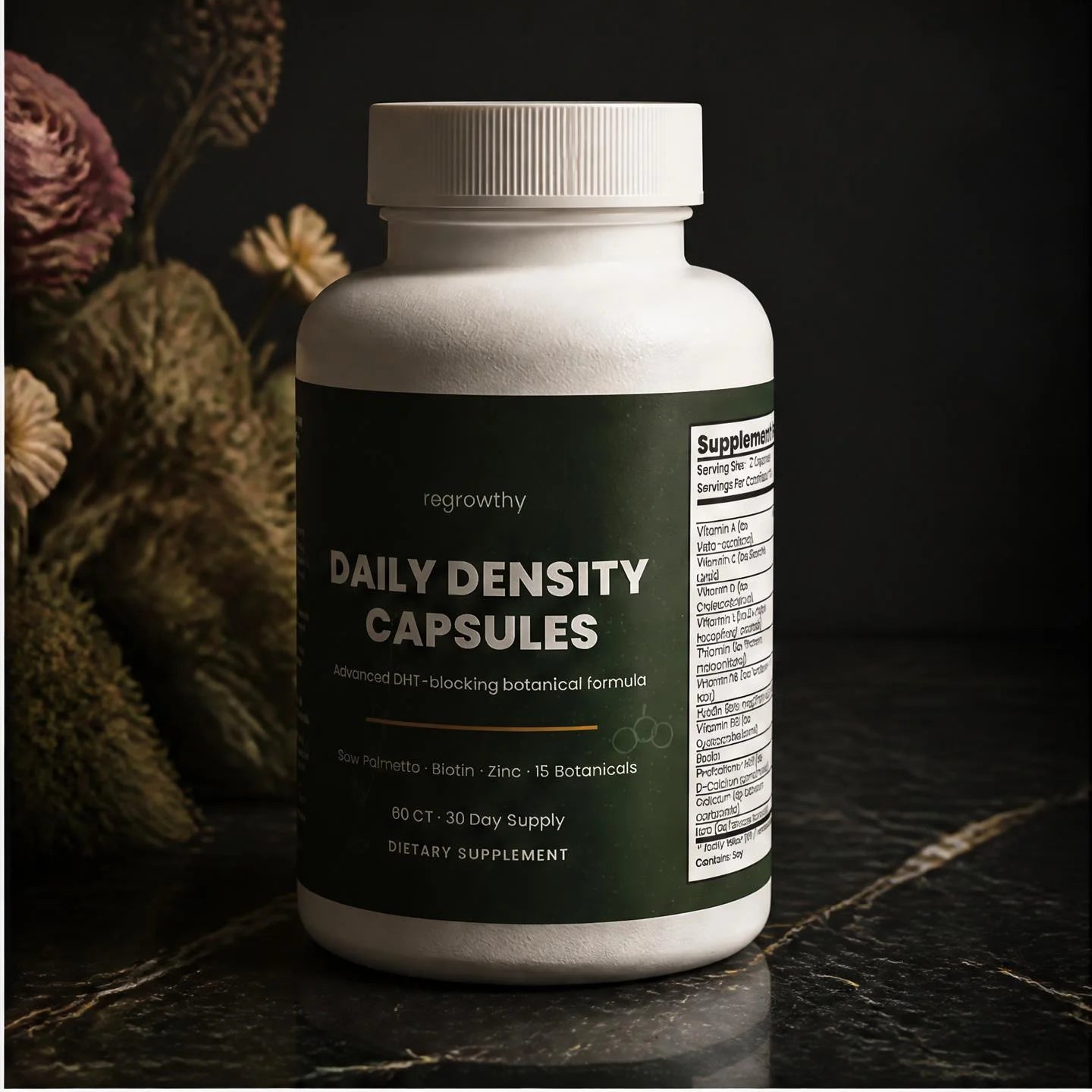
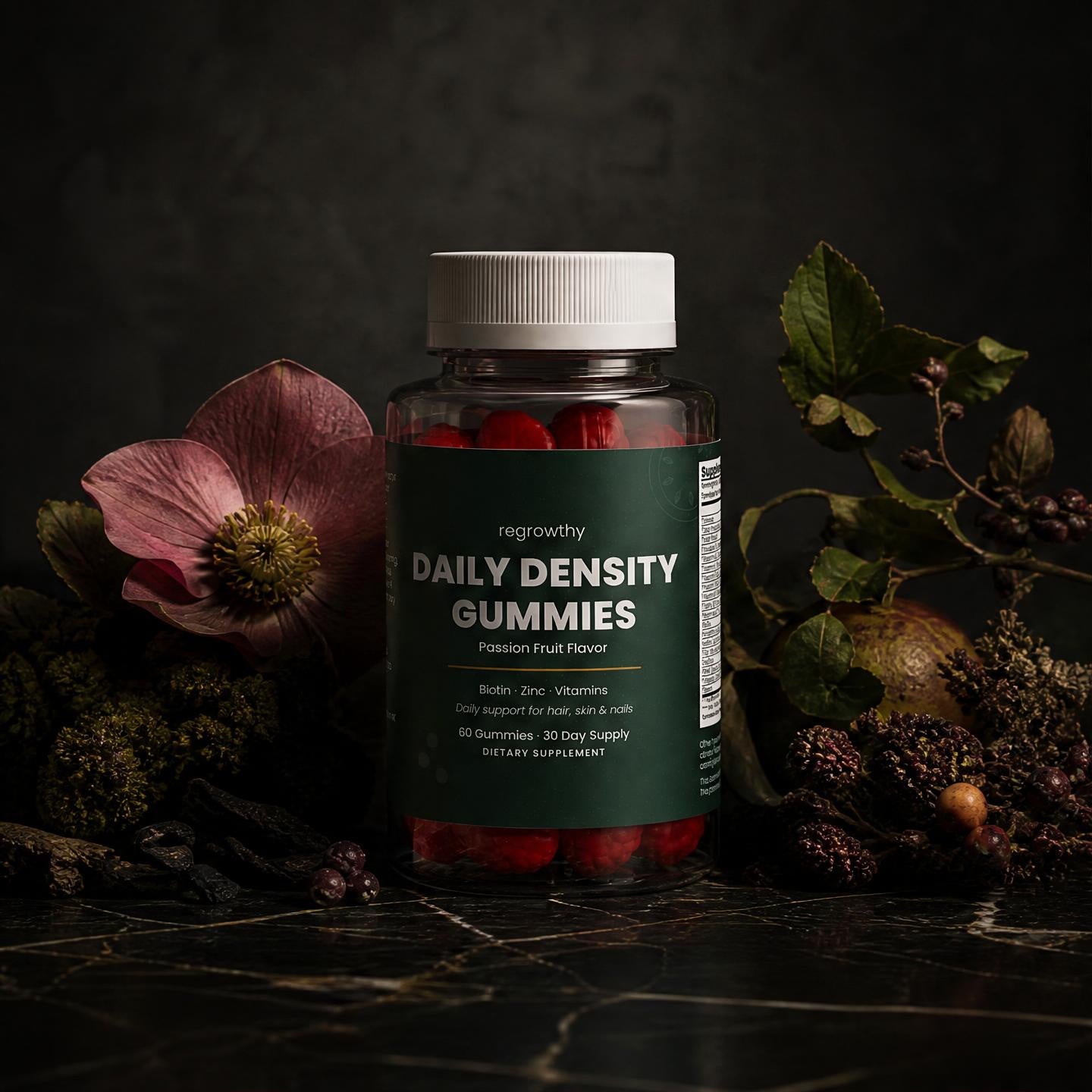
The supplement side of the routine leans on ingredients with long histories of use, rather than a compounded hormone-blocking drug. Daily Density Pro Capsules combine saw palmetto, a botanical extract studied for its ability to modestly inhibit the same 5-alpha reductase pathway that finasteride targets pharmaceutically, alongside biotin and other ingredients aimed at supporting the hair growth environment from the inside. Density Drops, a topical serum built around rosemary oil and other botanical actives, is designed as a non-hormonal alternative to a compounded topical, applied directly to the scalp. Dense Cleanse, a scalp shampoo, and Density Collagen Peptides round out a routine meant to address hair health from several angles at once.
The honest comparison here is not "natural versus pharmaceutical equals better versus worse." It is that saw palmetto's effect on DHT is generally understood to be milder than finasteride's, and clinical research on botanical actives like rosemary oil, while encouraging, is a smaller and newer body of evidence than the decades of data behind minoxidil and finasteride individually. What Regrowthy offers in exchange is a routine with no prescription requirement, no systemic hormone-blocking drug, and a lower barrier to simply starting.
Side Effects and Safety Considerations
This is usually the deciding factor for people comparing Happy Head and Regrowthy, and it deserves a direct answer. Finasteride, whether oral or topical, works by lowering DHT, and DHT plays a role in more than just hair follicles. A subset of users on oral finasteride report sexual side effects, mood changes, or other symptoms, and while topical formulations appear to reduce the frequency of these reports relative to the oral pill, they have not been shown to eliminate the risk entirely. Reasonable people land in different places on this trade-off. Some decide the benefit is worth it. Others decide they would rather not introduce a hormone-altering compound into their body at all, especially long-term, since these treatments generally need to be continued indefinitely to maintain results.
A compounded prescription also means an ongoing relationship with a telehealth provider and a pharmacy, periodic check-ins, and a formula that requires a valid, current prescription to keep refilling. If you stop the medication, most clinical evidence suggests the hair loss process resumes at roughly the rate it would have without treatment.
Regrowthy's device and supplement routine carries a much lower side effect profile because none of the core mechanisms involve a systemic hormone-blocking drug. Some people experience mild scalp sensitivity from topical botanicals or need to build up wear time on the device gradually, but there is no DHT-suppression mechanism at the pharmaceutical level and no prescription to manage. The trade-off, again in fairness, is that the ingredients involved are generally considered gentler in effect as well as gentler in risk.
What Happy Head Cost Looks Like Compared to a Non-Prescription Routine
Compounded prescription plans like Happy Head typically involve a recurring monthly subscription that covers the consultation, the ongoing provider relationship, and the compounded formula itself, refilled and shipped on a regular cycle. Because pricing, formulations, and add-ons change over time and vary by individual prescription, we won't cite a specific number here, but the general pattern across the compounded telehealth category is a higher recurring monthly cost than an over-the-counter product, largely because you are paying for the provider relationship and the custom formulation, not just the ingredients.
Regrowthy's model is subscription-based as well, but the ongoing cost covers supplements rather than a compounded drug and provider oversight. The laser cap itself is a one-time device purchase rather than a recurring prescription cost, and the ongoing monthly commitment is for Density Drops, Daily Density Pro, or other items in the Density Line that you choose to include in your routine. There is no telehealth consultation fee built into the price, since no prescription is required to begin.
The fairest way to frame the cost comparison is this: Happy Head cost reflects a pharmaceutical product with provider oversight built in. Regrowthy's cost reflects a device you own outright plus a supplement subscription you can adjust or pause. Which one is the better value depends entirely on whether you specifically want the pharmaceutical intervention and are comfortable with the ongoing prescription relationship that requires.
What a Happy Head Hair Loss Review Usually Reveals
If you read through Happy Head hair loss review threads and testimonials, a few patterns tend to repeat. People who see results often report them somewhere in the three-to-six-month range, consistent with how long minoxidil and finasteride generally take to show visible effects, since the hair growth cycle itself operates on a similar timeline regardless of which treatment is used. That timeline is not unique to Happy Head. It reflects biology more than the brand.
The more brand-specific feedback tends to cluster around two things: satisfaction with the convenience of a single combined topical instead of managing separate products, and occasional frustration with scalp irritation, greasiness from the topical vehicle, or the ongoing cost and commitment of a prescription subscription. Some reviewers also note the need to keep using the product indefinitely to hold onto results, which is true of essentially every treatment in this category, including Regrowthy's routine, since hair loss is a chronic, ongoing process rather than something that gets permanently "fixed" after a few months.
The honest takeaway from reading these reviews broadly is that Happy Head works reasonably well for people who are comfortable with prescription-strength intervention and want a streamlined telehealth experience. It is not a magic solution, and results are gradual and maintenance-dependent, same as any legitimate hair loss treatment on the market, including our own.
Who Should Choose Which Approach
Happy Head tends to make the most sense for someone who has already decided they want pharmaceutical-strength treatment, wants the convenience of a single combined formula instead of managing multiple bottles, and is comfortable with an ongoing provider relationship and prescription refill cycle. It is also a reasonable fit for someone who has tried over-the-counter minoxidil alone and wants to add finasteride's DHT-blocking mechanism without taking a separate oral pill.
- You want the most clinically established DHT-blocking mechanism available and are comfortable with a prescription.
- You would rather use one combined product than juggle a device and separate supplements.
- You are comfortable with an ongoing telehealth relationship and periodic check-ins.
- You understand results require continuing treatment indefinitely to maintain.
Regrowthy tends to make more sense for someone who wants to avoid a systemic hormone-blocking drug altogether, would rather not go through a telehealth consultation and prescription process to get started, or wants a multi-modal routine that combines a physical device with supportive nutrition rather than relying on a single pharmaceutical mechanism. It is also a reasonable starting point for someone earlier in their hair thinning journey who wants to try a lower-risk approach before considering prescription options, or someone who tried finasteride previously and did not tolerate it well.
- You want to avoid hormone-altering ingredients entirely, topical or oral.
- You would rather not start with a prescription and provider relationship.
- You want a routine that combines a device with supplementation rather than a single topical.
- You are earlier in your hair thinning journey and want to start conservatively.
Some people also use a laser device and supportive supplementation alongside a prescription, treating the two as complementary rather than mutually exclusive, though you should always loop in your prescribing provider before combining treatments. For a broader sense of how non-prescription approaches stack up against other telehealth prescription models, our comparisons of Ro against Regrowthy and Hers against Regrowthy cover similar ground from slightly different angles.
The Bottom Line
Happy Head and Regrowthy are not really competing for the same customer in the way two shampoo brands might. They represent two different philosophies about how to approach hair loss: one through a compounded prescription drug delivered via telehealth, the other through a non-prescription device and supplement routine you can start today without a consultation. Both are legitimate paths, and both require patience, consistency, and realistic expectations about timeline and maintenance.
If a compounded minoxidil finasteride formula from a licensed provider is the level of intervention you have decided you want, Happy Head is a straightforward way to access it. If you would rather build a routine around a laser device and The Density Line without a prescription requirement, hormone-blocking side effects, or an ongoing provider relationship, that is exactly the gap Regrowthy is built to fill. The right answer is the one that matches how you actually feel about pharmaceutical intervention, not which brand markets itself more aggressively.
From the routine
Mentioned in this article
Common questions
Frequently asked questions
Is Happy Head's compounded formula the same as buying minoxidil and finasteride separately?+
Does Regrowthy work as well as compounded minoxidil finasteride?+
Can I read a Happy Head hair loss review before committing to a prescription?+
Why doesn't this article list an exact Happy Head cost?+
Do I need a prescription to start with Regrowthy?+
Can I use a laser cap alongside a compounded prescription like Happy Head's?+
The Regrowthy System
Ready to start regrowing at home?
Hands-free. Non-prescription. 660nm clinical wavelength, backed by a 30-day guarantee.
Continue Reading
Product Comparisons
Capillus vs Regrowthy: FDA-Cleared Laser Caps Compared
8 min read
Product Comparisons
iRestore vs Regrowthy: Laser Hair Therapy Devices Compared
8 min read
Product Comparisons
Ro (Roman) vs Regrowthy: Telehealth Prescriptions vs a Non-Prescription System
9 min read
Product Comparisons