Treatment Guides
Hair Transplant vs. Non-Surgical Options: The Choice
Before dropping $15,000 on a hair transplant, understand what it actually does - and why non-surgical alternatives may give you better results for less.
Updated January 10, 2026
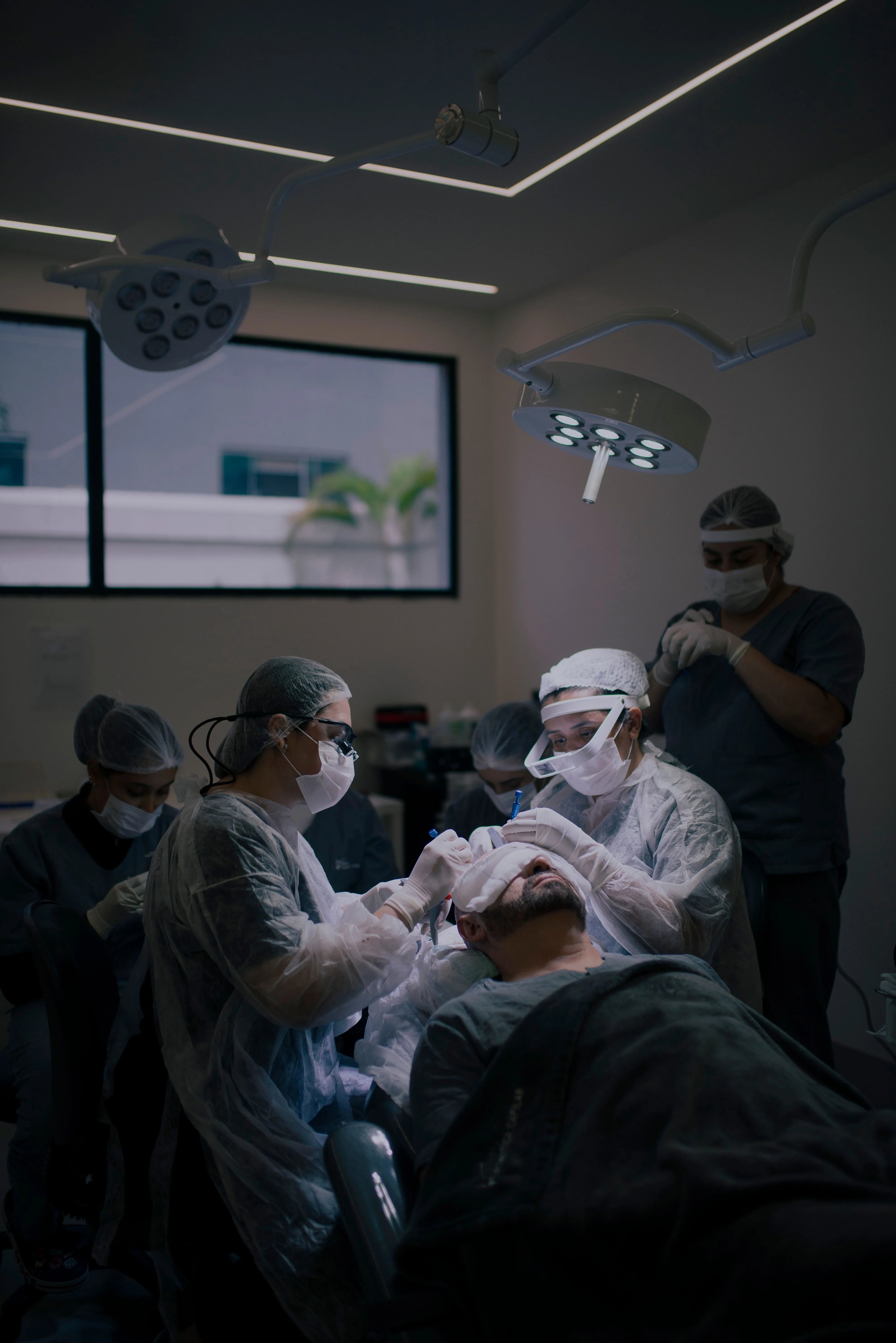
Hair transplant surgery has become a booming industry, with clinics charging anywhere from $8,000 to $15,000+ per procedure. The marketing is slick, the before-and-after photos are compelling, and the promise of permanent hair restoration is alluring. But before you hand over your credit card, there are critical facts about transplants that most clinics won't tell you - and non-surgical alternatives that deserve serious consideration.
This guide provides an honest, balanced comparison of hair transplant surgery versus non-surgical approaches so you can make the best decision for your situation, goals, and budget.
Understanding Your Options
Hair restoration falls into two broad categories: surgical (transplant) and non-surgical (topical treatments, light therapy, laser therapy). Despite what some clinics imply, these aren't mutually exclusive - and for many men, starting with non-surgical options makes far more sense than jumping straight to the operating table.
The most important principle to understand upfront: hair transplants move existing hair - they don't create new hair. Non-surgical treatments, conversely, work to stimulate your existing follicles to produce thicker, healthier growth. For men with early-to-moderate hair loss (Norwood 2-5), non-surgical approaches can often achieve impressive results without surgery.
How Hair Transplants Work
Hair transplant surgery involves harvesting follicular units from the "donor area" (typically the back and sides of the head, where hair is DHT-resistant) and implanting them into thinning or bald areas. The two main techniques are:
FUE (Follicular Unit Extraction)
Individual follicular units are extracted one by one using a small punch tool, then implanted into recipient sites. This method leaves small circular scars (dot scars) across the donor area. Recovery time is typically 5-10 days, with full results visible at 12-18 months.
FUT (Follicular Unit Transplantation / Strip Method)
A strip of scalp is surgically removed from the donor area, dissected into individual follicular units, and implanted. This method leaves a linear scar across the back of the head. Recovery is longer (2-3 weeks for the wound to heal), and the scar can be visible with short haircuts.
Transplant Limitations Most Clinics Won't Tell You
While transplants can produce impressive results for the right candidates, there are significant limitations to understand:
- Limited donor supply: You only have a finite number of donor follicles. Once they're used, there's no replenishing them. If hair loss continues (which it will without ongoing treatment), you may need additional procedures - with diminishing donor supply each time.
- Shock loss: 10-30% of transplanted hairs can fall out due to "shock loss" from the trauma of surgery. Existing non-transplanted hairs in the recipient area may also shed temporarily.
- No new hair creation: Transplants redistribute existing hair. They don't increase your total hair count - they move hair from one area to another. The donor area becomes thinner as a result.
- Scarring: Both FUE (dot scars) and FUT (linear scar) leave permanent scarring in the donor area. This limits future hairstyle options, particularly short cuts.
- Ongoing hair loss: Transplanted hair is DHT-resistant, but the existing non-transplanted hair around it continues to thin. Without ongoing treatment, you can end up with an unnatural pattern - transplanted islands of hair surrounded by thinning native hair.
- Multiple procedures often needed: Many men require 2-3 procedures to achieve desired density, especially for advanced hair loss. Each additional procedure costs $5,000-$10,000+ and further depletes the finite donor supply.
- Not immune to failure: Graft survival rates are typically 85-95%, meaning 5-15% of transplanted follicles may not survive. Poor surgical technique or post-operative care can reduce this further.
⚠️What clinics don't emphasize
Even after a successful transplant, you'll likely need to continue non-surgical treatments (like LED therapy and DHT blockers) to maintain the non-transplanted hair. The transplant addresses the bald areas; the non-surgical treatments protect everything else. This means non-surgical treatment is needed regardless.
Non-Surgical Alternatives That Create Actual Growth
Unlike transplants (which move hair), non-surgical treatments work to stimulate your existing follicles to produce denser, thicker hair. For men with early-to-moderate hair loss where follicles are miniaturized but still alive, this approach can be remarkably effective.
The most effective non-surgical protocol combines multiple treatment modalities:
- Red Light Therapy: 660nm LED light increases ATP production in follicle cells, boosting the energy available for hair growth. Clinical studies show 25-40% increase in hair density with consistent use. Full-coverage LED caps provide hands-free treatment.
- Laser Therapy: Triggers growth factor release (VEGF, PDGF, IGF-1) that activates dormant follicles. Stamps create vertical needle entry for clean, precise treatment. A 2013 study showed laser therapy quadrupled hair growth compared to topical treatment alone.
- Topical DHT Blockers: Caffeine and saw palmetto in laser caps and Laser Caps reduce DHT at the follicle level without systemic side effects.
- Scalp Massage: Improves blood circulation to follicles, enhancing nutrient delivery and treatment absorption.
No invasive procedures, no surgery, no needles. Consistent at-home treatment beats occasional clinic visits. The privacy and convenience of treating at home, combined with clinical-grade results, is why more men are choosing non-surgical approaches first.
Cost Comparison
| Treatment | Upfront Cost | 5-Year Total |
|---|---|---|
| Hair Transplant (FUE) | $8,000-$15,000 | $10,000-$25,000+ |
| PRP Treatments | $500-1,000/session | $6,000-$15,000 |
| Prescription Drugs | $30-$90/month + doctor visits | $2,400-$6,600 |
| Regrowthy Laser Therapy Cap | $289.99 one-time | $289.99 + refills |
More affordable than surgery or ongoing clinic treatments. The Regrowthy Laser Therapy Cap provides clinical results without the clinical costs - a fraction of what you'd spend on even a single transplant procedure, with the ability to treat your entire scalp rather than just transplanted zones.
Results Comparison
The honest comparison depends heavily on your stage of hair loss:
- Norwood 2-3 (early): Non-surgical treatments can be highly effective. Many men achieve significant regrowth and don't need a transplant. Recommendation: Start with non-surgical.
- Norwood 3V-4 (moderate): Non-surgical treatments can still produce meaningful improvement but may not restore full density in the most affected areas. Recommendation: Try non-surgical for 6-12 months first.
- Norwood 5-6 (advanced): Transplant may be needed for significant cosmetic improvement in bald areas, but non-surgical treatment is still essential to protect remaining hair and optimize transplant results.
- Norwood 7 (extensive): Limited donor supply makes full restoration difficult even with transplant. Non-surgical treatment can help maximize remaining hair.
Who Should Consider Each Option
Try non-surgical first if:
- You're at Norwood stages 2-4 (still have follicles to work with)
- You want to avoid surgery, scars, and recovery time
- Budget is a consideration
- You haven't tried a comprehensive treatment protocol yet
- You prefer the privacy of treating at home
Consider transplant if:
- You've exhausted non-surgical options for 12+ months
- You have areas of complete baldness (dead follicles)
- You have realistic expectations and adequate donor supply
- You understand you'll still need non-surgical maintenance
The bottom line: try non-invasive methods before considering surgery. For the vast majority of men experiencing early-to-moderate hair loss, a comprehensive non-surgical protocol - like the Regrowthy Laser Therapy Cap - can deliver impressive results at a fraction of the cost and without the risks of surgery. And even if you eventually opt for a transplant, having established a non-surgical treatment routine first will optimize your surgical results and protect your investment.
From the routine
Mentioned in this article

Common questions
Frequently asked questions
Is a hair transplant permanent?+
How much does a good hair transplant cost?+
Can I do a transplant and non-surgical treatment together?+
What's the best first step for someone noticing hair loss?+
The Regrowthy System
Ready to start regrowing at home?
Hands-free. Non-prescription. 660nm clinical wavelength, backed by a 30-day guarantee.
Continue Reading

Treatment Guides
Minoxidil vs. Red Light Therapy: Which Is Better?
12 min read
Treatment Guides
Finasteride Side Effects: What Every Man Should Know
11 min read
Treatment Guides
Multi-Modal Hair Loss Treatment: Why Combining Works Best
11 min read
Results & Progress