Advanced Science
The Hair Follicle Stem Cell Niche Explained
Every hair on your head grows from a tiny reservoir of stem cells tucked into a structure called the bulge. Here is how that hair follicle stem cell niche actually works, and what happens to it when hair starts thinning.
Updated July 1, 2026
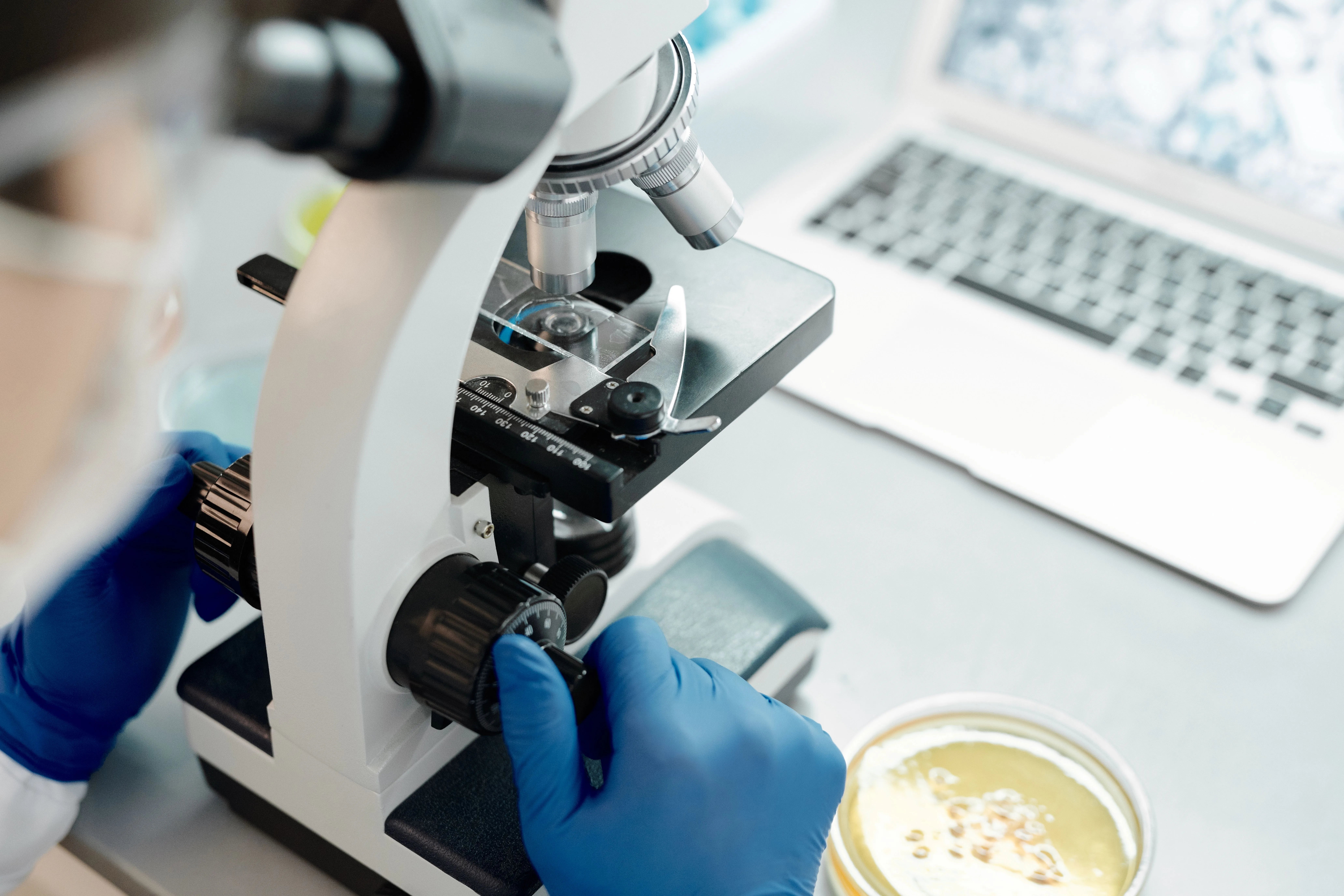
Every strand of hair on your head traces back to a tiny cluster of cells so small you could fit thousands of them on the head of a pin. That cluster, known to biologists as the hair follicle stem cell niche, is arguably the most important piece of real estate on your scalp. It is not the follicle itself that determines whether you grow thick hair for decades or watch it thin year after year. It is what happens inside this niche: whether the stem cells living there stay healthy, get the right chemical signals, and keep cycling through growth on schedule. Understanding this niche is not just an academic exercise. It reframes almost everything about why hair loss happens and why some interventions work better than others.
This article is a deep dive into follicle stem cell biology: what the niche is made of, how it drives the hair growth cycle, what changes when hair starts thinning, and what current science says about supporting it. It is dense material, but it is also some of the most useful material for understanding your own scalp.
What Is the Hair Follicle Stem Cell Niche?
A "stem cell niche" is a specialized microenvironment that houses stem cells and controls what they do. Stem cells are not autonomous. They do not simply decide on their own to divide, rest, or specialize. Instead, they take cues from their immediate surroundings: neighboring cells, structural proteins, signaling molecules, blood vessels, and even nerve endings. The niche is the sum of all of that context. Change the niche, and you change stem cell behavior, even if the stem cells themselves are untouched.
In the hair follicle, the niche sits partway down the follicle, anchored to a small pouch-like structure. It houses a population of specialized epithelial stem cells that spend most of their existence in a dormant, protected state. When conditions are right, a subset of these cells wakes up, proliferates, and travels down to rebuild the lower portion of the follicle for a new growth phase. This is follicle stem cell biology in its simplest form: a reservoir of cells that periodically regenerates the structure responsible for producing hair.
What makes this system remarkable is its efficiency. The same modest population of stem cells is reused cycle after cycle, year after year, for decades. A healthy niche can support this regeneration process an extraordinary number of times over a person's life. A disrupted niche, on the other hand, is one of the central reasons hair follicles gradually shrink in conditions like androgenetic alopecia.
The Bulge: Home Base for Bulge Stem Cells
The specific structure that houses this reservoir is called the bulge, named for the small bulging protrusion visible on the outer wall of the follicle where the arrector pili muscle, the tiny muscle responsible for goosebumps, attaches. Bulge stem cells hair biology has been studied for decades because the bulge appears to be uniquely protective. It sits above the portion of the follicle that gets recycled during each hair cycle, which means the stem cells living there are shielded from the degeneration that the lower follicle undergoes.
Bulge stem cells are unusual in a few ways. They are slow-cycling, meaning they divide far less often than most other cells in the body, which is thought to protect them from accumulating DNA damage over a lifetime of use. They are also multipotent, capable of giving rise to several different cell lineages within the follicle, not just one. And critically, they do not act alone. The bulge sits adjacent to the dermal papilla, a small cluster of specialized mesenchymal cells that functions as the command center of the follicle. The conversation between bulge stem cells and the dermal papilla, back and forth, is what ultimately decides when a new hair growth cycle begins.
Beyond the epithelial stem cells, the niche is a genuinely mixed neighborhood. It includes melanocyte stem cells that supply pigment to new hair, resident immune cells such as macrophages that influence the local signaling environment, sensory nerve fibers, and a dense network of small blood vessels that keep the whole structure fed with oxygen and nutrients. Every one of these components has been shown to influence whether the niche functions normally or begins to falter.
How the Niche Runs the Hair Growth Cycle
Hair does not grow continuously. Each follicle cycles through three phases: anagen, the active growth phase that can last years; catagen, a brief regression phase; and telogen, a resting phase before the cycle starts again. The niche is what times this cycle. During telogen, bulge stem cells sit quiet, held in check by a set of inhibitory signals. As the resting phase draws to a close, the dermal papilla begins sending activating signals to the bulge, essentially telling it that it is time to rebuild.
Once activated, a portion of the bulge stem cell population becomes transit-amplifying cells: a temporary workforce that divides rapidly to reconstruct the lower follicle and the hair matrix, the region that actually manufactures the hair shaft. As this new structure forms, the dermal papilla is drawn back down into position, and a new anagen phase begins. When anagen ends, the lower follicle degrades again during catagen, the dermal papilla migrates back up toward the bulge, and the whole system resets for the next telogen phase.
Key Point
The stem cells in the bulge rarely leave home. Most of the actual cell division that builds a new hair happens further down the follicle, in transit-amplifying cells that the bulge produces on demand. The niche's real job is deciding when to release that workforce, not doing the manufacturing itself.
This is why the health of the niche matters so much more than the health of any single hair. A follicle can only be as good as the timing of its cycle allows, and that timing is set entirely by signals passing through the niche. When those signals are disrupted, whether by hormonal changes, inflammation, or reduced blood flow, the cycle does not necessarily stop, but it starts to misfire: shorter anagen phases, longer rests between cycles, and progressively smaller hair shafts.
The Signals That Wake Stem Cells Up
A handful of signaling pathways dominate the conversation inside the niche, and researchers studying follicle stem cell biology have mapped many of them in considerable detail. Wnt/beta-catenin signaling is generally considered the primary "go" signal, activating bulge stem cells and pushing them toward the transit-amplifying state needed to build a new follicle. Bone morphogenetic protein, or BMP, signaling tends to do the opposite, keeping stem cells quiescent and preventing premature activation. The balance between these two opposing signals, rather than either one alone, is what determines how long a follicle rests before it grows again.
Growth factor signaling is also central to this process. TGF-beta signaling plays a well-documented role in maintaining stem cell quiescence and regulating the transition between cycle phases, acting almost like a brake pedal that has to be released at the right moment for growth to proceed. Sonic hedgehog signaling from the hair matrix helps sustain the rapid proliferation needed during active growth. And because the niche cannot function without adequate nutrient and oxygen delivery, the surrounding vasculature plays a supporting but essential role as well.
Hormones also reach into this signaling network, which is one of the more important connections for anyone dealing with hair thinning. Androgens, particularly dihydrotestosterone, or DHT, interact with receptors in the dermal papilla of genetically sensitive follicles. This does not destroy the bulge stem cells directly. Instead, it appears to alter the signals the dermal papilla sends back to them, shortening anagen and nudging the whole cycle toward dysfunction over repeated cycles. It is a slow, cumulative process, which is part of why pattern hair loss develops gradually rather than all at once.
What Happens to the Niche in Pattern Hair Loss
One of the more clarifying findings in hair biology research over the past couple of decades is that in androgenetic alopecia, the bulge stem cell population itself often remains present in miniaturizing follicles, at least in the earlier stages. What appears to decline is the population of progenitor and transit-amplifying cells, the workforce that the bulge is supposed to activate and release each cycle. In other words, the reservoir is often still there, but the mechanism for tapping into it is breaking down.
Several things seem to contribute to this breakdown. Chronic low-grade inflammation around the follicle, sometimes described as perifollicular inflammation, can disrupt the signaling environment the niche depends on. Progressive fibrosis, meaning the gradual stiffening and scarring of the tissue surrounding the follicle, changes the physical and biochemical properties the niche needs in order to function normally. Reduced blood flow to the area limits the nutrient supply the niche relies on for the intensive work of rebuilding a follicle each cycle. And, of course, sustained androgen signaling continues to shorten anagen phases cycle after cycle, giving the niche less and less time to properly rebuild before the next rest period begins.
The blood vessel network surrounding each follicle deserves particular attention here, because it is easy to overlook in discussions that focus mostly on hormones. A well-perfused niche has the resources to activate stem cells efficiently and support a full anagen phase. A poorly perfused one is working with a handicap before any hormonal signal even enters the picture. This is one reason why treatments that target multiple aspects of follicle health, rather than a single pathway, tend to align more closely with what the underlying biology actually requires.
Supporting the Niche: What the Science Suggests
Given how central the niche is to hair growth, it makes sense to ask what can realistically be done to support it. A few approaches have reasonable scientific grounding, even if none of them amount to a guaranteed fix.
- Low-level red and near-infrared light in the 630 to 670 nanometer range has been studied for its effect on mitochondrial activity in skin and follicle cells, which may help support the energy demands of an active niche. This is the mechanism behind devices like the Regrowthy Laser Therapy Cap, which uses 660nm LED light aimed at supporting follicle activity rather than altering hormone levels.
- Reducing androgen activity at the follicle level, through ingredients such as saw palmetto, may help preserve a longer anagen phase by easing pressure on the dermal papilla signaling that the niche depends on.
- Improving scalp circulation supports the vascular side of the niche, since the bulge and dermal papilla both rely on nearby blood vessels for the resources needed to rebuild a follicle each cycle.
- Reducing scalp inflammation, including through gentler cleansing routines, may help preserve the signaling environment the niche needs, since chronic irritation is one of the factors associated with niche disruption.
- Supporting the structural matrix around the follicle matters too. The niche does not exist in isolation; it sits within a collagen-rich basement membrane and extracellular matrix that gives the follicle its physical scaffolding. Ingredients like Density Collagen Peptides are aimed at supporting this connective tissue environment, since a stiffened or degraded matrix is part of what researchers associate with a less responsive niche.
None of these approaches rebuild a niche that has fully broken down, and none of them replace stem cells that are genuinely gone. But because the niche depends on so many inputs at once, a multi-pronged approach, addressing hormones, circulation, inflammation, and structural support together, has a more plausible mechanism for slowing decline than any single intervention pursued in isolation.
The Future of Niche-Targeted Treatment
Because the niche, rather than the stem cells alone, appears to be the real bottleneck in many cases of hair thinning, a growing amount of research has shifted toward reconstructing or rejuvenating the niche environment itself instead of simply trying to add more stem cells. This includes work on regenerating a functional dermal papilla, since a follicle without a properly signaling dermal papilla struggles to complete a normal growth cycle even when bulge stem cells are present. It also includes early-stage hair cloning research, which aims to expand follicle-generating cells in the lab and reintroduce them in a way that can rebuild a functioning niche rather than just depositing loose cells into the scalp.
This shift in thinking, from "more stem cells" to "a better environment for the stem cells that are already there," is one of the more important developments in the field. It also explains why researchers increasingly describe hair restoration as a systems problem rather than a single-ingredient problem. The niche receives input from hormones, the immune system, blood vessels, nerves, and physical tissue structure all at once, which means meaningful, lasting support is unlikely to come from addressing just one of those inputs.
Where This Leaves You
None of this science is a reason to feel discouraged if you are noticing thinning. If anything, understanding the niche is a reason for cautious optimism. Follicles do not typically disappear overnight, and in many cases the underlying stem cell reservoir is more resilient than the visible symptoms suggest. What changes first is usually the signaling environment around that reservoir, which is exactly the kind of thing that consistent, well-targeted care, whether that is managing androgen exposure, improving circulation, calming inflammation, or supporting the surrounding tissue structure, has a real chance of influencing over time.
The takeaway from all of this niche biology is not that any single product will reverse years of follicle decline overnight. It is that hair growth is a genuinely biological process with a specific, well-mapped mechanism behind it, and that mechanism responds to specific, sustained inputs. Understanding the niche will not grow hair by itself, but it does make it much easier to understand why patience, consistency, and a multi-pronged approach tend to outperform anything promising an instant fix.
From the routine
Mentioned in this article


Common questions
Frequently asked questions
Are bulge stem cells the same thing as the hair follicle stem cell niche?+
Does hair loss mean the stem cells in the niche are gone?+
Can anything actually repair a damaged stem cell niche?+
Why does hair thinning happen gradually instead of all at once?+
How does light therapy relate to the stem cell niche?+
What role does the extracellular matrix play in the niche?+
The Regrowthy System
Ready to start regrowing at home?
Hands-free. Non-prescription. 660nm clinical wavelength, backed by a 30-day guarantee.
Continue Reading
Advanced Science
Hair Cloning and Multiplication: How Close Are We?
8 min read
Advanced Science
The Future of Hair Loss Treatment: What's Coming in 2025-2030
9 min read
Advanced Science
TGF-Beta Signaling and Hair Growth: The Molecular Pathway
10 min read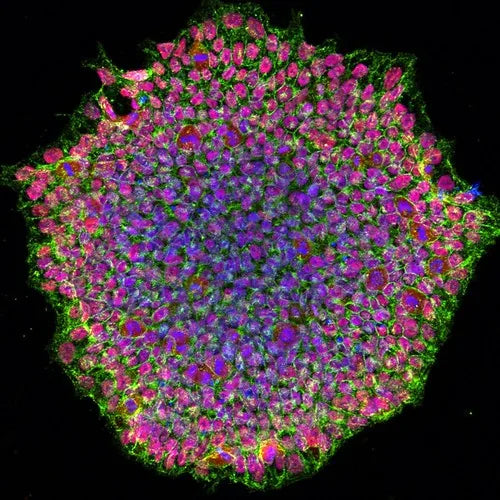
Advanced Science