Myths & Facts
Does Dyeing or Bleaching Hair Cause Permanent Hair Loss?
Bleach can wreck your hair's texture, but does it actually destroy your follicles? Here's what separates cosmetic shaft damage from real, permanent hair loss.
Updated July 1, 2026
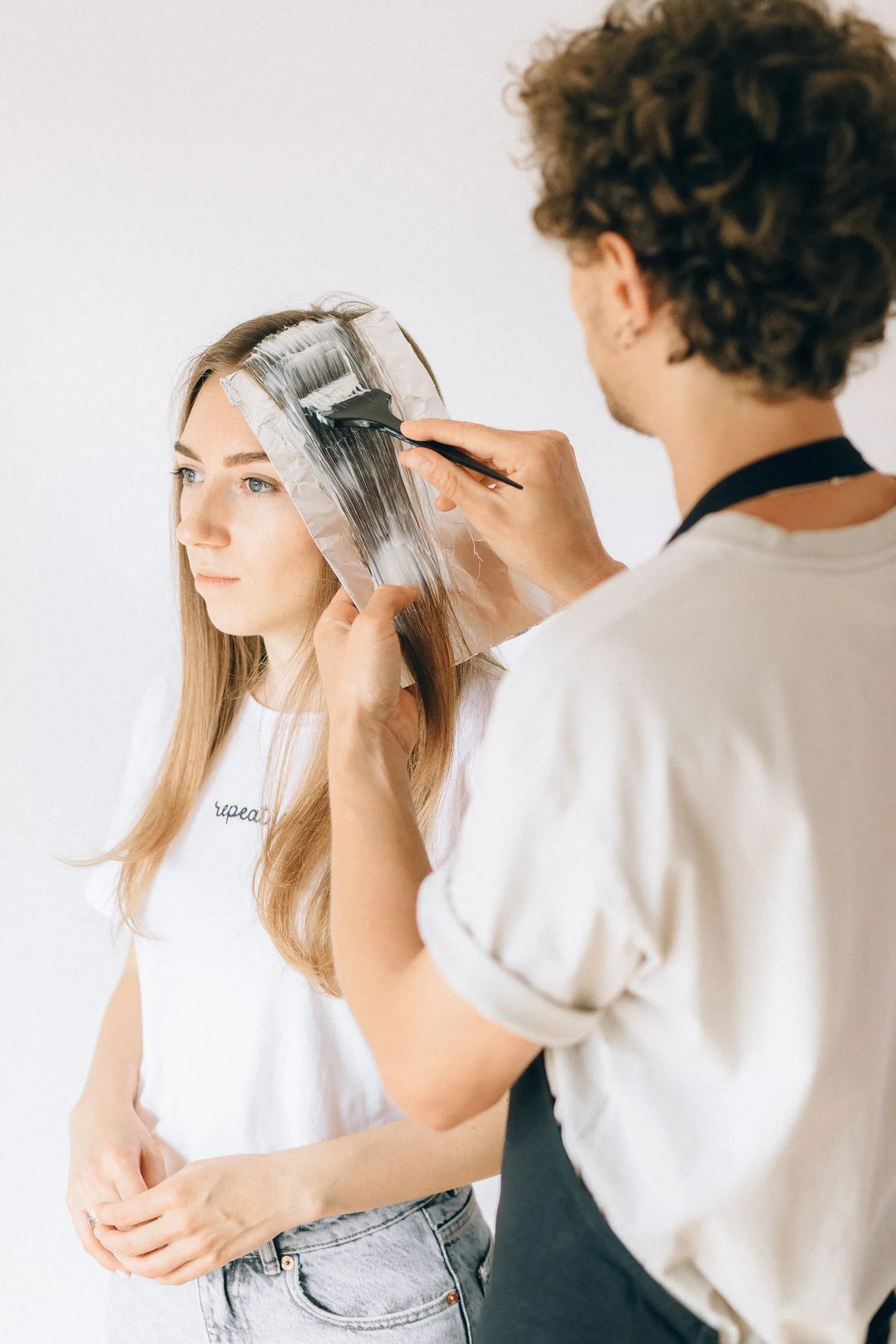
You color your hair on a Saturday. By Tuesday, you swear you're finding more strands in the shower drain than usual, and your mind jumps straight to the worst conclusion: the dye did this, and it's permanent. It's one of the most common fears clients bring to salons, and one of the most persistent myths in hair care. Let's separate what bleach and hair color actually do to your hair from what causes real, lasting hair loss.
The Myth: Coloring Your Way to Baldness
The dyeing hair loss myth usually starts with a real observation. Someone bleaches their hair, notices more shedding in the following days, and connects the two events. Add in the fact that heavily processed hair often looks thinner, feels more fragile, and breaks more easily near the ends, and it's easy to conclude that color chemicals are killing hair follicles one application at a time.
But observation isn't the same as causation. Hair sheds naturally in cycles, salon visits often coincide with periods of stress or seasonal shedding that would have happened anyway, and damaged hair strands are not the same thing as fewer follicles. The myth persists because it feels intuitive, not because it holds up under scrutiny.
How Hair Dye and Bleach Actually Work
To understand why coloring your hair cannot cause permanent hair loss in the way most people fear, it helps to know where the chemistry actually happens. Permanent hair dye uses ammonia to swell and open the hair's outer cuticle layer, combined with a developer (hydrogen peroxide) that triggers a reaction depositing color pigment inside the hair shaft. Bleach works more aggressively: it uses peroxide to strip away the natural melanin pigment inside the hair shaft, which is what lightens hair color.
Both processes happen entirely within the visible hair shaft, the part that has already grown out of your scalp and is, biologically speaking, dead keratin protein. Neither ammonia nor peroxide, applied through a normal salon or at-home process, penetrates deep enough to reach the hair follicle sitting in the dermis layer of your scalp. The follicle is where hair is actually produced, and it's protected below the skin's surface, well beyond where color chemicals are designed to work.
What Bleaching and Dyeing Really Damage
This doesn't mean chemical processing is harmless. Bleaching hair damage and loss of hair quality are very real, just not in the way most people assume. Repeated or overly aggressive bleaching breaks down the protein bonds that give hair its strength, raises the hair's porosity so it loses moisture faster, and roughens or lifts the cuticle so light no longer reflects evenly off the strand. The visible results are familiar to anyone who has over-processed their hair:
- Straw-like texture and loss of natural shine
- Increased tangling and difficulty detangling wet hair
- Split ends and visible breakage, especially at the mid-shaft and ends
- Hair that snaps rather than stretches when pulled gently
- A scalp that feels tight, dry, or irritated after processing
All of this is shaft damage. It's cosmetic and structural, affecting how the existing hair looks and behaves, not whether new hair is being produced underneath.
Breakage Is Not the Same as Follicle Loss
This is the distinction that resolves most of the confusion around hair color and hair thinning. When over-bleached hair snaps off mid-shaft, it can genuinely look like you've lost a large amount of hair, especially near the hairline or part where damage tends to concentrate. But a broken hair shaft is not a lost follicle. The follicle that produced that strand is still alive underneath your scalp, and it will continue its normal growth cycle, producing a new hair in due course.
Actual hair loss, the kind involving the follicle rather than the shaft, happens for reasons that have nothing to do with color chemistry: androgenetic alopecia driven by genetics and hormone sensitivity, telogen effluvium triggered by physical or emotional stress, autoimmune conditions, or scarring processes that physically destroy the follicle. Bleach and dye, used as directed, don't reach far enough to do any of that.
Key Point
Hair color and bleach act on the hair shaft above the skin, not the follicle beneath it. Broken or shedding processed hair can look dramatic, but it does not mean fewer follicles are producing hair. The follicle almost always survives normal chemical processing intact.
When Coloring Could Contribute to Real Shedding
There are a handful of edge cases worth being honest about, because they're where the myth picks up a grain of truth. First, a severe allergic reaction to a dye ingredient, most notably paraphenylenediamine (PPD), can cause chemical burns, blistering, or significant scalp inflammation. In rare, severe, and repeated cases, this kind of scalp injury can lead to localized scarring, and scar tissue can permanently damage the follicles underneath it. This is uncommon and almost always preceded by obvious signs of a bad reaction, not a routine coloring appointment.
Second, any significant physical or emotional stress, including a frightening allergic reaction, a painful chemical burn, or even the general stress of a major appearance change, can act as a trigger for telogen effluvium. This is a temporary, diffuse shedding event where a larger-than-usual percentage of hairs shift into the shedding phase a few months after the triggering event. It resolves on its own once the trigger passes, and it isn't caused by the chemicals themselves so much as the body's stress response.
Third, coloring combined with other stressors, tight braiding right after a bleach service, aggressive brushing of weakened wet hair, or skipping conditioning treatments entirely, can compound shaft weakness into more dramatic breakage than color chemistry alone would cause. That's a cumulative styling issue, not evidence that dye itself thins hair at the root.
Warning Signs Something Else Might Be Going On
If you colored your hair recently and you're now seeing real thinning, meaning visible scalp, a widening part, or reduced density rather than split, broken strands, it's worth considering that the timing may be coincidental rather than causal. Hair color appointments are common, and so is the onset of androgenetic alopecia or a stress-related shedding episode. Watch for these signs that point toward a genuine underlying cause rather than cosmetic damage:
- Thinning concentrated at the crown, temples, or part line rather than evenly across the head
- Shedding that continues for more than two or three months rather than settling down
- Visible scalp skin through the hair, not just shorter or frizzier strands
- A burning, blistering, or scabbing scalp reaction that followed a specific color application
- A family history of hair thinning, which points toward genetics rather than a recent salon visit
If any of that sounds familiar, the honest next step is figuring out what's actually driving the change, since the answer determines what will actually help. Our guide on whether hair loss is reversible walks through how to tell early-stage pattern loss from temporary shedding.
How to Color Your Hair Safely If You're Already Thinning
If you're already dealing with thinning hair for unrelated reasons, you don't necessarily have to give up color, but a few adjustments reduce unnecessary shaft stress and protect the hair you have:
- Always patch test before a new dye or bleach product, both for allergy safety and to catch scalp sensitivity early.
- Space out processing. Give your hair and scalp at least six to eight weeks between bleaching sessions so the shaft has time to recover strength and moisture.
- Use a bonding or protein treatment during and after lightening services to help rebuild the internal protein structure bleach breaks down.
- Ask your colorist about lower-damage techniques like balayage or lowlights instead of full, repeated bleaching, especially if your hair is already fine or thinning.
- Be gentle with wet, processed hair, since it's at its weakest right after a color service. Detangle carefully and avoid aggressive brushing or heat styling immediately after.
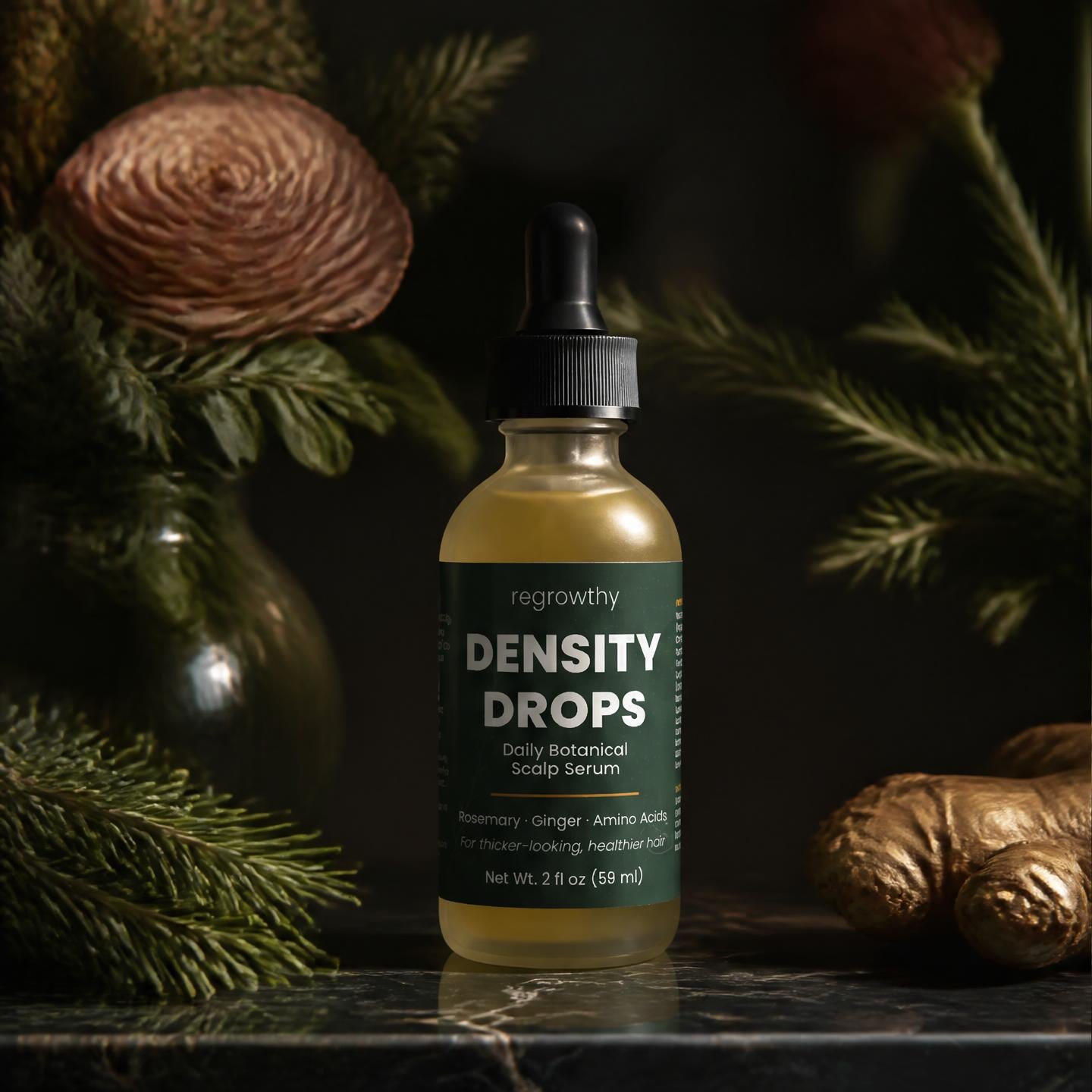
- Support your scalp separately from your color routine. If the real driver of your thinning is genetics or DHT sensitivity rather than your last color appointment, a Laser Therapy Cap and a daily routine like Daily Density Pro Capsules address the follicle-level factors that dye and bleach were never responsible for in the first place.
None of this means bleach is gentle or that you should ignore how your hair feels after processing. Damaged, brittle hair is a real cosmetic problem worth managing with better products, better timing, and a colorist who listens to your hair's condition. It just isn't the same problem as follicle-level hair loss, and treating the two as interchangeable leads people to blame their hair color for something it didn't cause, while the actual driver of their thinning goes unaddressed.
If you're genuinely worried about thinning that happened to start around a color appointment, the most useful thing you can do is look past the calendar coincidence and check the pattern: is it diffuse or localized, is it new strands failing to regrow or old strands snapping off, and is it settling down or getting worse over time. Those answers tell you far more than which chemical treatment you had last month.
From the routine
Mentioned in this article

Common questions
Frequently asked questions
Can bleaching my hair permanently stop it from growing back?+
Why did I shed so much hair right after dyeing it?+
Is bleached hair breaking off the same as hair loss?+
Can hair dye allergies cause permanent hair loss?+
How long should I wait between bleaching sessions to avoid damage?+
If my part is widening, is that from hair dye or something else?+
The Regrowthy System
Ready to start regrowing at home?
Hands-free. Non-prescription. 660nm clinical wavelength, backed by a 30-day guarantee.
Continue Reading
Myths & Facts
Does Shaving Your Head Make Hair Grow Back Thicker?
6 min read
Myths & Facts
Hair Loss Genetics: Myths About the Mother's Side and More
7 min read
Myths & Facts
Does Masturbation Cause Hair Loss? The Science Behind the Myth
8 min read
Myths & Facts