Product Comparisons
Philip Kingsley vs Regrowthy: Trichology Haircare vs a Regrowth System
Philip Kingsley built its name on trichology clinics and cosmetic haircare like Tricho Complex. Regrowthy takes a different route: a laser cap and a full supplement line built around the biology of hair loss itself.
Updated July 1, 2026

If you have spent any time researching hair thinning, you have probably come across Philip Kingsley. It is one of the most established names in haircare, built on decades of clinical trichology practice in London and New York. But "trichologist recommended" and "built to treat hair loss" are not always the same claim, and understanding that difference is the whole point of comparing Philip Kingsley vs Regrowthy. This article walks through what each brand actually does, where their philosophies diverge, and how to think about which one fits the problem you are trying to solve.
This is not a takedown of either brand. Philip Kingsley has real credibility, and its products are well formulated for what they are designed to do. But "well formulated haircare" and "a system built around the physiology of hair loss" are two different categories, and a lot of shoppers conflate them because both brands show up in the same searches.
Who Is Philip Kingsley
Philip Kingsley is a British haircare brand founded on the clinical practice of trichology, the study of the hair and scalp. The brand's trichology clinics in London and New York have operated for decades, and the retail product line grew out of formulas originally used in that clinical setting. This lineage is a big part of why the brand carries so much authority: it did not start as a cosmetics company that later added a "hair health" angle, it started as a clinic that later productized its approach for people who could not walk into a Mayfair office for a consultation.
The retail catalog is broad. There are shampoos and conditioners built for specific hair types (fine and flat, dry and damaged, color treated), pre-shampoo treatments meant to improve elasticity and reduce breakage, scalp toners, and a "Density" range aimed at hair that has become visibly thinner over time. Sitting alongside the haircare is a nutritional supplement called Tricho Complex, which is the product most often searched alongside terms like "trichologist recommended hair products."
It's worth being precise about what "trichologist recommended" means here. It generally means the products were developed by, or in consultation with, practicing trichologists, and that trichologists in that clinical setting have historically recommended similar nutritional support to their own patients. It does not mean the over-the-counter retail versions carry the same clinical backing, dosing precision, or monitoring that an in-person consultation would.
What Is Tricho Complex, Really
Anyone researching a philip kingsley tricho complex review is usually trying to answer one question: is this actually going to help my hair, or is it a general multivitamin with a hair-focused label. The honest answer sits somewhere in between. Tricho Complex is a nutritional supplement built around biotin, amino acids like L-lysine and methionine, iron, and a handful of supporting vitamins and minerals. These are ingredients tied to healthy hair structure and the biological processes hair needs to grow, and if you are genuinely deficient in one of them, correcting that deficiency can meaningfully help your hair.
The catch is the "if." Nutrient support supplements like this are built on the premise that a nutritional gap is contributing to your shedding or thinning. That is a real and common issue, especially for people with restrictive diets, iron deficiency, or postpartum hair changes. But it is a different mechanism than the one behind the most common form of hair thinning in both men and women: androgenetic alopecia, which is driven primarily by genetics and the hormone DHT gradually shrinking hair follicles over time, not by a vitamin shortfall. A nutritional formula, however well designed, is not built to interrupt that hormonal process. It is built to make sure your body has the raw materials it needs to grow hair well, which is a genuinely useful but narrower job.
Key Point
Philip Kingsley's Tricho Complex is a nutrient-support supplement, not a treatment aimed at DHT or the hair growth cycle itself. If your thinning is driven by genetics and hormones rather than a nutritional gap, it is solving a different problem than the one you likely have.
What Regrowthy Is Instead
Regrowthy did not start as a haircare or cosmetics brand. It is built around two categories that work on hair loss from different angles: a non-prescription Laser Therapy Cap that uses 660nm red light to stimulate the scalp, and The Density Line, a family of supplements and a scalp shampoo designed around the actual biology of thinning hair rather than general nutrition.
The laser cap approach is a device category, not a cosmetic one. Low-level laser therapy at the 660nm wavelength has been studied for its ability to stimulate cellular activity in the scalp and support the hair growth cycle, and it works independently of what you eat or apply topically. It is worn for short sessions and requires no prescription, which puts it in a very different lane from both haircare and pharmaceutical treatments.
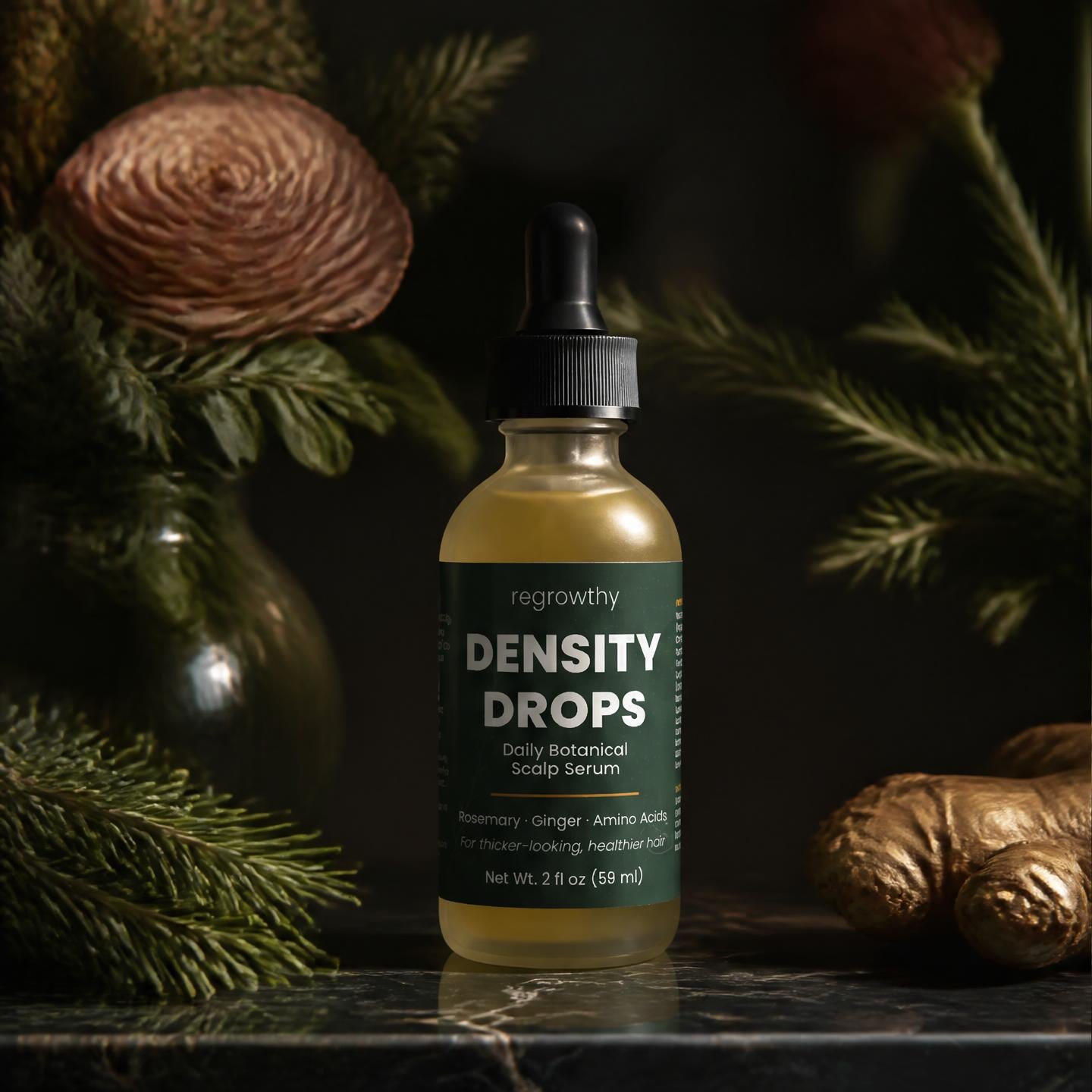
The Density Line, meanwhile, is built to work alongside the cap rather than duplicate it. Daily Density Pro Capsules are formulated with ingredients like saw palmetto, which has a long history of use as a natural DHT blocker, alongside supporting nutrients. Density Drops and Density Elixir offer topical and liquid formats for people who prefer not to take capsules, Density Collagen Peptides address the structural protein side of hair strength, Dense Cleanse is a scalp shampoo formulated to keep the follicle environment clean rather than clogged, and Daily Density Gummies exist for people who simply will not remember to take a capsule but will remember a gummy. Several products also include rosemary oil, an ingredient that has drawn comparisons in small studies to more conventional topical treatments for scalp circulation.
Cosmetic Care vs Targeting the Cause
This is really the crux of the philip kingsley vs regrowthy comparison. Philip Kingsley's core haircare, the shampoos, conditioners, and pre-shampoo treatments, is designed to make the hair you currently have look and feel healthier: more elasticity, less breakage, better shine, less frizz. That is a legitimate and valuable goal, and if your main issue is damaged or fragile hair rather than a shrinking follicle, that kind of cosmetic care can make a visible difference fast.
Where it gets murkier is when someone is using cosmetic haircare, even excellent cosmetic haircare, to address a follicular problem. Shampoo and conditioner sit on the hair shaft and scalp surface for a few minutes before being rinsed away. They can improve the condition of existing strands, and a clean, well-conditioned scalp is a healthier environment in general, but they are not positioned to interrupt DHT's effect on the follicle or to stimulate dormant follicles into a new growth phase. That is simply not the job cosmetic haircare is built to do, at Philip Kingsley or anywhere else.
Regrowthy's approach is deliberately aimed at the follicle and the growth cycle rather than the hair shaft alone. The laser cap targets the scalp directly with light therapy. The Density Line supplements are formulated around ingredients tied to hormonal and structural support, not just general nutrition. Dense Cleanse still functions as a shampoo, so there is a cosmetic-care layer here too, but it sits inside a broader system rather than standing alone as the whole strategy.
Trichologist Recommended vs a Multi-Modal System
"Trichologist recommended" is a meaningful phrase, and it is fair to give Philip Kingsley credit for the clinical pedigree behind it. But it is worth noting what it is not: it is not the same as "clinically proven to regrow hair" or "matched to your specific hormonal profile." A trichologist consultation, the kind Philip Kingsley's clinics actually offer, involves a scalp examination, a discussion of family history and diet, and often bloodwork. The retail products are a downstream, generalized version of that process, formulated to be broadly useful rather than personalized.
Regrowthy is not positioning itself as a replacement for a trichology consultation or a dermatologist visit either. It occupies a different space: an at-home, non-prescription, multi-modal system that combines a physical device with targeted supplementation. "Multi-modal" matters here because hair thinning is rarely caused by just one thing. Combining light-based scalp stimulation with ingredients aimed at hormonal and nutritional support gives you more than one lever to pull, rather than relying on a single shampoo or a single tablet to do all the work.
- Philip Kingsley: cosmetic haircare plus a general nutrient-support supplement, grounded in trichology clinic heritage.
- Regrowthy: a 660nm laser cap plus The Density Line, aimed specifically at the growth cycle and DHT-related thinning.
- Neither replaces a dermatologist or an in-person trichology consultation for diagnosing the cause of your specific hair loss.
If you have compared other subscription or telehealth options in this category, you will notice the same theme comes up again and again: the products that treat hair loss as a hormonal and follicular issue tend to look different from the products that treat it as a cosmetic or nutritional one. We have covered this dynamic in more depth in our comparison of Hims and Regrowthy, where the contrast is prescription telehealth versus a non-prescription device-and-supplement approach rather than trichology versus device therapy.
Cost and Commitment
Philip Kingsley products are generally sold as one-time purchases you restock as needed, which suits people who want to try a shampoo or a supplement without committing to an ongoing plan. The tradeoff is that consistency is entirely on you: if you forget to reorder, the routine lapses, and nutrient-support supplements in particular need months of consistent use before you would expect to notice anything.
Regrowthy's supplement line runs on a subscription model, which is a deliberate choice rather than an accident. Hair growth cycles are slow. A single hair follicle can take several months to move through its resting phase and into active growth, so any product aimed at the follicle, whether a device or a supplement, needs consistent use over a period measured in months, not weeks. A subscription removes the "did I remember to reorder" failure point and keeps you on the ingredient schedule long enough to actually judge whether it is working. The laser cap itself is a one-time purchase, since it is a reusable device rather than a consumable.
- If you want a simple, no-commitment haircare upgrade for damaged or fragile hair, one-time purchase cosmetic products make sense.
- If you are trying to address genetic or hormonal thinning, a consistent months-long routine matters more than the purchase format, which is why a subscription structure exists for that use case.
- Either way, give any product, cosmetic or follicular, a full growth cycle before judging results. Three or four weeks is not enough time for any of these approaches.
Who Each One Actually Fits
Philip Kingsley makes the most sense if your priority is overall hair and scalp condition: reducing breakage, improving elasticity, calming a sensitive scalp, or supporting hair health nutritionally alongside a balanced diet. If you have already been evaluated by a dermatologist or trichologist and been told your thinning is likely nutritional or related to a stressful life event rather than genetic, a nutrient-focused supplement like Tricho Complex fits naturally into that plan.
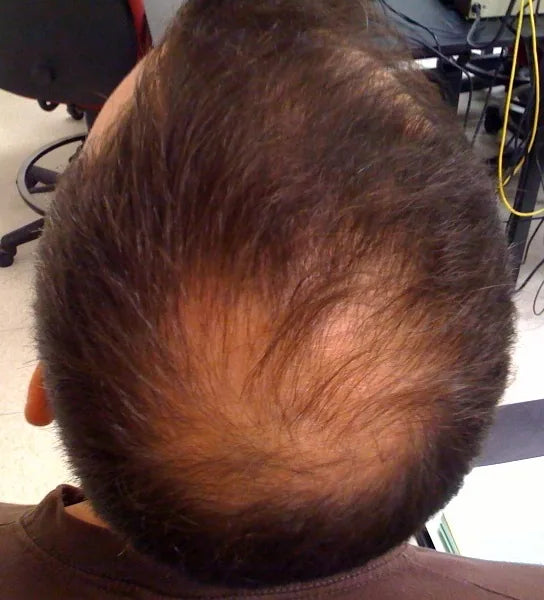
Regrowthy tends to make more sense if you are noticing a receding hairline, a widening part, or diffuse thinning that looks like it is following a pattern, the kind of change associated with the Norwood scale in men or diffuse thinning in women, and you want a non-prescription, at-home way to address it on more than one front. Pairing scalp-level light therapy with Daily Density Pro Capsules and a supporting shampoo like Dense Cleanse gives you a system built around the actual mechanism of that kind of thinning rather than around general hair condition.
Some people reasonably use both categories at once, cosmetic haircare for day-to-day hair quality and a device-and-supplement system for the underlying growth cycle, since they are not really competing for the same job. If you are also weighing other haircare-adjacent brands against a more targeted approach, our Olaplex and Regrowthy comparison covers a similar distinction between bond-repair cosmetic treatments and systems built specifically for hair loss.
The clearest way to decide is to be honest about what you are actually trying to fix. If your hair feels dry, brittle, or over-processed but is not visibly thinning or receding, you are dealing with a hair-quality problem, and trichologist-formulated cosmetic care is a reasonable, well-credentialed answer. If you are watching your part widen or your hairline move and you want something built specifically to work on that process from more than one angle, without a prescription and without guessing at which single product might help, that is the gap Regrowthy's laser cap and Density Line were built to fill. Neither brand can promise a specific outcome, and neither should be expected to work overnight, but knowing which category actually matches your problem is the difference between a routine that helps and one that just sits in your bathroom cabinet.
From the routine
Mentioned in this article

Common questions
Frequently asked questions
Is Philip Kingsley Tricho Complex actually effective for hair loss?+
What is the main difference between Philip Kingsley and Regrowthy?+
Does 'trichologist recommended' mean a product is clinically proven to regrow hair?+
Can I use Philip Kingsley haircare alongside Regrowthy's laser cap and supplements?+
How long before I would notice a difference from either approach?+
Do I need a prescription for either brand's products?+
The Regrowthy System
Ready to start regrowing at home?
Hands-free. Non-prescription. 660nm clinical wavelength, backed by a 30-day guarantee.
Continue Reading
Product Comparisons
Hims vs Regrowthy: Two Very Different Approaches to Hair Loss
9 min read
Product Comparisons
Keeps vs Regrowthy: Prescription vs Non-Prescription Hair Loss Treatment
8 min read
Product Comparisons
Olaplex vs Regrowthy: Bond Repair vs Hair Loss Treatment
9 min read
Product Comparisons