Product Comparisons
Hairguard vs Regrowthy: Derma Rollers vs Laser Therapy
Hairguard built its name on the derma stamp and microneedling for hair loss. Regrowthy takes a laser-first, multi-modal approach. Here is how the two actually compare.
Updated July 1, 2026

If you have spent any time researching at-home hair loss tools, you have almost certainly come across Hairguard. The brand built its reputation on the derma stamp and derma roller, positioning microneedling for hair loss as an affordable, DIY-friendly way to wake up a thinning scalp. Regrowthy takes a different route, built around a wearable laser therapy cap paired with a targeted supplement system. Both brands are aimed at the same frustrated reader: someone watching their part get wider or their temples recede who wants to do something about it before considering a prescription. This is an honest look at how the two approaches actually work, where each one shines, and where the science does and does not back up the marketing.
This comparison is not about declaring a winner in every category. Derma rolling and laser therapy are genuinely different mechanisms, not just different brands selling the same thing. Understanding that difference is the whole point of this article.
Hairguard vs Regrowthy at a Glance
Hairguard is best known for its derma stamp and derma roller line, small handheld devices covered in fine needles that you roll or press across the scalp to create controlled micro-injuries. The brand also sells minoxidil-adjacent topicals and educational content around microneedling protocols. It is a manual, hands-on tool that requires a learning curve and a maintenance routine.
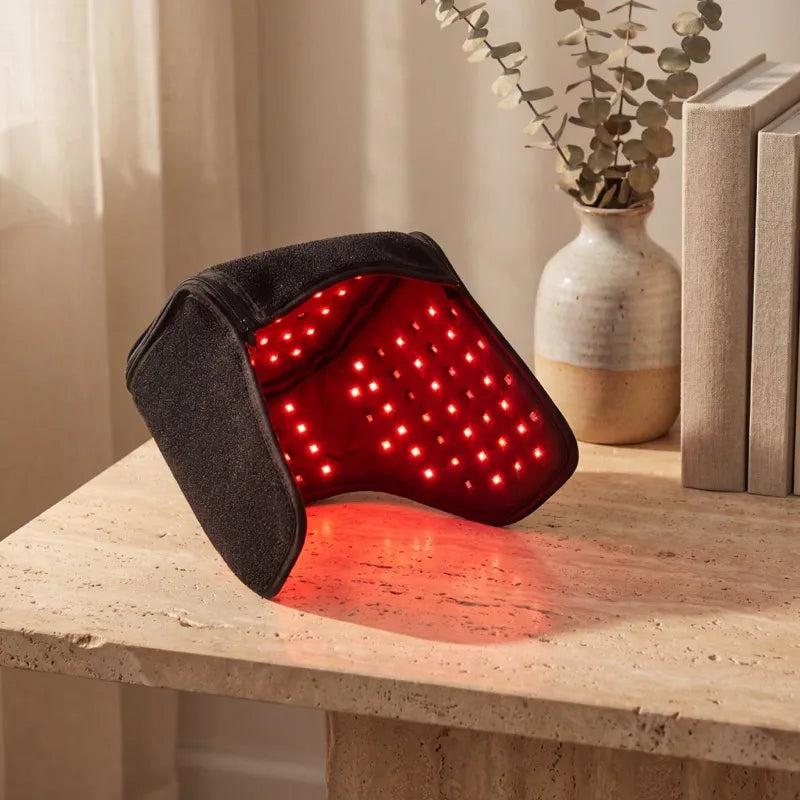
Regrowthy is built around the Laser Therapy Cap, a wearable 660nm LED device that requires no needles, no bleeding, and no downtime. It is worn passively for a set number of minutes a day. Alongside the cap, Regrowthy sells The Density Line, a set of supplements, drops, and a scalp shampoo designed to support the same growth cycle from the inside and on the surface. Where Hairguard is a single-mechanism tool with an intense at-home protocol, Regrowthy is a multi-modal system: light therapy, nutritional support, and topical scalp care working together.
Key Point
A derma roller and a laser cap are not competing for the exact same job. Microneedling creates a controlled wound response to trigger repair. Laser therapy delivers light energy to stimulate cellular activity in the follicle without breaking the skin. They can be complementary, but they are not interchangeable.
What Is Hairguard
Hairguard positions itself as an education-first hair loss brand, publishing detailed guides on scalp health alongside its product line. Its flagship item, often searched as the hairguard derma stamp review, is a titanium or stainless steel needling tool available in different needle lengths depending on how aggressive the user wants their routine to be. The brand markets this as a way to increase absorption of topical treatments like minoxidil and to mechanically stimulate the scalp.
Hairguard has built a loyal following among people who like a hands-on, DIY approach to their hair loss routine. Their content library covers derma stamping technique, needle depth, and how to pair microneedling with other treatments. That said, a derma stamp is a manual instrument. Results depend heavily on consistent technique, proper depth selection, and diligent aftercare to avoid infection or irritation, which is a meaningfully different user experience than putting on a wearable device and letting it run.
How Derma Rollers and Microneedling Work
Microneedling for hair loss works on the principle of controlled injury. Fine needles puncture the outermost layers of the scalp, and the body responds to that micro-trauma by ramping up its natural wound healing cascade, releasing growth factors and increasing blood flow to the area. The theory is that this localized repair response can wake up follicles that have shrunk due to androgenetic alopecia, and that the tiny channels created by the needles also improve absorption of topical treatments applied afterward.
Dermatology studies have found that microneedling, particularly when combined with topical minoxidil, can produce meaningfully better results than minoxidil alone in some populations. That combination effect is the strongest part of the case for derma rolling. Used entirely on its own, without a topical treatment layered on top, the evidence for microneedling as a standalone hair regrowth strategy is thinner. It is generally viewed by dermatology researchers as an adjunct that enhances other treatments rather than a primary therapy by itself.
There are also real practical downsides. Needling the scalp carries a risk of irritation, minor bleeding, and infection if the device is not properly sanitized or if it is used too frequently. Technique matters, and overdoing needle depth or frequency can do more harm than good.
How Laser Therapy Works
Low-level laser therapy, sometimes called red light therapy, works through an entirely different mechanism. Rather than creating an injury response, a 660nm laser cap delivers light energy directly to the follicle. That wavelength is absorbed by mitochondria in scalp cells, which is thought to increase cellular energy production and support the follicle's transition back into an active growth phase. There is no needle, no puncture, and no wound healing cascade involved.
A growing body of clinical research supports low-level laser therapy as a legitimate non-prescription option for androgenetic alopecia, with several devices in this category having gone through clinical study and clearance processes. The appeal for a lot of people is that it is entirely passive. You wear the cap, it does its job, and there is nothing to sanitize, no bleeding risk, and no technique to get wrong the way there is with a handheld needling device.
Regrowthy pairs its laser cap with The Density Line rather than selling the device as a standalone fix. Topical treatments like minoxidil work on similar growth-cycle timelines, and Regrowthy's own approach layers in ingredients like saw palmetto and rosemary oil, both of which have research behind them related to DHT, the hormone byproduct most responsible for shrinking follicles in androgenetic alopecia.
Derma Roller vs Laser Cap: Head to Head
When you put a derma roller vs laser cap side by side, the differences go well beyond price. Here is how they actually compare on the factors that matter most to someone choosing between them.
- Mechanism: Microneedling relies on a wound-repair response triggered by physical injury. Laser therapy relies on light energy absorbed by cells, with no injury involved.
- Ease of use: A derma roller or stamp requires manual technique, consistent needle depth, and a sanitation routine every single use. A laser cap is worn passively, hands-free, with no cleaning beyond routine maintenance.
- Risk profile: Needling carries a real risk of irritation, minor bleeding, or infection if done incorrectly. Laser therapy carries essentially none of that risk since the skin barrier is never broken.
- Standalone evidence: Microneedling's strongest evidence comes from pairing it with a topical like minoxidil. Laser therapy has a body of research supporting it as a standalone modality in its own right.
- Time investment: A full derma stamping session plus aftercare can take longer and requires more hands-on attention than sitting under a cap for the recommended session length.
- Long-term cost model: Hairguard's needling devices are typically a one-time purchase with occasional needle cartridge replacement. Regrowthy's system, including the cap and The Density Line, is generally sold as an ongoing subscription, reflecting that hair regrowth is a maintained process rather than a one-time fix.
Neither approach is inherently wrong. A derma stamp appeals to someone who wants a low-cost, hands-on tool and does not mind the maintenance. A laser cap appeals to someone who wants a passive, lower-risk daily habit that fits into an existing routine, like watching television or reading in the evening.
Can You Combine Microneedling and Laser Therapy
A question we hear often is whether someone can use a derma roller and a laser cap in the same routine. In principle, there is no fundamental conflict between the two mechanisms, but most dermatology guidance recommends spacing them apart rather than stacking them on the same day. Needling creates open micro-channels in the scalp, and it is generally advised to let that heal before introducing another treatment, whether that is a topical or a light-based device.
If you are already invested in a needling routine and curious about adding light therapy, the more realistic path for most people is not running both indefinitely, but rather deciding which mechanism fits your lifestyle and risk tolerance better and building consistency around that one. Consistency is the biggest predictor of results with any hair loss treatment, pharmaceutical or not, and a routine you will actually stick with for months beats a theoretically more powerful one you abandon after three weeks.
Key Point
Whichever device you choose, hair regrowth operates on the follicle's natural growth cycle, which runs in months, not days. Neither microneedling nor laser therapy produces visible change overnight, and any product promising otherwise should be treated with skepticism.
Who Should Choose Hairguard
Hairguard is a reasonable choice if you want a low-cost entry point into an active hair loss routine and you are comfortable with a hands-on, manual device. It suits people who are already using a topical minoxidil solution and want to explore whether microneedling improves absorption and results, since that combination has the most support behind it. It also fits people who prefer a one-time purchase over an ongoing subscription and do not mind the extra few minutes of technique and cleanup each session requires.
It is a less natural fit for anyone with sensitive skin, a history of scalp irritation, or anyone who simply does not want to introduce needles into their routine at all.
Who Should Choose Regrowthy
Regrowthy fits the reader who wants a passive, lower-risk daily habit rather than a manual procedure, and who would rather build a complete system than manage several separate products. The laser cap handles the light therapy piece, while supplementation through something like Daily Density Pro Capsules addresses the nutritional side of follicle health, and Dense Cleanse keeps the scalp environment itself clean and balanced. For someone who wants that structure without weekly needling sessions, this multi-modal approach tends to be easier to sustain over the months it actually takes to see change.
It is also a sensible option for anyone who tried microneedling in the past and found the maintenance or irritation not worth it, or who simply prefers a device with a strong non-invasive research base behind it as their primary tool.
There is no universal right answer between a derma roller and a laser cap. Both are legitimate, non-prescription tools with real mechanisms behind them, and the honest answer depends on your skin, your patience for maintenance, and how you want to spend the few minutes a day you are willing to give to your hair. What matters most, regardless of which device ends up in your bathroom cabinet, is picking the one you will actually use every single day for the months it takes the follicle cycle to respond, and pairing it with the nutritional and scalp-care fundamentals that support whichever mechanism you choose.
From the routine
Mentioned in this article
Common questions
Frequently asked questions
Is a derma roller or a laser cap better for hair loss?+
Does the Hairguard derma stamp actually work for hair loss?+
Can I use a derma roller and a laser cap together?+
Is microneedling safe to do at home?+
How long does it take to see results from laser therapy or microneedling?+
Does Regrowthy require a prescription like some hair loss treatments do?+
The Regrowthy System
Ready to start regrowing at home?
Hands-free. Non-prescription. 660nm clinical wavelength, backed by a 30-day guarantee.
Continue Reading

Product Comparisons
Rogaine vs Regrowthy: The Daily Commitment vs The Complete Routine
10 min read
Product Comparisons
Viviscal vs Regrowthy: Marine Complex vs Botanical DHT-Blocking Formula
8 min read
Product Comparisons
Thicker Fuller Hair vs Regrowthy: Drugstore Line vs a Complete System
9 min read
Product Comparisons